Consciously Co-working: Shreya Josh and Rohan Kale
Juggling one’s work and a relationship in the present day is challenging enough for many young couples. Verve finds out what happens when partners share their professional space as well — and how they function when the lines between home and office blur
On Their Creative Practice
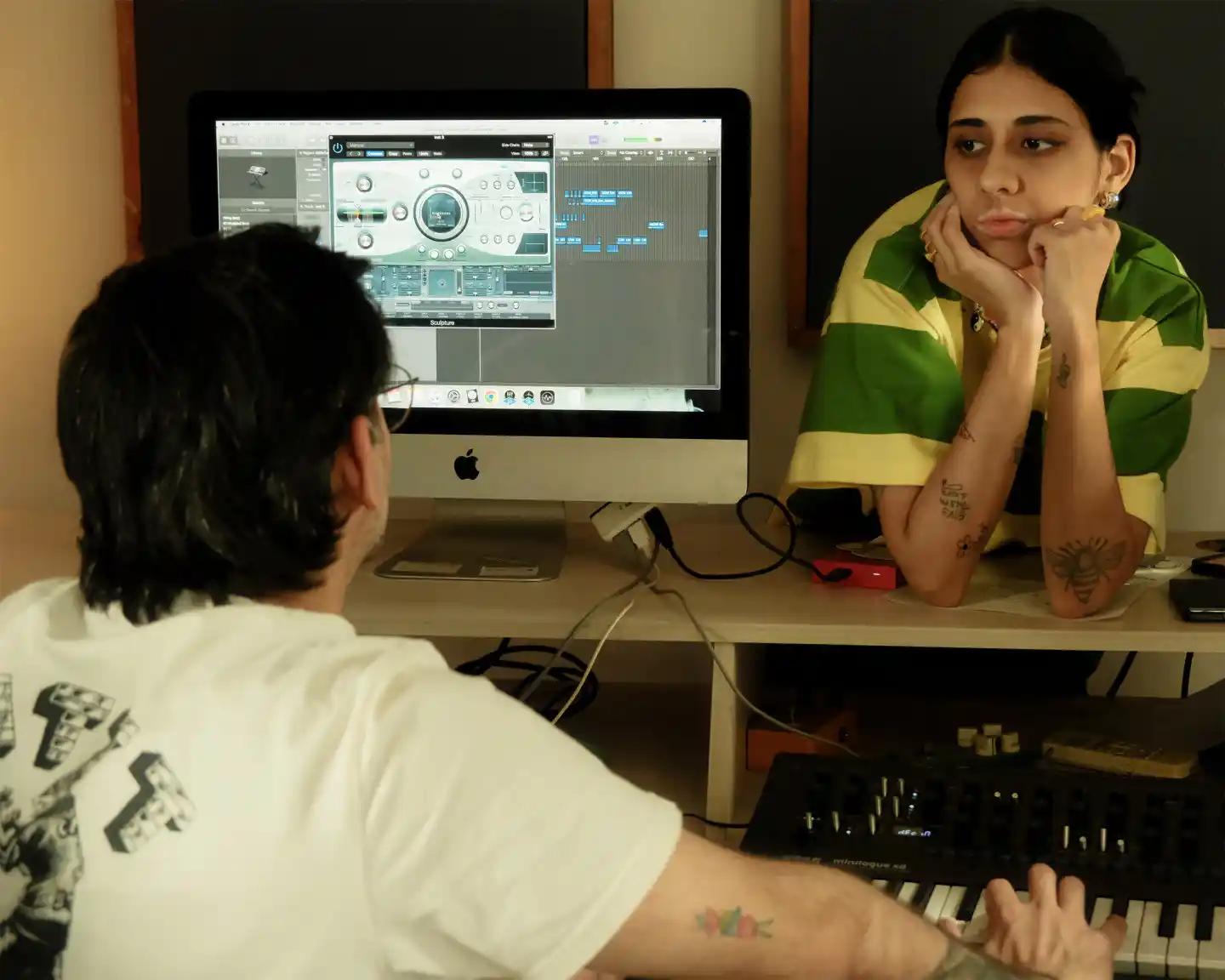
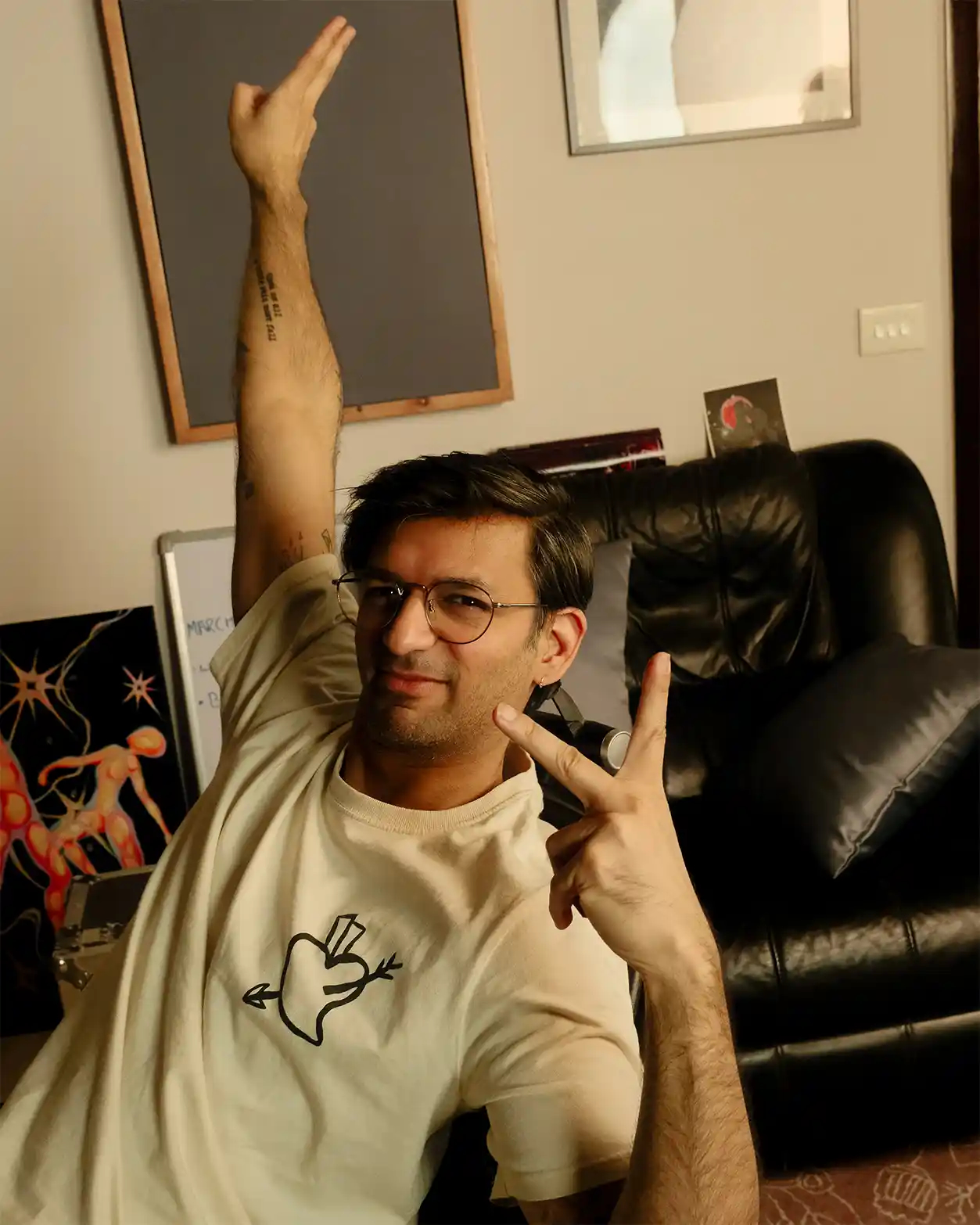
Rohan Kale (RK): I have worked in music since I was 15 years old, playing guitar for a band from 2006 to 2009, after which I went to Tech Music School, London, to study music. I now work as a full-time DJ and music producer, releasing electronic music with various labels across the world, from Japan to the UK. I have hosted my monthly DJ residency called Mixed Feelings in Delhi and Goa. I’ve started teaching music very recently, so I guess you can call me an educator as well. I plan to turn that into a bigger chunk of my music career in the next couple of years.
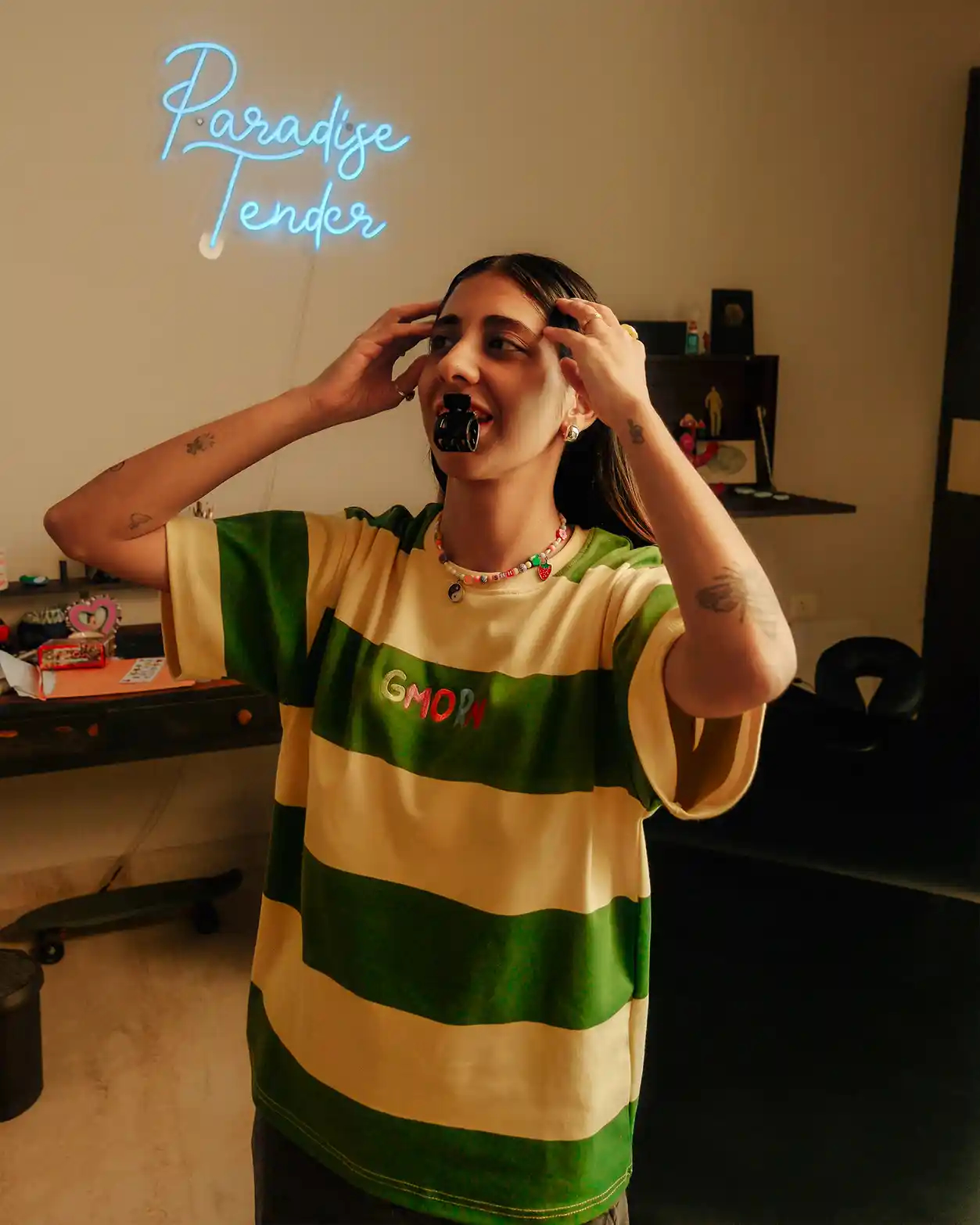
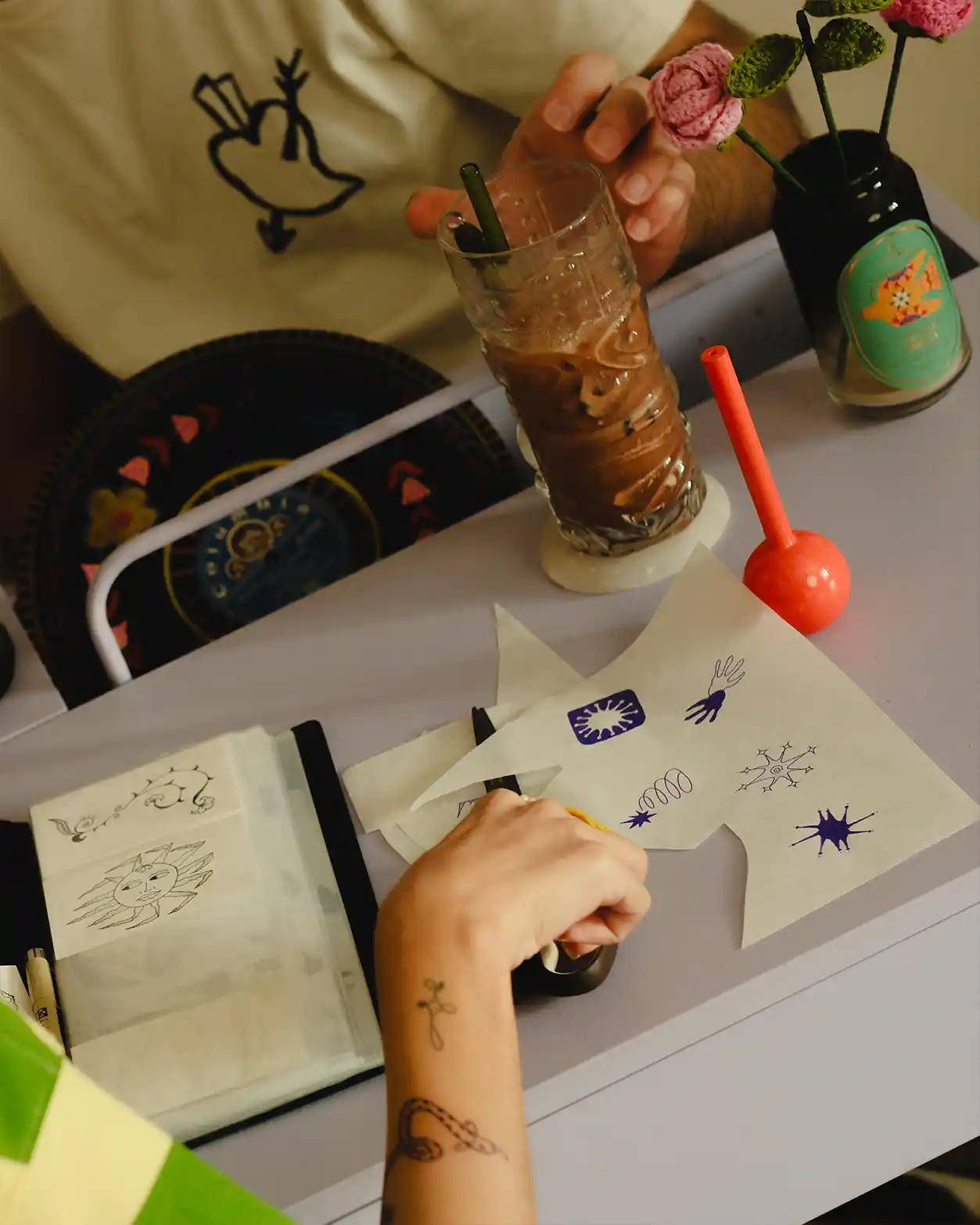
Shreya Josh (SJ): I’m primarily a tattoo artist and I create hand-poke tattoos, facilitate tattoo workshops and sell DIY tattoo kits in my effort to make hand-poke tattoos accessible in the country. I also paint and work with many kinds of arts and crafts. Additionally, I organise events for artists around the country to promote their work. Most recently, I opened a body art studio, where we offer hand-poke and machine tattoos, and tooth gems, which I added to my repertoire two years ago.
On Finding Love
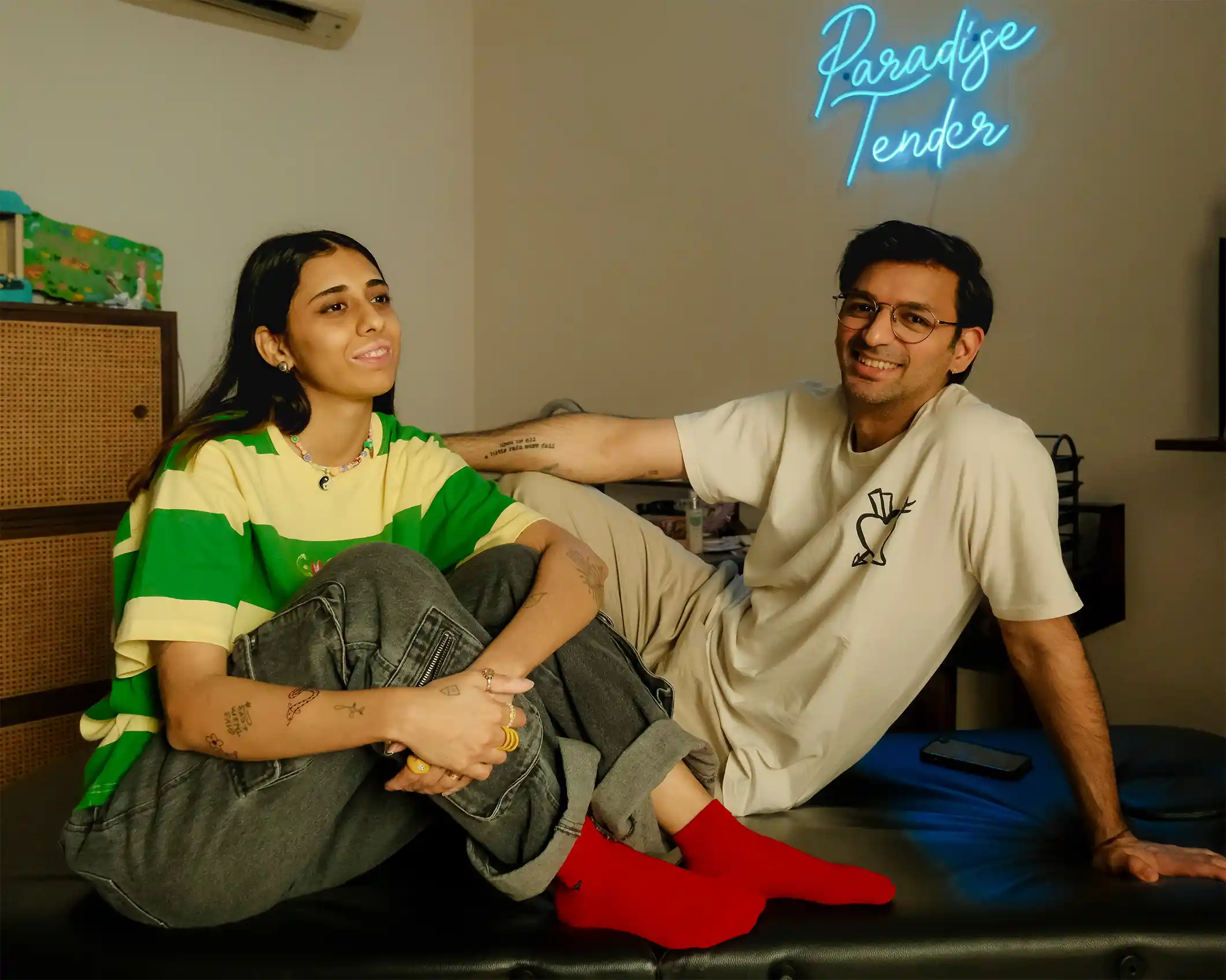
SJ: We first met at a party in New Delhi, around 2017, but for a while, we would just brush past each other at a club or gig, some glances here and there, maybe a “Hi!” Then, once we were both single, I actually started noticing him. A mutual acquaintance reconnected us.
RK: I happened to find her cute and the acquaintance told me that Shreya finds me attractive, so that gave me the confidence to take this forward.
SJ: He was interested in getting a tattoo, because it was the first time he was exposed to the hand-poke and flash tattoo cultures.
RK: To be honest, it was also an excuse to see her. But yes, I had only ever gotten tattoos done at conventional tattoo studios and I found her style to be unique, so I was genuinely curious about her work aside from the fact that I also wanted to spend time with her.
SJ: I was ignoring his requests to book a tattoo appointment, because I tend to flirt with someone by playing hard to get. Then he finally sent me a message saying, “What does a guy have to do to get a tattoo?” And I had to commit!
On Being In A Relationship With A Creative Person
SJ: All of my close friendships and past relationships have been with people who do creative work. Just being with Rohan, who is also creatively charged and supports my vision, has been transformational. I care about the advice he gives me. He has helped me grow and my work is better for it. I’m not very good at being confrontational at work so he helps me have those tough conversations in a way that still feels authentic to me. At the crux of it we share the same values and intentions as to why we’re in the creative field, and we are lucky that we have found each other.
RK: I feel the same way. It has also been particularly great for me because I get a different perspective on things and also there’s a lot more art in my life because of her. I believe that artists exist so that people who don’t have the time to get into art can access it through them. I love art — and I love tattoos — but I don’t have the time to really immerse myself in it. And I know how much time it actually takes to get into something that deeply.
SJ: People ask me why I don’t learn DJing from Rohan. I tell them I don’t need to because I can listen to good music through him whenever I want to. If I want a certain playlist, he can just make one for me.
RK: I also love that I get to meet a lot of creative people thanks to Shreya. I’m quite a homebody and would probably just be in the studio without any human interaction for years. But because of her work, there are a lot of interesting people coming into the studio which is good for me because you do need some kind of human interaction and creative stimulation from time to time. I would say it’s been, not life-changing, but “life-adding” to be with a partner who is very naturally creative.
On Their Marriage
RK: It’s a more serious commitment, at least for us. If I were to give up music tomorrow, I don’t think she’s going to change her mind about being with me. And the same applies vice versa.
SJ: Not like that would happen though, realistically.
RK: Yeah, it probably won’t happen. But what I mean is that, our values are aligned beyond what we do for a living. I don’t think I’m married to her only because she is a creative person and an artist. We may have connected because of that, but you have to go deeper, and that’s the difference when you’re married. She is also the funniest person I know. There’s a deeper connection.
SJ: I do think that since we got married, we have been noticing certain changes in our creative lives especially because the fields that we’re in are very party-centric. There is usually a lot of alcohol and drugs, and a casual sex culture that exists in our places of work. But I think that marriage, as opposed to dating, really solidified our work mindset. Because we’re so committed to each other, part of my brain is free to focus on other things. I’m not even thinking about questions like where am I going to find love? Who am I going to cuddle with if I’m sad? Or if I want to have sex, I have to make the effort to go out and put myself out there. Marriage makes you feel more secure, and disciplines you. Now, I can just focus on work. I love being married.
RK: When you get married, you become part of your partner’s family and your partner becomes a part of yours. You can be the best person you want to be, because there are people watching you who have your back. Your growth is important to people.
On Their Decision To Share A Studio Space Together
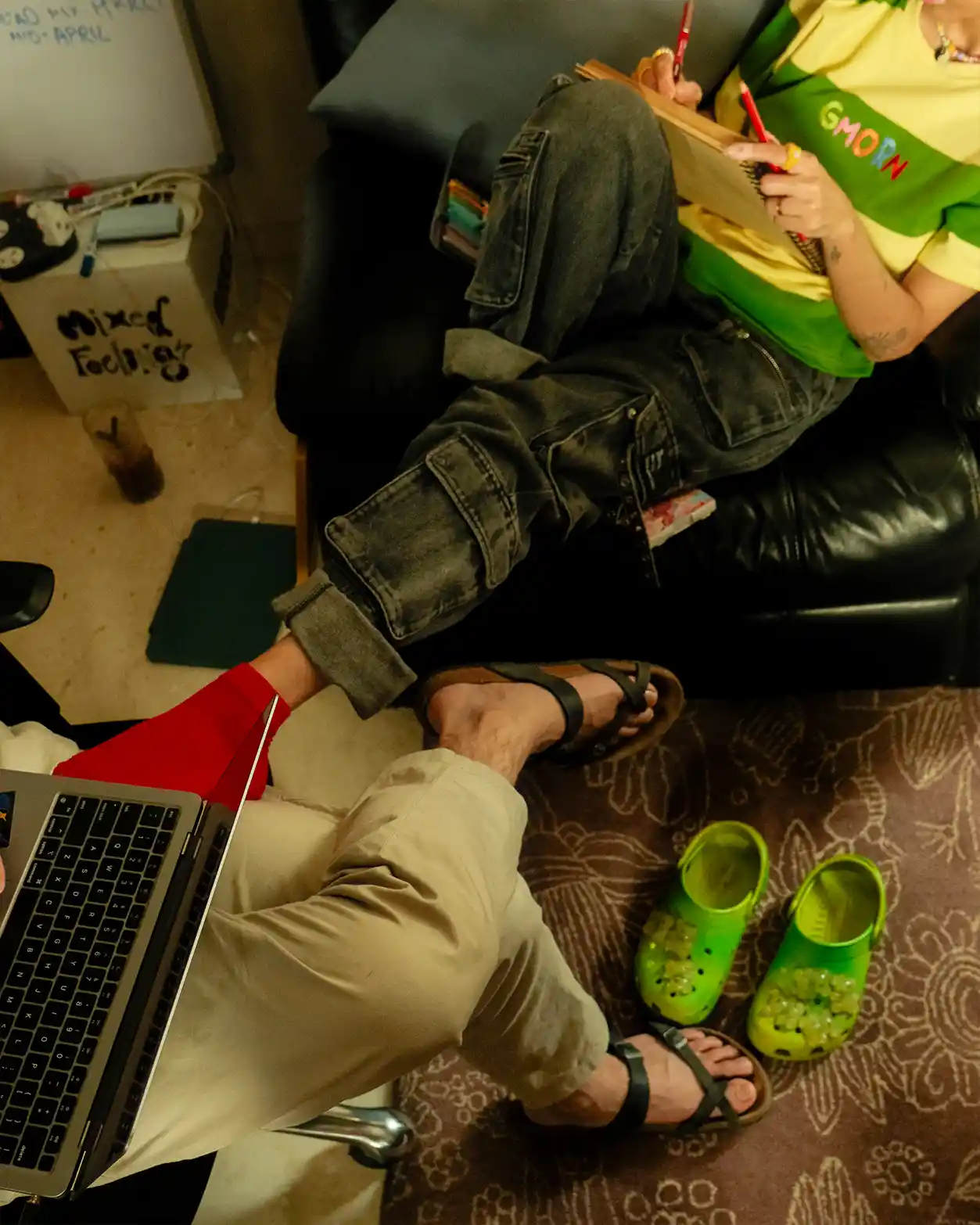
RK: To be honest, we had been slowly heading towards this since we started dating. In the beginning, when I was staying with my parents in New Delhi, I had my studio in my bedroom, and she was living there half the time. It took me some time to get used to having her around because I am very private when I’m creating music. The other half of the time, we were living at her parent’s place in Gurugram.
SJ: Even during the COVID-19 lockdown, we were living at his house for the most part, and then we went back to my parents’ for a bit. At that stage we moved our studio equipment with us. It just made sense. We got married in November and a month after that, we drove to Goa. We took all our work things with us even though it was supposed to be our downtime.
RK: Initially, we were sharing a place with some friends, and we had one bedroom that doubled up as our studio. So over time we got used to working next to each other. It was a learning curve, but it was also our choice. A month in, we decided to stay in Goa for a longer time and rented a three-bedroom house where we both had our individual studios.
SJ: I’ll admit, it was a relief! That was the first time ever, actually, when we both had our own rooms to work out of. It was getting slightly annoying for me to listen to the same three-second loop of music playing again and again, or for him to have me there when he might want to zone out in silence. But again, life is very situational and soon we had to move back to Rohan’s parents’ place in Delhi where we were back to sharing a room in their basement. It was a busy time in our lives and it took a lot of coordination to use the space efficiently and allow each of us to continue to grow our careers. If I had a client getting a tattoo, he wouldn’t make music for those hours so that they were comfortable, or if he was working on a serious project then I would make sure the client didn’t stay back after their appointment to just chit-chat. So again, it was challenging but we made it work.
And finally, after we moved out of his parents’ house, we started to look for a space that accommodates all our needs. This was also the first time where we decided that we will not live in the studio. Even if it entailed a five-minute commute, it would be a separate space.
On The Financials
SJ: We figured out how much each of us could afford to put in, and the sum of that was our budget. We made sure we were both comfortable with it, and that earning the amount wouldn’t drive us crazy.
RK: We’re flexible and that’s how we like it. I happily pitch in extra when needed because I want what’s best for her, and she does the same for me. We did end up increasing our budget though. What was important was freezing an upper limit for ourselves.
SJ: My parents helped us with the security deposit because it’s hard to come up with a big chunk of money up front.
On Finding And Setting Up The Space
RK: I was in two minds about whether I wanted to keep the basement studio in my parents’ house and commute, while Shreya would have her own studio in Gurugram. But I realised within a few days that the commute was too long for me to sustain it. Shreya had just started her search for a 2BHK then, but once it was decided that we would share a studio, we started looking for a place with three bedrooms.
SJ: I had certain non-negotiables. Because our previous studio was in a basement, I was very clear that the place had to be above ground and well-lit. I also wanted a big living room to host people which is why I didn’t look for commercial properties. They tend to have an office layout with a tiny common space and come with their own restrictions, like having to shut shop by 7 or 8 p.m. and we are both night owls.
RK: My studio does require some acoustic treatment. I needed the landlord to let me make those adjustments as the tenant. We were very honest with the brokers about how we were going to use the space even though a lot of people advised against it. Being married helped. If we were dating and trying to get a space together, that would have reduced our options, just because in India, landlords can be apprehensive about renting to an unmarried couple. Renting to a musician is also a big issue for a lot of people.
SJ: That is so silly, the issue with music. In many places we saw, you could hear a kid crying from the floor below, or hear their TV. It was quite noisy. And if you go into Rohan’s studio, you can’t hear anything because he always works with his headphones on. But in hindsight I think that it was a good filtration system, and helped us avoid a lot of future conflicts. And eventually we found a place that fit all the criteria.
RK: Our current landlord is very accepting. She actually told us that we are lucky to have these skill sets, and it is a blessing that both of us can pursue this work! She told us we should be proud instead of having to hide it. So, we knew that this was the right place.
On The Decor
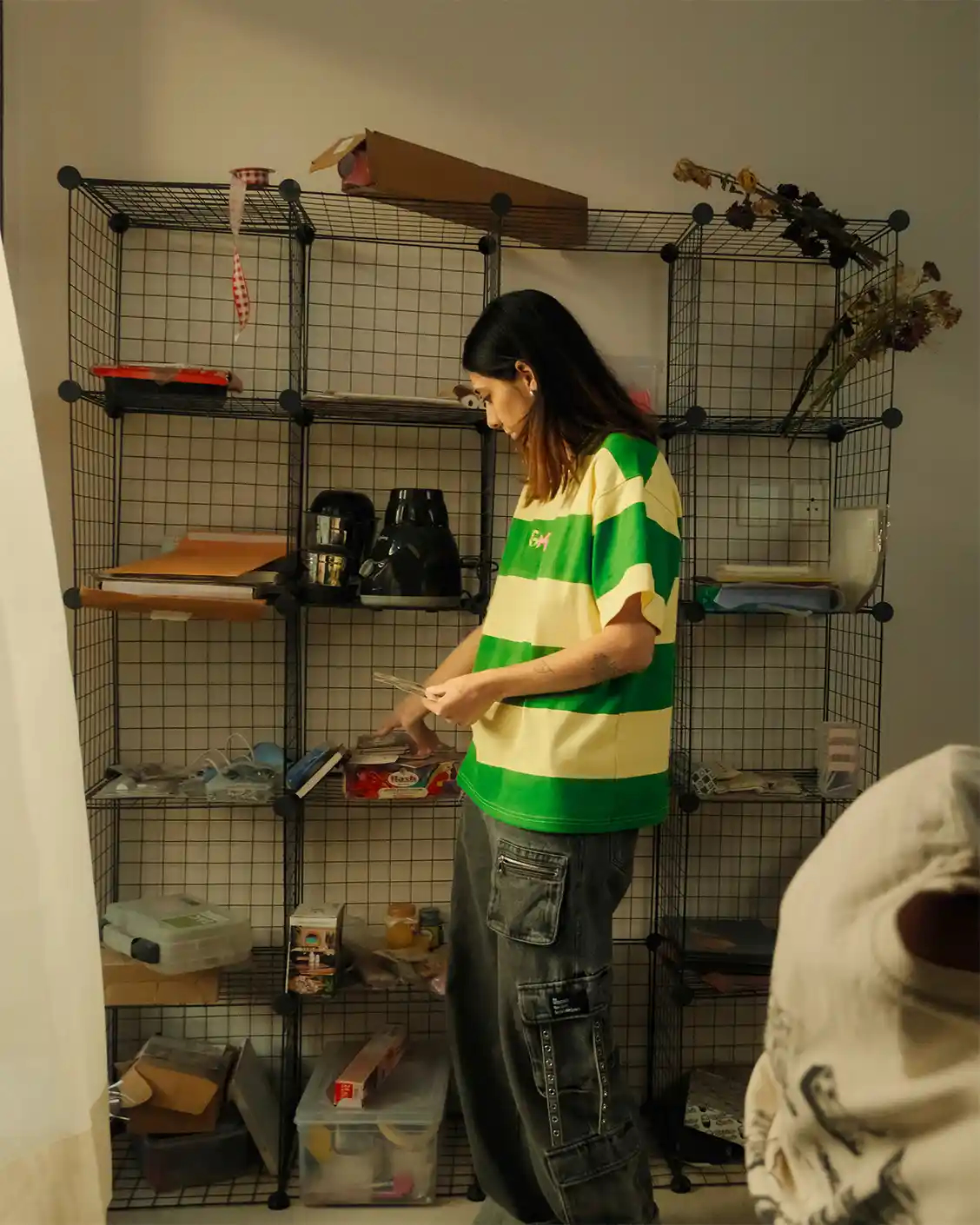
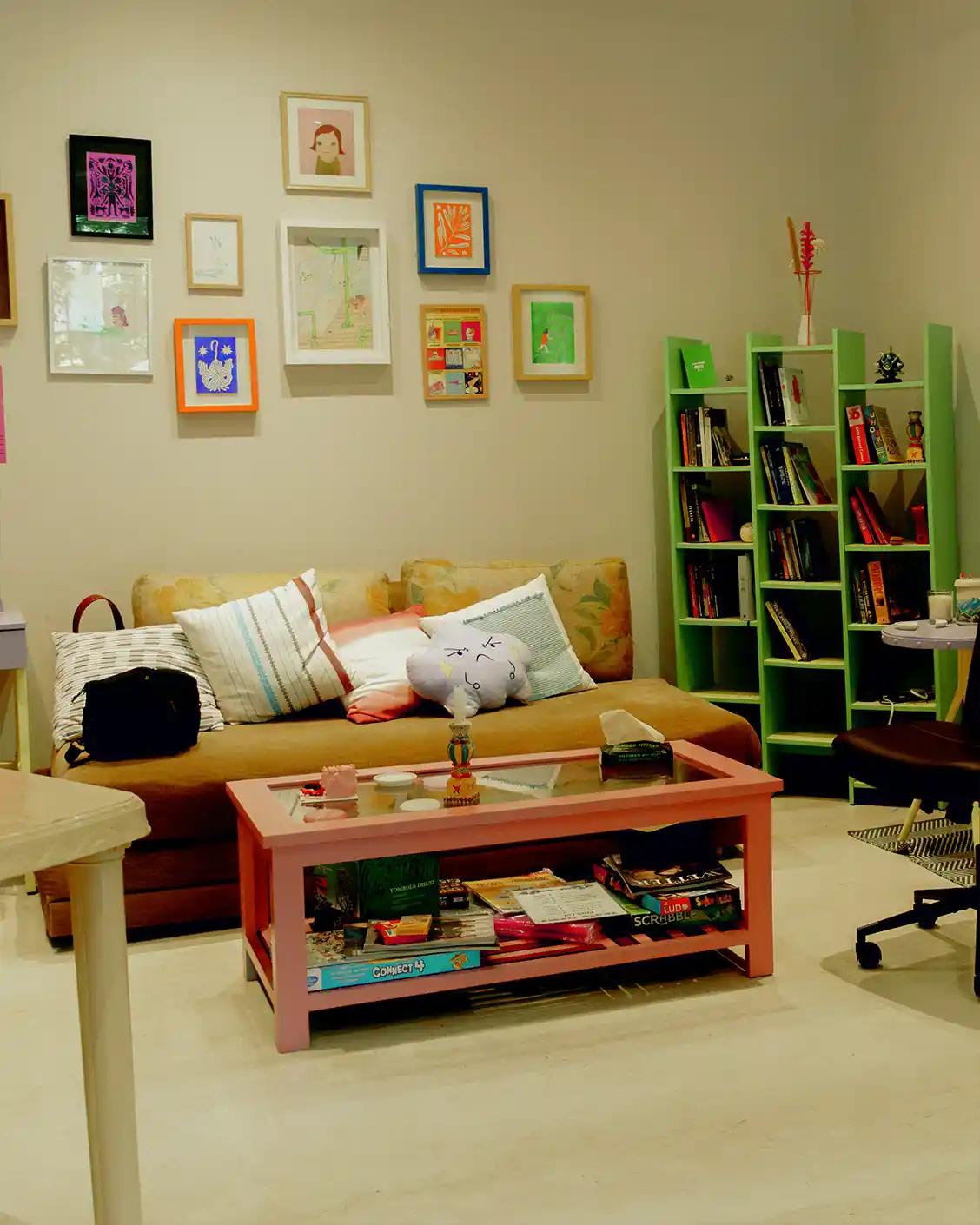
SJ: Since we were clear about distinguishing this space from where we live, we set it up with that mindset. The kitchen, for example, is a fun space stocked with snacks, coffee and baked goods. My dad gave us some sound advice — invest in movable stuff like furniture but don’t enhance the house itself with things like wallpaper or new light fixtures so that you can take everything you have invested in with you, if you need to move. So for now we have decorated it with furniture and souvenirs, and it has a very mix-and-match vibe. Another fun layer is all the textiles — fabrics, carpets and curtains.
RK: Shreya came up with the great idea of getting everything painted so that it looks more cohesive and intentional. You notice the silhouettes of the furniture but the finishes don’t clash. It was very fun to have the painter come in, select swatches, and watch the space transform. I also want to add — we have a really nice porch, and her dad helped us with the gardening. Neither of us has a green thumb so he did all of it, from sourcing the plants to hiring a gardener.
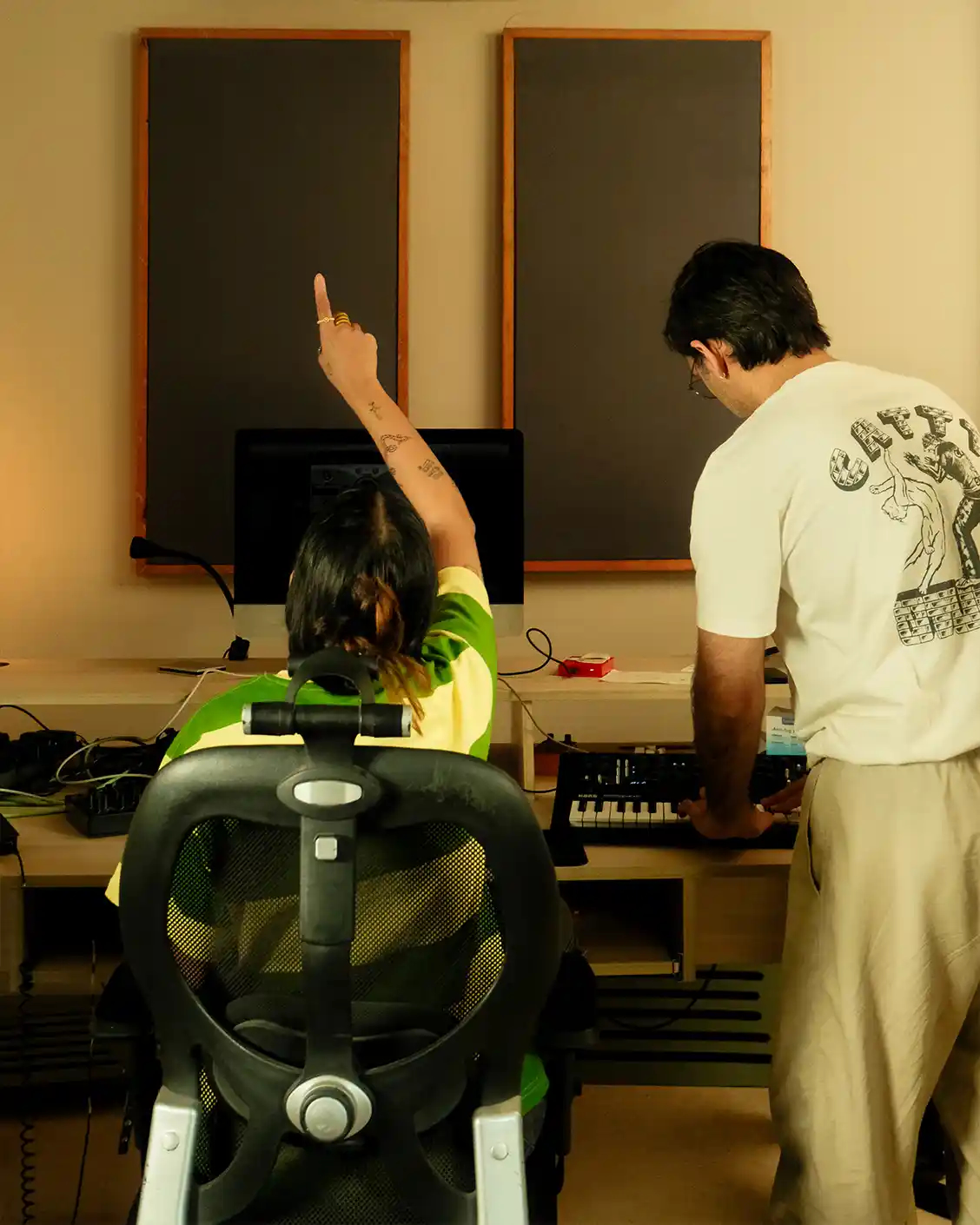
The acoustic treatments took me a day or so to install because every room has reverberations, and if you’re making music, you want to get the cleanest sound. You don’t want the room to muddle the sound, so to speak. Keeping that in mind, I have had basic sound absorption panels installed in strategic angles.
SJ: We took our time with the artwork. We have been collecting art together for a while, and we have often gifted it to each other on birthdays. There are many sentimental pieces here, including the first artwork that we purchased together. We like to get the framing done ourselves, and we’re quite particular about that. It really enhances the artwork for us so we try to get creative and experimental with the mounting for each piece. Sometimes it goes wrong, but that’s part of the process. Wherever I can, I like to customise things, like adding unique knobs and handles.
The studio has become a very collaborative space. We have a glass wall by the entrance and multiple artists have made a mural there and this has become a unique feature of the studio. It started when I hosted the first event for Valentine’s Day and used it to create a storefront display that had “Only sweeties and lovers allowed” written directly on the glass. As I was erasing it, my friend Fatima, who was here for a tattoo residency, drew her unique illustration on the glass panel. Because the curtain hanging in front of it is translucent, you can see the artwork as a play of light and shadow during the night. I find it really inspiring to be around people who constantly want to create. It has helped me get back into making art for myself. It is exciting and freeing to be around this energy of creating without thinking of producing a finished piece or something to sell.
On Naming The Studio
SJ: Since we have different uses for the space, I initially thought we’ll each have our own name for it. But then it made more sense to have a shared one because putting two Google Maps locations for the same place might seem silly. Eventually, Rohan and I shortlisted two names: B. A. M., which stood for Body, Art and Music, and Rover’s Playground, which was the name of our late dog, who was still with us at that point. He used to come house-hunting with us and it seemed fitting because anyone who would enter would be greeted by Rover first.
But when he passed away within the first month of moving in, we did away with that idea. It is still called Rover’s Playground on Google Maps, but I eventually decided to name the studio Lovable Rebels, which is the umbrella brand under which I organise events, fundraisers and workshops. It is fitting for the kind of people who come here because they’re rebellious but in a way that is non-aggressive, community-driven and tender; you can’t dislike them just because they have tattoos. It is also general enough for us to host a variety of events, not just tattoo-related ones.
On Hosting Events In The Space
SJ: The living room is the heart of our events. If we open out the porch, it can hold up to 40 people. But we tend to host more intimate events. So far, all of them have had a focus on body art. I’ve hosted multiple flash tattoo days, when visitors come and choose a tattoo from a set of original designs created especially for that day. I often invite other tattoo artists so guests can choose from multiple styles. I also tend to curate elements of fashion, music and food into the experience. So I have started a series of events called Tats, Thrifts and Tunes. Having access to Rohan’s CDJs and professional-quality speakers is a big asset. I tap into our network of DJs and invite them over to come play to keep guests entertained. Items from their own wardrobes are selected by the tattoo artists and the DJs playing on that day. I’m interested in including sustainability in a more personalised manner, instead of a hard sell. It’s nicer to buy an item from the closet of someone you have personally met or connected with, instead of a more commercial third-party thrift shop.
People have told me that they make new friends at my events. A lot of my clients have revealed to me that they don’t have many friends in this city, or don’t know how to make friends. And these are the people who show up for my events. They find it less stressful to make friends when, for example, they are just colouring next to each other, and chatting. Often, at parties you meet someone but your interaction may be superficial and if you’re drunk you may forget about them the next day, or them you. But here you’re socialising in a sober environment. I’m also finding that a lot of them work corporate nine-to-five jobs but they also have a creative side to them, which is why they like coming to the studio.
RK: My favourite event was the short film screening you hosted.
SJ: That was the first time Delhi-based animator Mansi Maheshwari screened her film Bunnyhood in India! It had just been featured at the 2024 Cannes Film Festival and I invited her to host a preview. Her family, friends and a bunch of creative people came for it. In addition to showing her own film, which is nine-minutes-long, she curated a selection of films for the event which turned into an introduction to indie animation.
The space has started to put out a vibe of being very open. We are constantly getting messages from people asking to get involved. People have also been noticing the interiors and all the colours in the videos we post. Someone reached out asking if they could shoot a podcast from here. It didn’t work out because they wanted it every day for two months and required complete silence which was not feasible. But it is nice to know that people are seeing potential in this space beyond what we had envisioned.
On Boundaries
SJ: I think both of us are quite fluid; we don’t like to set rigid rules because things are constantly changing. I can’t think of any rule because he doesn’t disturb me or make any sound. Even if he’s making a mix, it’s never that loud.
RK: It’s the same for me. I do have times when I need the space to be silent, but if her clients are there, they have to be there. And I use that noisy period as a chance to take a break and make some coffee.
SJ: I do set some basic hygiene rules for visiting tattoo artists and their guests in terms of cleaning and sanitising their work stations, and not allowing guests to be under the influence of alcohol while getting a tattoo.
On Routine
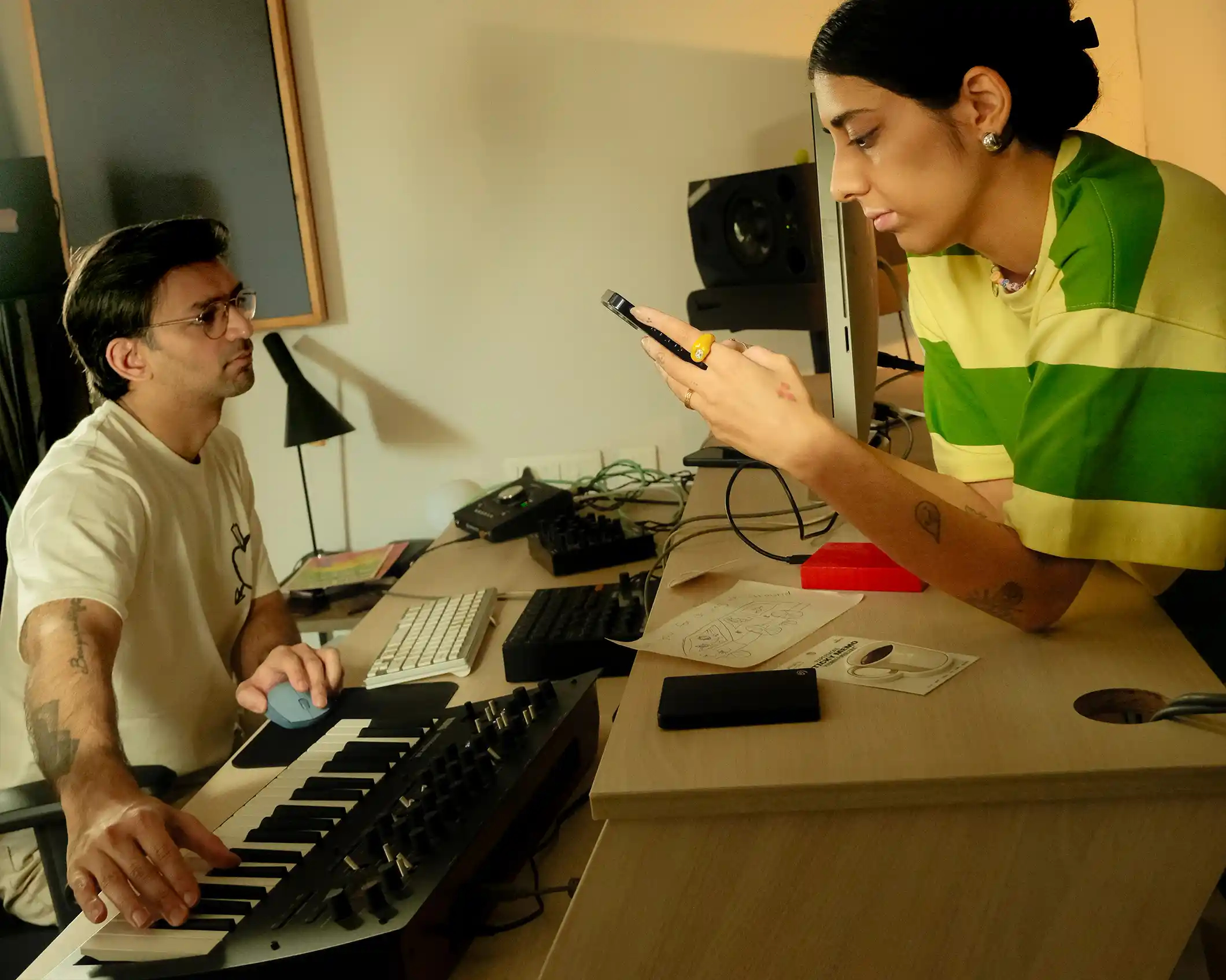
SJ: On most days, we wake up around noon, eat lunch around 2:30 p.m. at home and go to the studio by 3 p.m.
RK: I come a bit earlier on the days that I’m teaching a class. I switch my iMac on, and I make coffee. I’m pretty much in my room till 6 or 7 p.m., which is about when Shreya gets hungry. She’ll come into the room; she doesn’t say anything usually, and we’ll order a snack and a fun drink like bubble tea or an experimental coffee.
SJ: And a lot of times, if I have my social media manager or tattoo residents over, then we all place an order together. We’re people who enjoy our snacks!
RK: I often come back to the studio at night because I just want to make more music. Also, once we are back home, we both stay up late. We just end up watching TV, which is not a bad thing, but we don’t want to make it a habit. We would rather create.
SJ: Sometimes, I stay back at home and on those nights I have to call him and remind him to come back home, because otherwise he would just stay and work till 6 a.m.
On The Neighbourhood
SJ: We love being here in Gurugram. I was worried that most of my followers and clients, who are Delhi-based, would be reluctant to travel outside Delhi to Gurugram, Noida or Faridabad. It’s just part of the culture here to be cranky about the travel times. What is great about the studio is that we are so close to Galleria Market. People come here to get a tattoo, then they’ll go to Long Finish By Ramen Donn for ramen, or to OMO: Soul Food Community which has very good coffee. So they can make a trip out of it. But even for us, it’s been very convenient to have the print shop and stationery store within walking distance. And many times we have taken a break and gone for a date together, just us.
On Memorable Moments
RK: I remember the first time she tried Colonel’s Kababz in Gurugram.
SJ: Oh my god, that was so good and it wasn’t spicy. The meat was so soft and tasty. Rohan knows the owner, who actually used to follow his music and has since become a friend. We have also enjoyed some delicious baked goods thanks to one of the resident artists Freya and my apprentice Simran, who recently quit her job, moved back to New Delhi and is trying to make a career out of her art now. Just the other day, they were testing out some bakes for an event we’re hosting — a lemon blueberry cake, which was crunchy on top and gooey in the middle, and a chocolate chip walnut cookie. And we happened to have a whole team of people in the studio that day because we were shooting the new Lovable Rebels merchandise as well as some of my tattoo clients. All of us were hanging out in the kitchen, eating dessert, and laughing. I remember feeling happy about the fact that we have managed to build this space and a community without forcing any of it. And not just the team, but even my client stayed back and didn’t feel intimidated. And food has definitely played a major role in this.
On Future Plans And Dreams
RK: I do want to host more events and DJing workshops. There are a lot of international DJs visiting India and I’d like to invite them to teach local talent in my studio. Creative industries can be so unorganised and those with knowledge or resources tend to gatekeep it because, sadly, they think it gives them the upper hand. So I want to use this space to get rid of some of these power imbalances in the music industry.
I hate authority. What makes you better at a skill than others is the time you’ve spent on it. I also want to invite people to listen and appreciate sound, or watch a movie and really have a conversation about it.
On Life Outside The Studio
SJ: We love to travel, but this quote we read somewhere resonates with both of us: “Instead of wondering when your next vacation is, maybe you should set up a life you don’t need to escape from”. We’re also trying to really build something here, and there’s a lot of momentum so we’re choosing to continually reinvest in the studio. And we don’t live a life that needs a weekend off. We go out, see a movie or grab a meal on any day of the week. We have tried a lot of new restaurants together.
RK: I travel a lot for DJ gigs so sometimes I end up spending an extra day [at the place], which kind of becomes my day off to relax, and sit in a cafe. I get to spend time with my fellow musician friends in those cities and we jam together.
SJ: For our anniversary in November, we went for a leopard safari in Jaipur. We also like to go up to the hills and rest.
Reflections
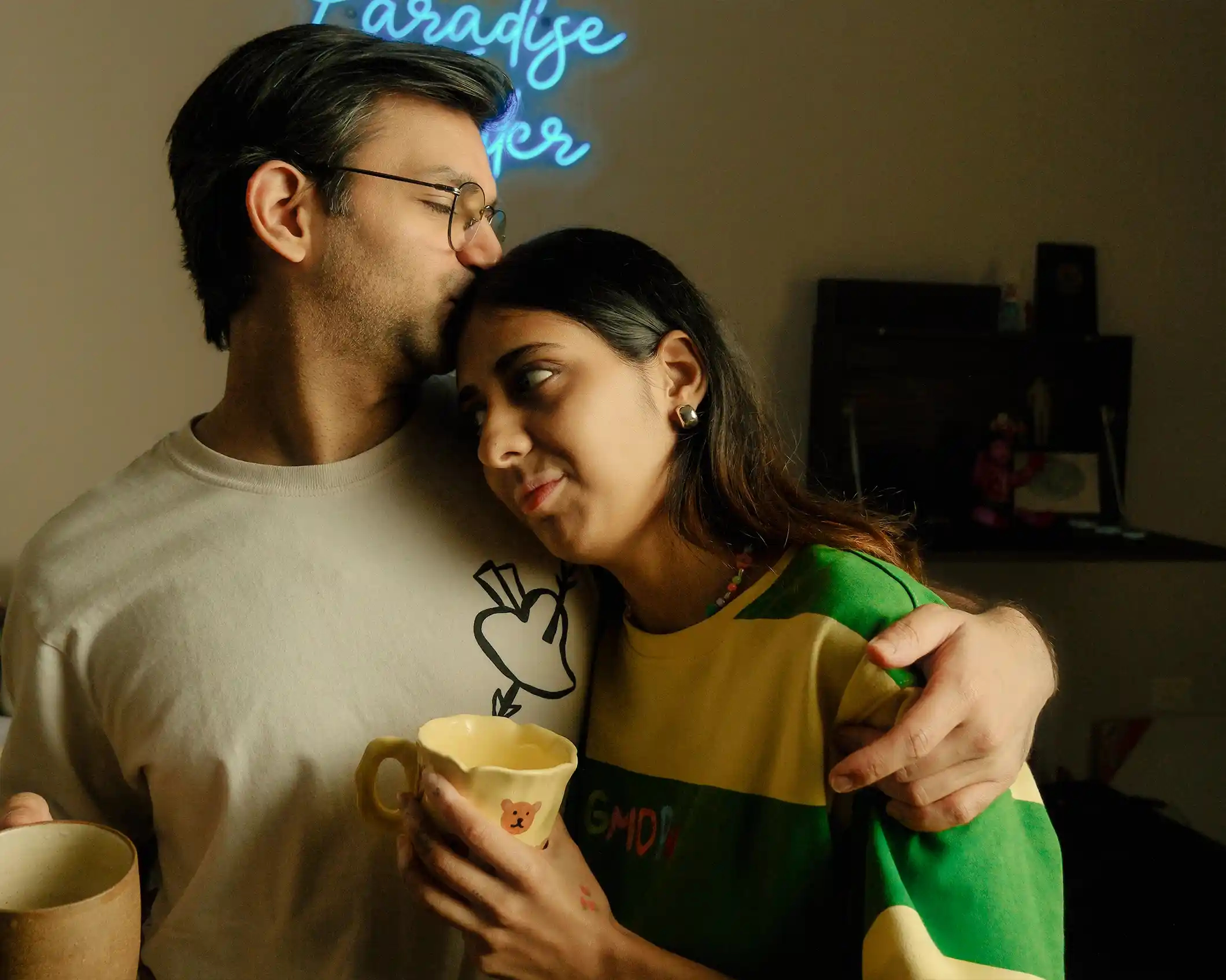
SJ: We have shared a space for so long now that I feel like we got into it being quite in harmony with each other. Marriage didn’t really change things much because we had been living together, and with each other’s families. So there’s nothing about him that’s been new or shocking to me.
RK: I think this is the best we’ve done so far for ourselves in terms of what we both want out of our space, and I know that the next one is going to be even better. It makes sense. If you have a strong partnership, it extends to all aspects of your life.
At the links below, read how these creative couples are sharing their spaces.
Mallika Tandon and Nishant Mittal
Ishaan Bharat and Abhishek Desai
Back to Introduction