The Hope-Makers: Nimmy Joshi
Four artists from Goa, having witnessed the demolition of forests and natural habitats and the burgeoning of construction sites around them, aim to spark conversations through their work, while putting their audiences in touch with the natural world and reminding them of its beauty and resilience. In the second of a four-part series, Verve talks to Nimmy Joshi on how she has converted this trauma into hope, which she in turn transmits to her viewers…
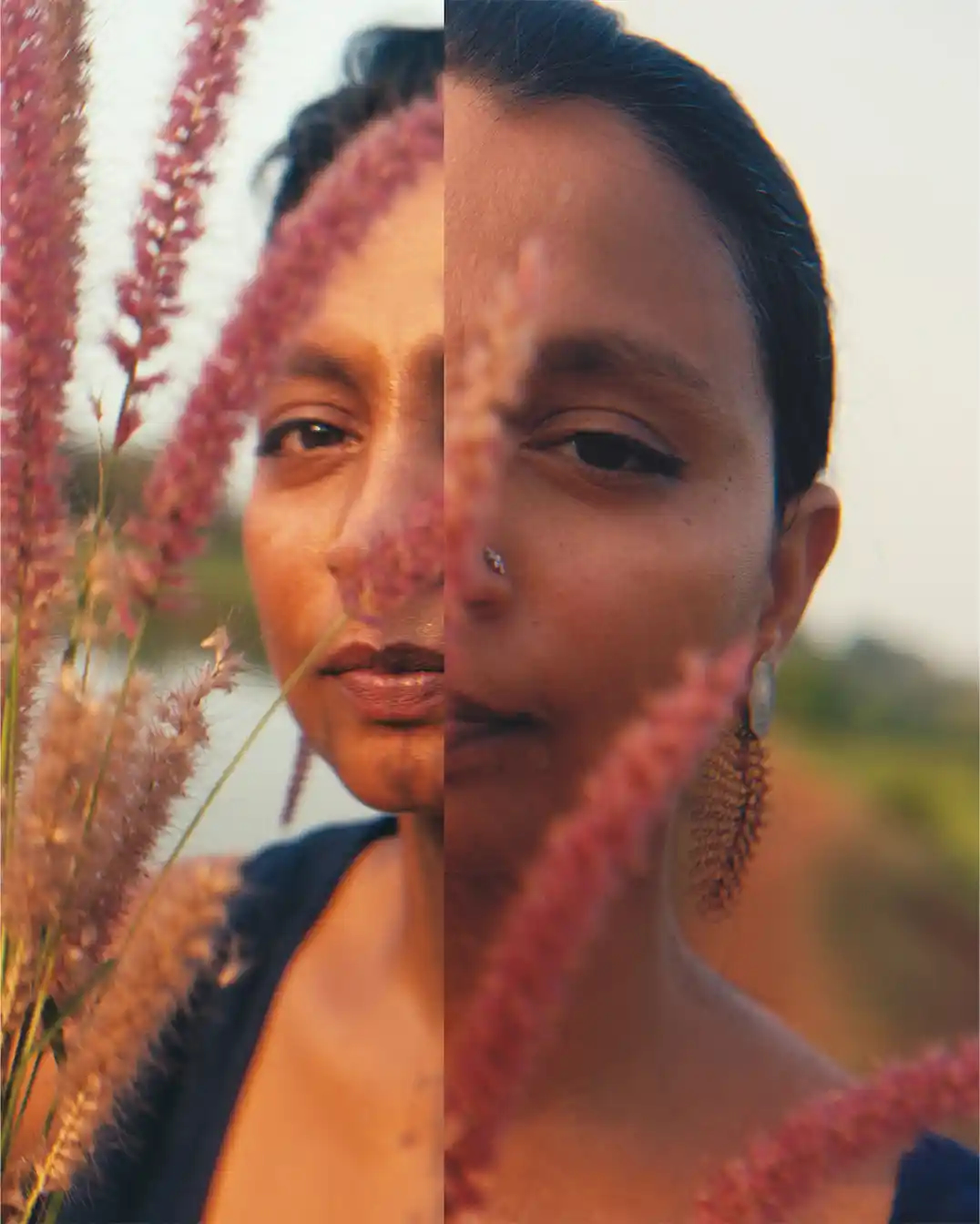
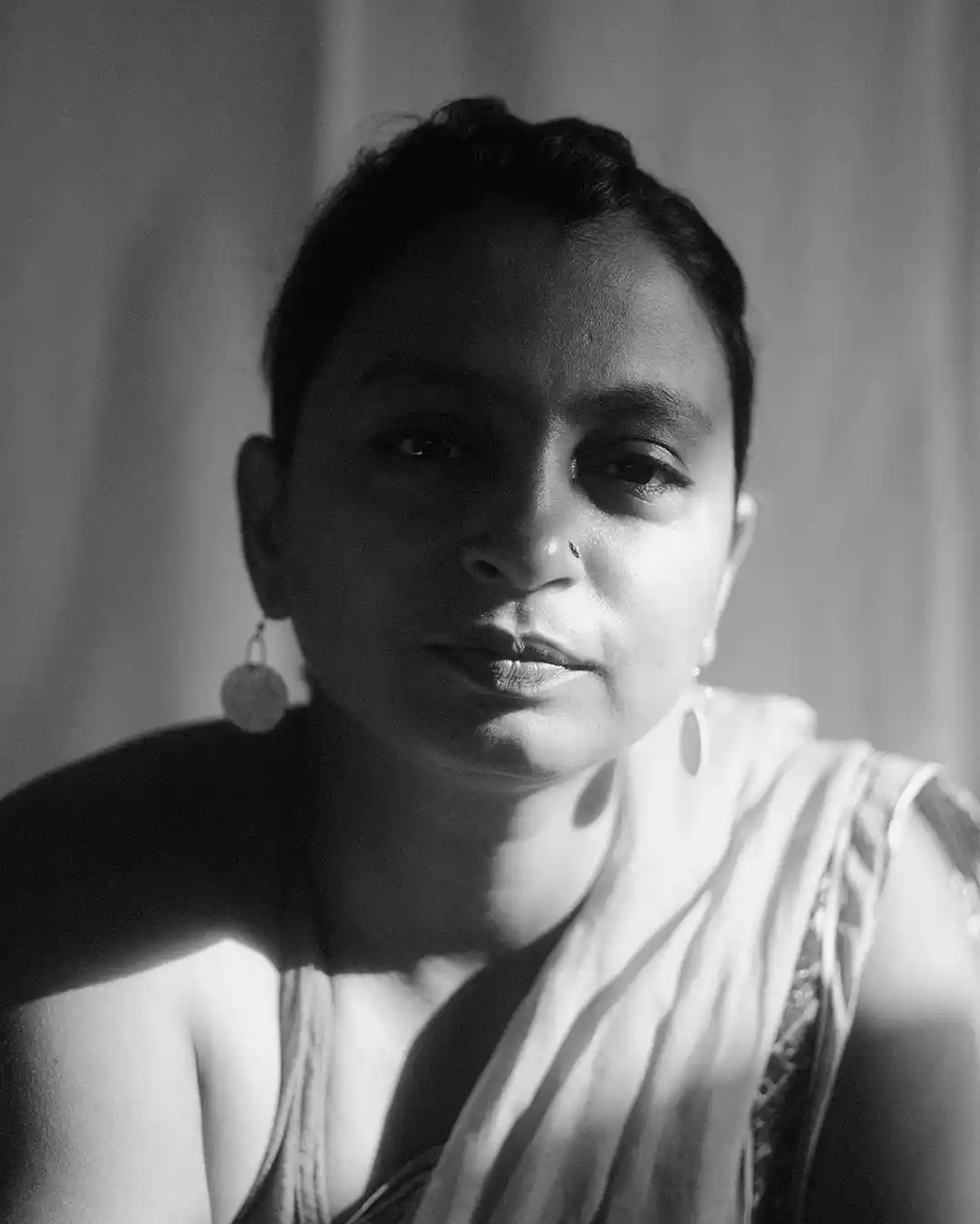
After years of training and working as a vernacular architect in Bengaluru, 37-year-old Nimmy Joshi discovered clay on site, fell in love and never turned back. She moved to Goa in 2015 when rents were cheap and the villages, still green and quiet. She found a mentor in the iconic Thomas Louise and became a ceramicist, insisting it was much easier at that time because Goa was so different. And soon most discussions with her seemed to turn to every Goan’s — adopted or not — favourite conversation: nostalgia for pre-COVID Goa, the Goa before fancy restaurants, palatial holiday homes, water tankers and constant construction sites. You can’t avoid it — the destruction of the natural world is devastatingly evident.
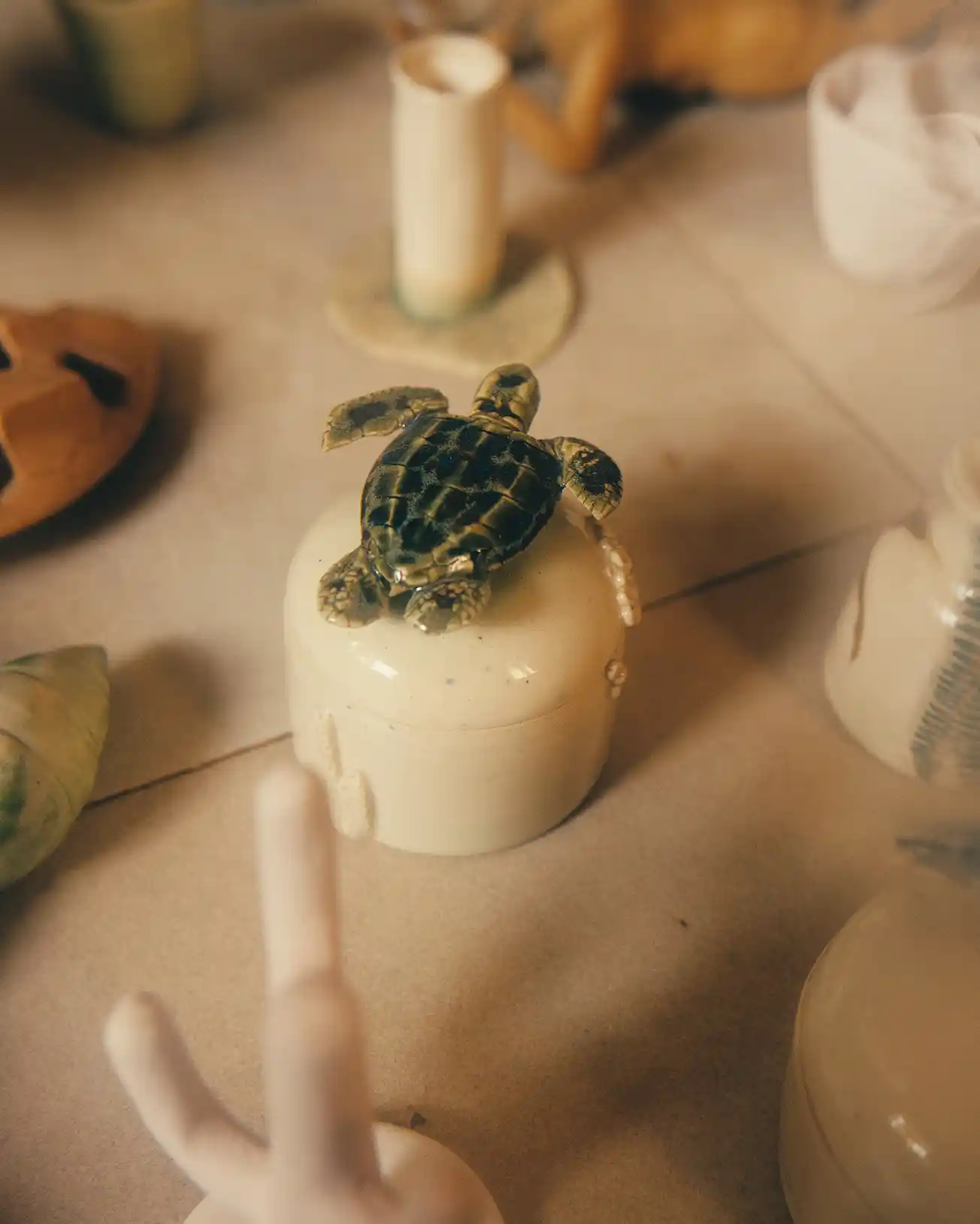
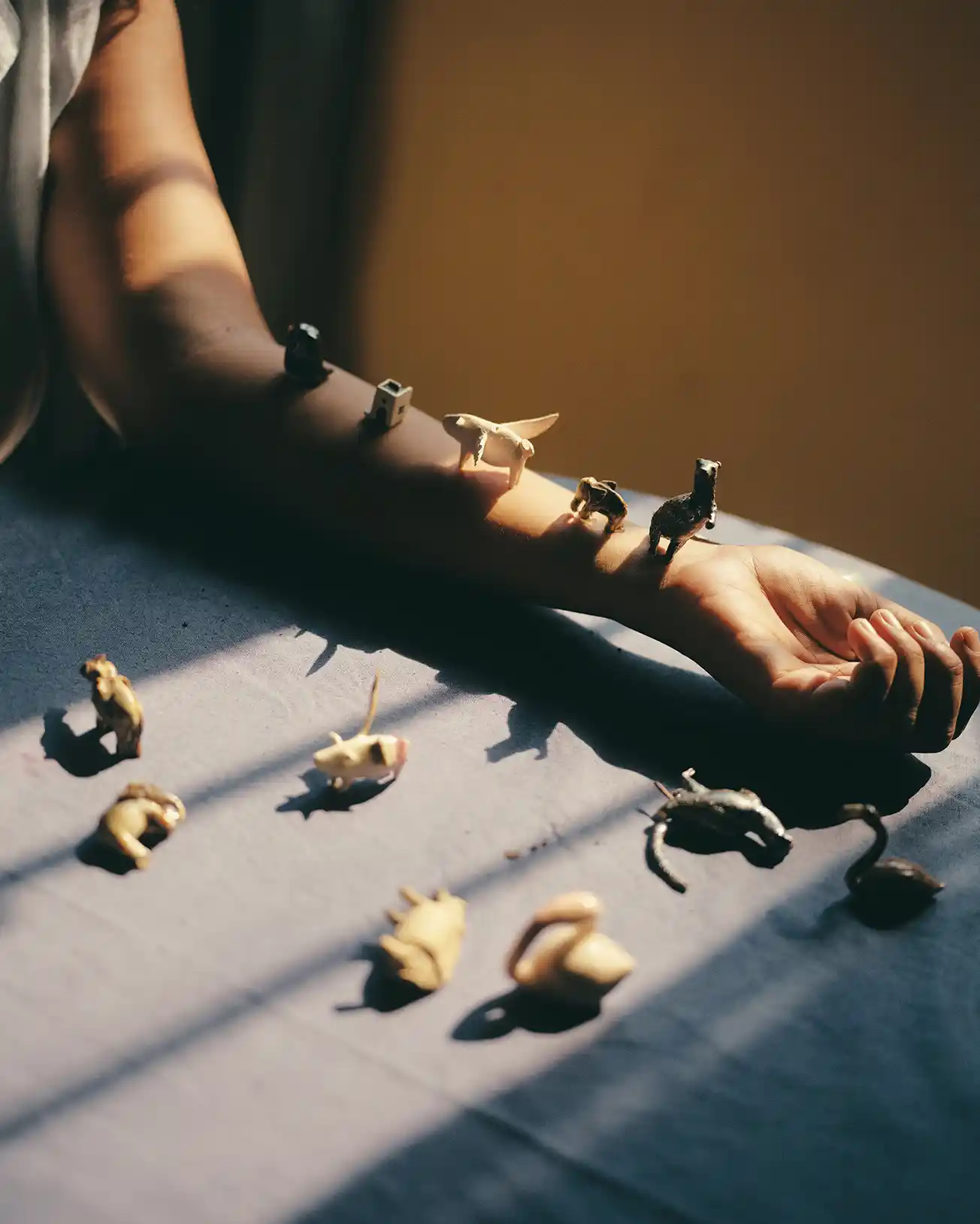
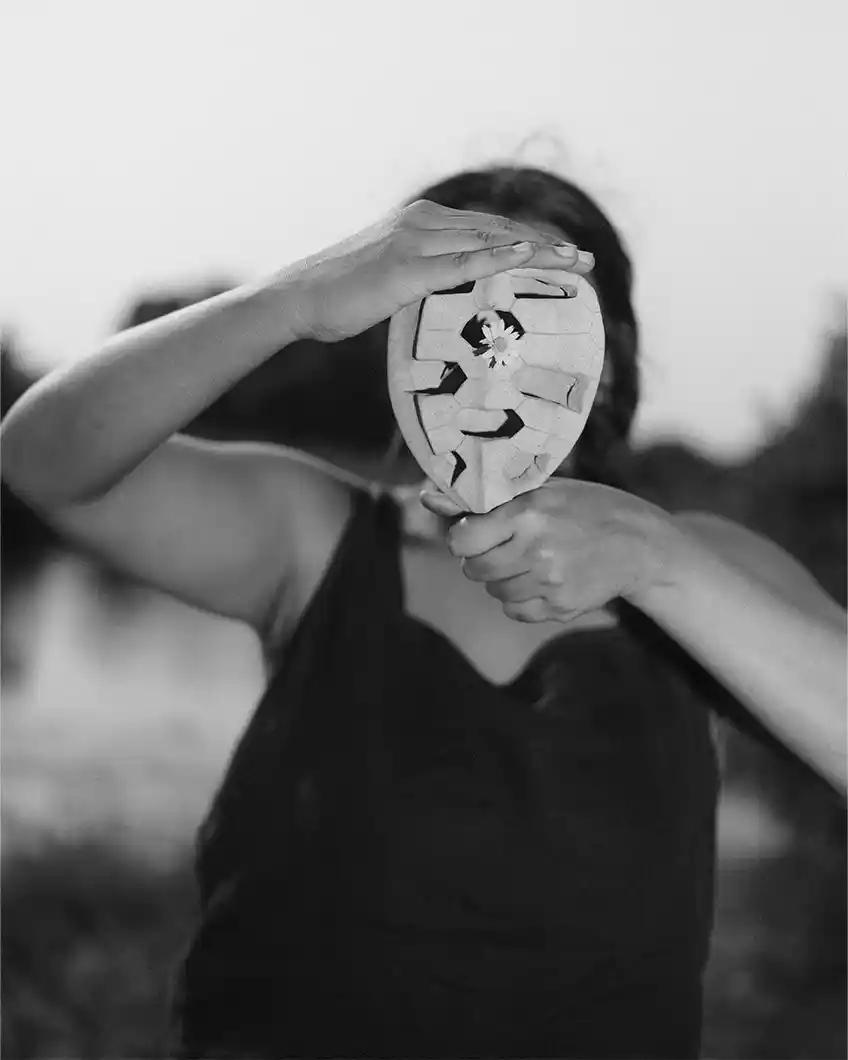
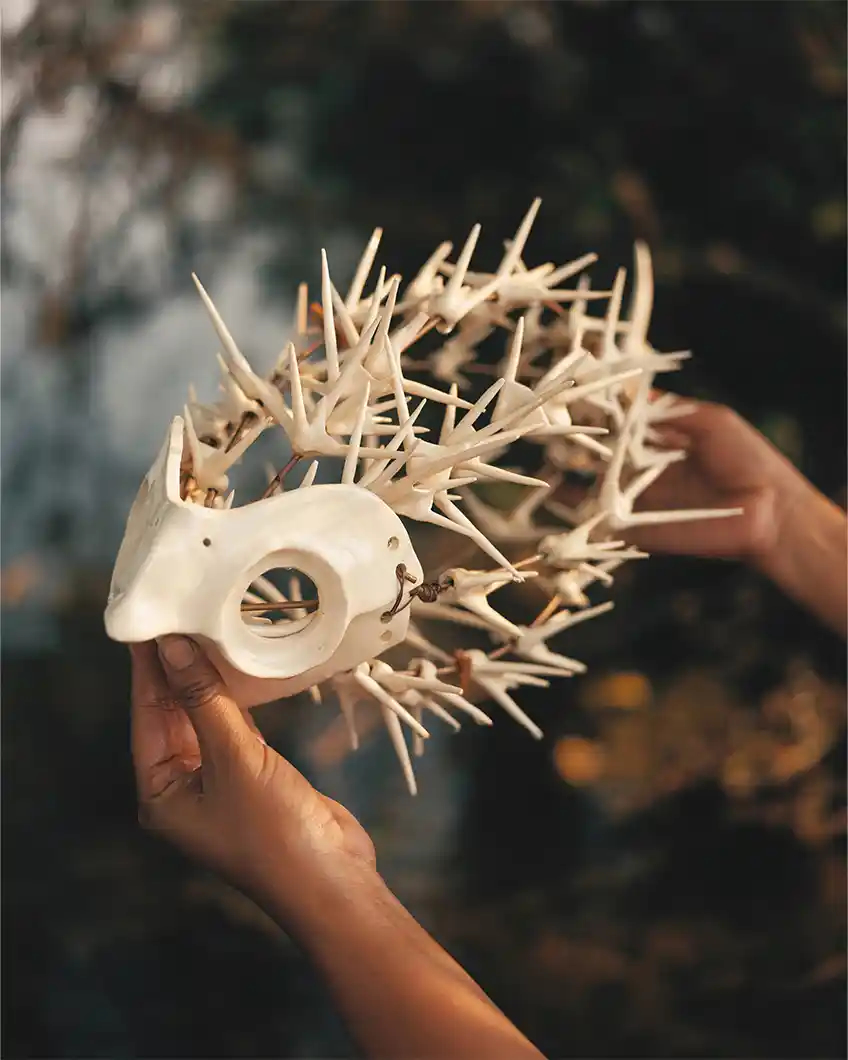
Working with ceramics, copper, bronze and e-waste, Joshi’s work explores the relationship that human beings have with nature and how that impacts cultural and ecological identity. With a penchant for creating intricately designed miniatures and replicating the beauty of nature, her work is informed by magic realism — think hornbills with human feet and turtle backs, or fluid, half-human and half-octopus, goddess-like creatures. Her work remains emotionally evocative, prompting the audience to examine their kinship with the planet more closely. Her more recent oeuvre includes a painstakingly beautiful ceramic rendition of the skeletal system of a puffer fish and throws up complex ideas on the nature of beauty, the beauty in death and the increasing death of nature itself.
As digitisation and technology continue to invade and dominate the most intimate recesses of people’s lives, she affirms, “My work reimagines our future through the lens of hope and coexistence.”
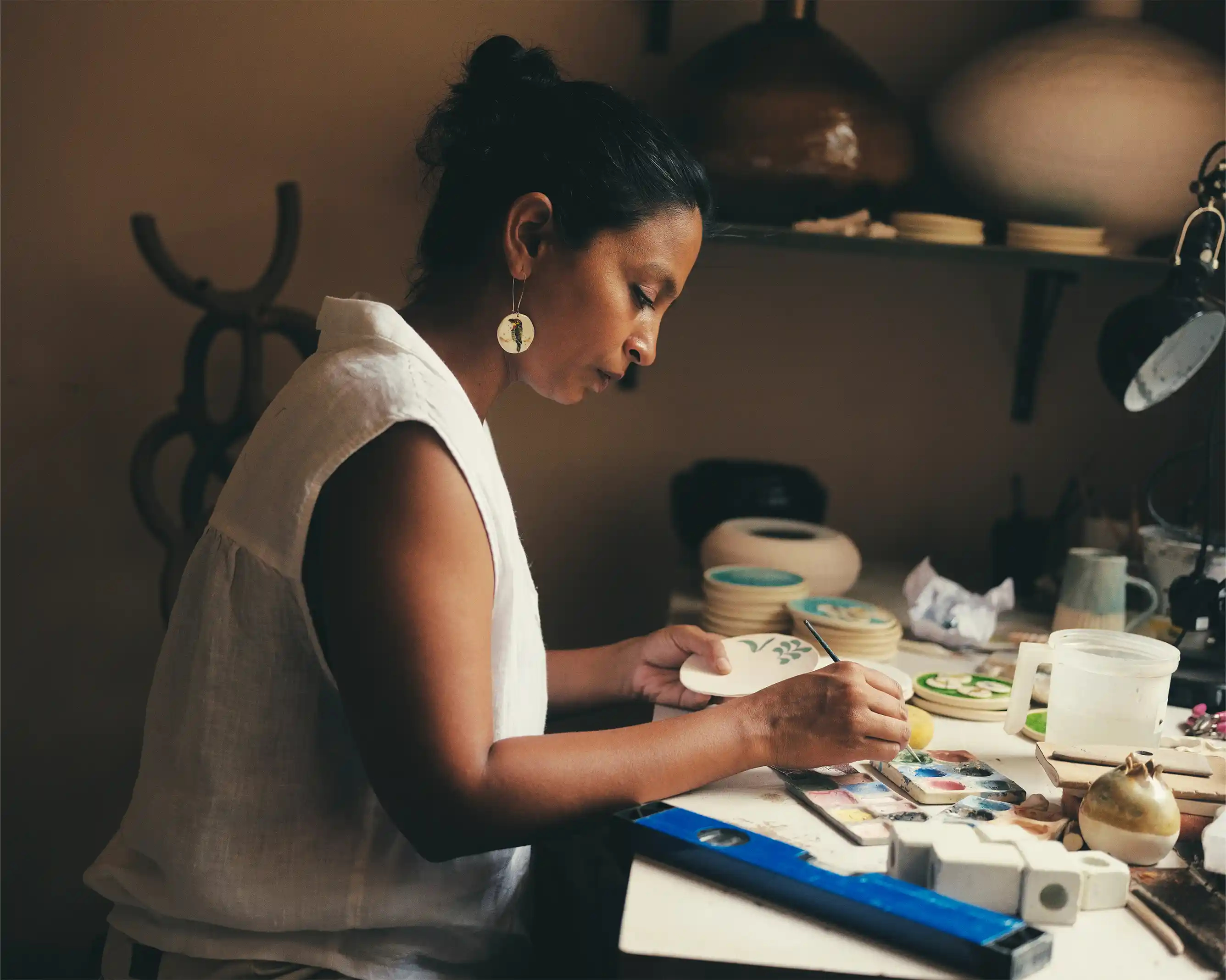
Excerpts from the conversation...
Goa is developing and changing fast post-COVID-19. Has this impacted your identity and work?
I see my work becoming a bit more stark and urgent. Earlier, I was trying to bring attention to the beauty in nature. But now, I also try to highlight the changes happening here and how our relationship with the natural world is shifting. There is a disconnection, not least because one doesn’t have the time. I think what was preserving Goa, and especially its natural heritage, was the ability of its people to just sit down and do nothing.
Lifestyles today are overly productive in an almost extractive way. Take as much as you need, but leave the rest of it be, you know? There’s nothing wrong with seeking a good life, which is what Goa offers to a lot of people. It’s a free life. But then, you see all these second and third homes, and those who dwell in them don’t have the time to get to know the place or its people. Set your foot on the ground and get involved with what’s happening in your neighbourhood in whatever capacity you can!
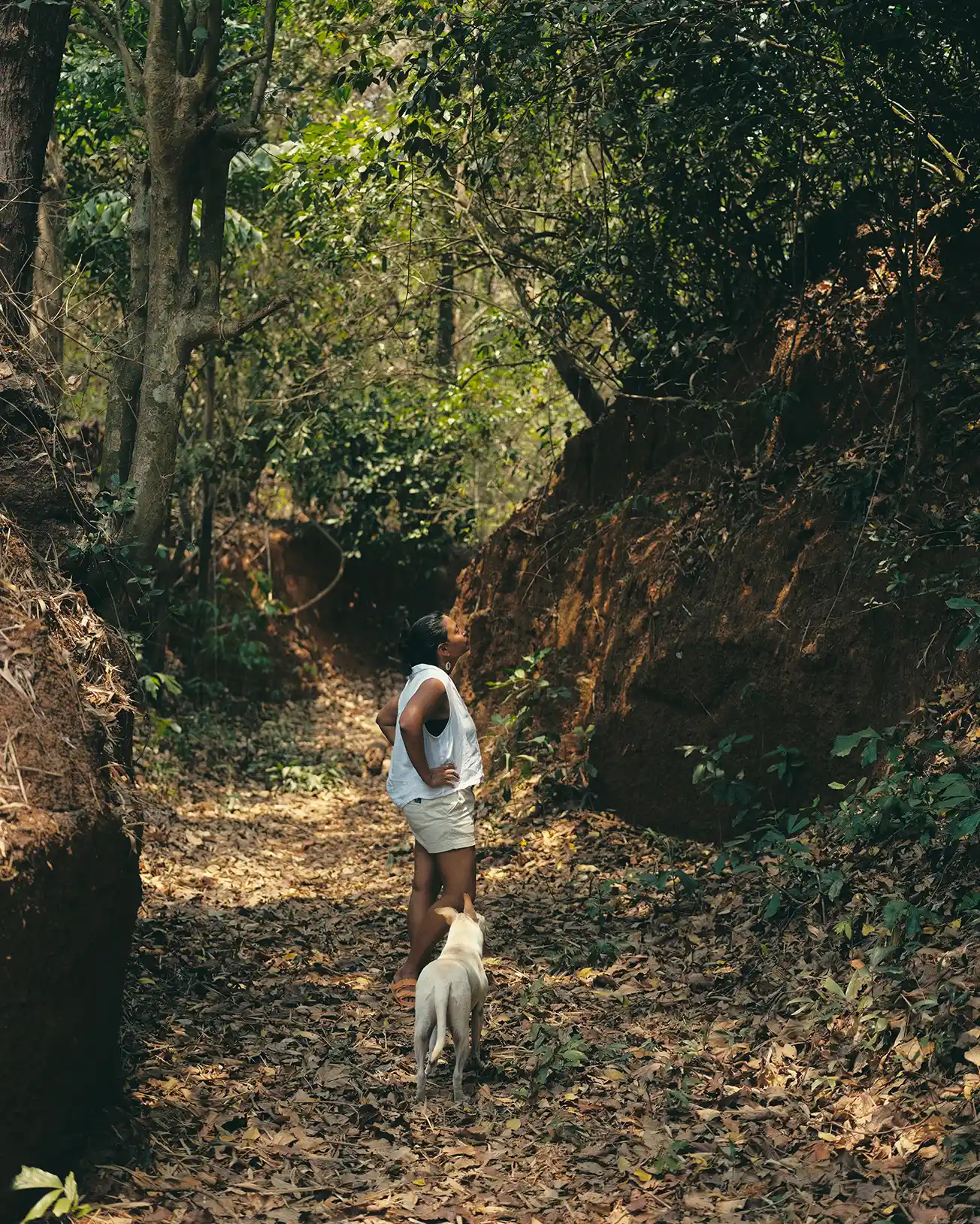
It is hard for me to accept the new Goa. We have the Western Ghats here, covered by some of the most ancient forests in the world. They are so ecologically sensitive, and we are blessed to be living here, among these forests. But then someone buys a piece of land, and the first thing they do is chop down all the trees. There is this disregard which baffles me because…how can they not see the connection between man and nature? It’s so direct, and you’re severing that bond without understanding how it will impact your life and health. But I am also hopeful; I can see that, even from this point, a turn is possible. But then, it can’t be just me, right? It has to be seen by a lot of people. More importantly, it has to be felt by a lot of people.
Do you think that people are feeling it? It seems difficult to avoid, but humans do love living in denial.
Do people even have the time to notice what is happening? Don’t you feel like everyone works so much now? We work more, and we get a lot less for it. When I first came to Goa, I could rent a house for 5,000 rupees. A basic house, but it met my needs. Nowadays, a house with a rent of even 80,000-90,000 rupees may not suffice. Convenience seems to overpower all other needs in society today. You can’t blame the Goans; somebody comes and throws a bunch of money at you, you’re going to take it, right?
A lot of times, we stress individual responsibilities, but I believe what’s needed is a policy-level change. A person can only be motivated to change his or her ways that much — the working class is barely keeping it together. It’s an unreasonable amount of stress on a single person, and these issues need to be tackled by larger groups and communities. It only depends on how much one wants to be involved. There are lots of people here in Goa doing fantastic work in conservation, from the Mhadei research and Amche Mollem campaign to the organisations working with the ocean and saving the turtles.
Do you feel that, individually, we don’t have enough of a sense of urgency to create change?
You do what you can. I am getting into doing more things outside of my art. Being an artist is only one part of me. There’s a whole other thing which feeds into being an artist – being a decent human being. Joining this nature education fellowship by YouCAN (Youth Action Conservation Network) based in Coonoor has been transformative for me. I enjoy teaching, and I’m good at it; it is something that I can do without feeling like it’s too much effort. It feels easy for me. But you know, not everyone can be an activist. I don’t think all artists need to be activists either. Everyone just needs to do what they can. I also want to have a good life and not live with this constant sense of doom, which is becoming harder and harder to do. And it breaks you.
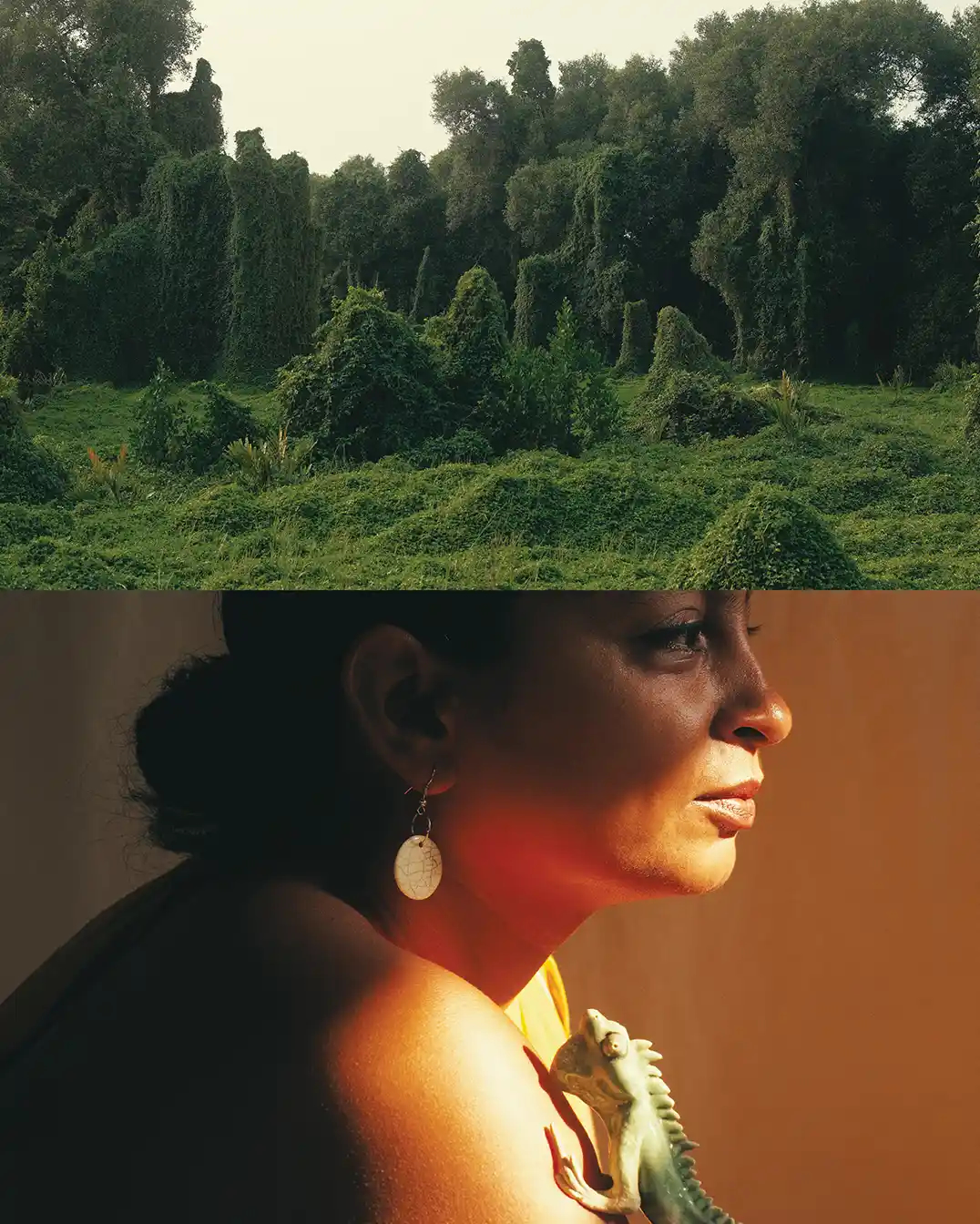
Often, the aspects that are cathartic for the artist are equally powerful for those who witness the art. It becomes a form of processing whatever is going on collectively.
There is a sadness that is being worked through. Some of the sites I have witnessed...I’m just, I can’t even…[voice breaking]. There is a plateau near our home, where we used to take our dogs for a walk every day. It was always full of life — there were black hares, porcupines, different kinds of snakes and birds and mongoose. Now, it’s a construction site for a massive villa. One has to become indifferent to a certain extent so as not to feel, and this desensitisation, there’s a whole machinery behind it….
So, how does one stay hopeful while living amongst this destruction?
A few years back, I felt so hopeless and restless. I wanted to do something, take some kind of action. I got selected as a part of this fellowship programme, and actually, people are a great source of hope. Honestly, I love meeting people and learning about their stories — a good conversation is gold for me. Artists don’t have much institutional support [in India]. So, your community is your support system, and my community is full of people who are following their passion for the natural world. It is so heartening to just see that somebody is still at it.
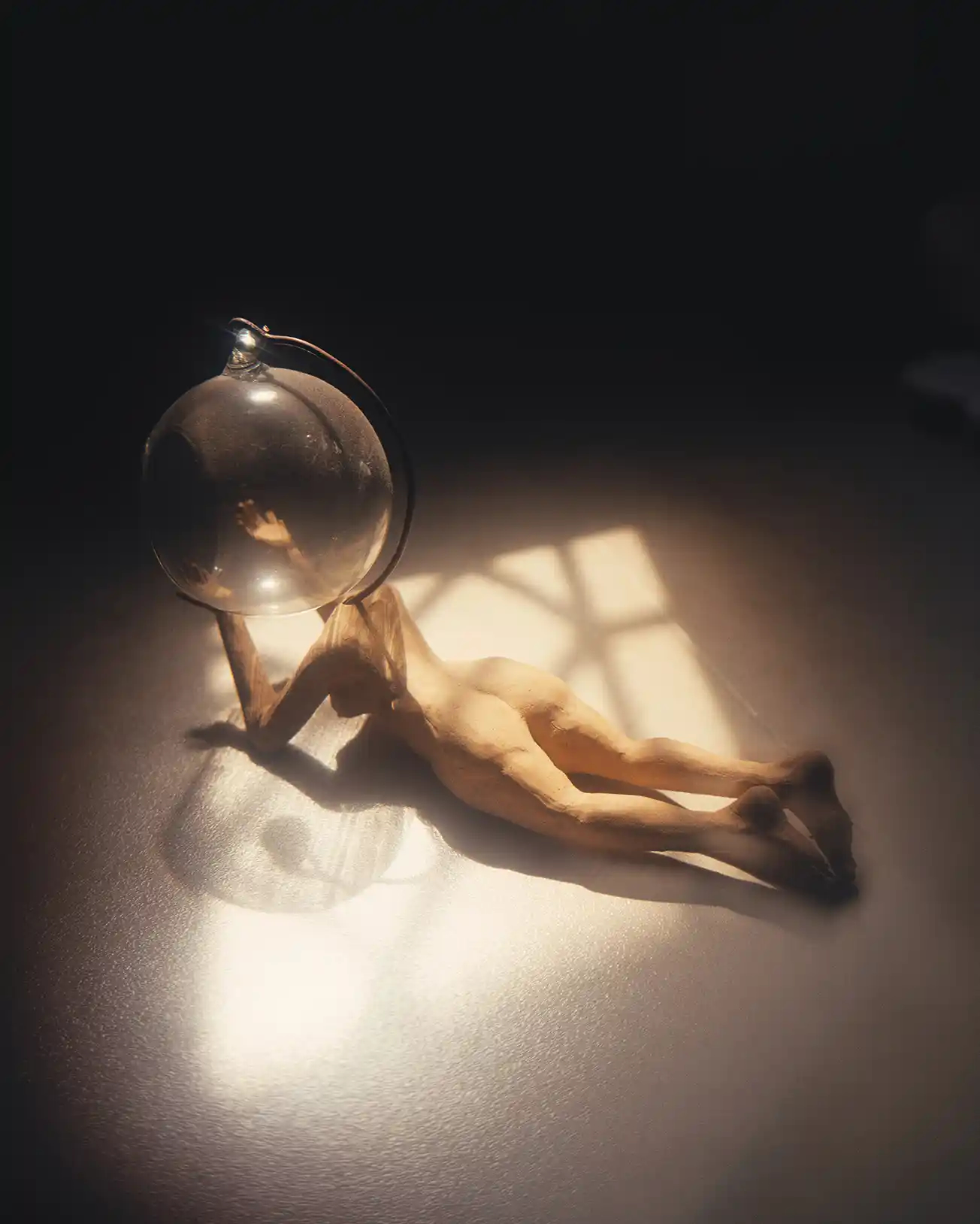
The Artblot show at the Cube Gallery [in Moira, Goa] was monumental for me because it sparked a lot of these conversations. [Part of Joshi’s installation were her Space Cadets.] People related with Space Cadets, I think, because they were faceless and placed within this dystopian setting that is a reality for a lot of people now. It could be someone they knew, or even parts of themselves. Also, they were all in the nude, which makes them vulnerable; added with the postures I used (mostly contemplative) — people really seemed to connect with them. So the work has an effect, but I want it to have even more of an impact now. I can see that in the next few years, I am going to do things very differently in terms of my art. It has to be hard-hitting. The dystopia we are living in needs to be more in the foreground, the reality of the destruction made more blatant.
We are all so desensitised now…
Maybe that is my job, to keep the world sensitive; that, and interacting with more young people. Because in five or ten years they will not be so young anymore. And they will be the ones who will be creating policies and shaping the new world.
My daughter said something really interesting while we were walking past a construction site recently. She said, “In a hundred years, these buildings are all going to be gone, and this whole place will be full of trees.” The younger generation is already thinking so differently!
Absolutely! And it is especially our generation’s job to show them what there is out there. This sense of stewardship does not come through teaching or a screen; it comes from having meaningful experiences outdoors, not just once but year on year. That’s when it has a real effect, when you start feeling that nature and you are the same.
Some individuals can take stewardship into a saviour complex, where they remain separate from the thing that they’re trying to save.
That is also a disconnect. And the whole point of my art is to get people to see that we are it, and it is us. There is a direct relationship, and that is what needs to be the major focus. But there are all these opposing forces. I believe every human being has an artist inside; everybody can create. But the act of creation stems from a…I wouldn’t say interrogation, I want to use a gentler word…an examination of yourself. I am constantly in the process of asking, “How does this make me feel and why?” It can get exhausting.
I surround myself with friends and people for whom these things are important. Then it feels light. Then, there is no way of developing a saviour complex because I know that I am also a part of this whole connection. And when I feel deeply jaded, I go and spend a night on the beach.
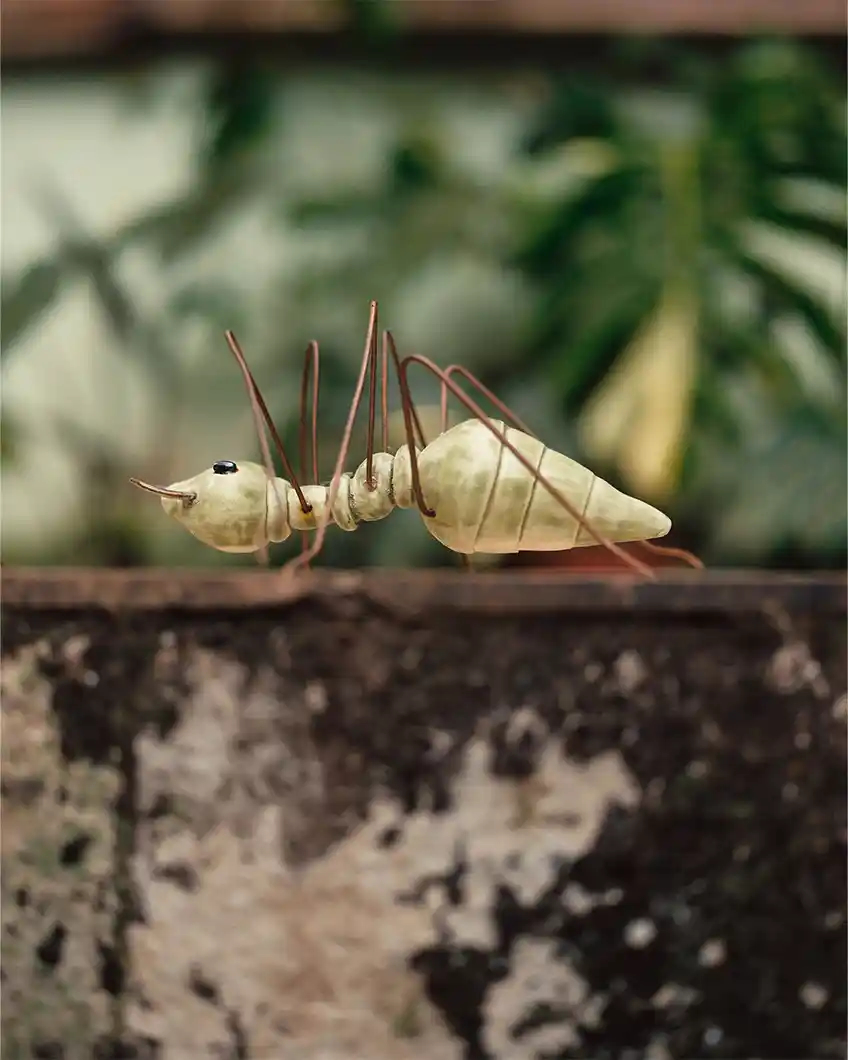
Witnessing nature can be so reassuring. A beautiful sunset can make you feel like everything is going to be okay.
The month of July in Goa…. It will make you start believing in the world. I love the ferocity that the monsoon brings. You have to sit quietly in your house, watch the outside, and watch your thoughts. It is very reassuring that it can still bring us to our knees in a second. I mean, we might be wiped out, but nature will come back and flourish. Like the dinosaur story…
So you believe that could happen to us?
Maybe it would be a natural part of a larger cycle. After the intense periods of the monsoon are over, you find a lot of dead animal life on the beach. I came across a dead puffer fish and I was struck by how beautiful it was, even when dead and rotting. I took it home and put it in a pot so that the flesh would decompose. Later, I studied the skeleton so that I could replicate it.
Nature just is; there is nothing that it “should” or “shouldn’t” be. From the death of one life, another life is born. And that feeds someone else. It’s this largeness of things. Then you realise that you are small and insignificant, and it doesn’t matter.
Making art out of death…you are confronting us with the one thing humans want to avoid the most.
It’s hard to talk about one’s work. I’m just beginning to get more comfortable with it. It’s difficult because the subject matter – like deforestation and the huge losses caused by that – is problematic. I did a lot of intense study on the subject for my fellowship programme, and despite the subject matter, a large part of my experience at the residency was hopeful.
Regardless of whether you are working alone or in a group, it is the process of creation that is most important. What are the questions that are being answered by the creation, what emotion needs to be released? I find that a lot of knots get untied, and a resolution is easier when one spends time on their process. I think sitting quietly in one space is deeply underrated in the times that we live in. For me, that works. Then, I can mine this integration for my art. I’ve been doing ceramics for over 10 years now, and it’s only now that I can finally get a sense of what I’m saying through it. It is important to be able to communicate because I’m not creating my art in a vacuum – I don’t create for myself.