The Hope-Makers: Waylon D’Souza
Four artists from Goa, having witnessed the demolition of forests and natural habitats and the burgeoning of construction sites around them, aim to spark conversations through their work, while putting their audiences in touch with the natural world and reminding them of its beauty and resilience. In the first of a four-part series, Verve talks to Waylon D’Souza on how he has converted this trauma into hope, which he in turn transmits to his viewers…
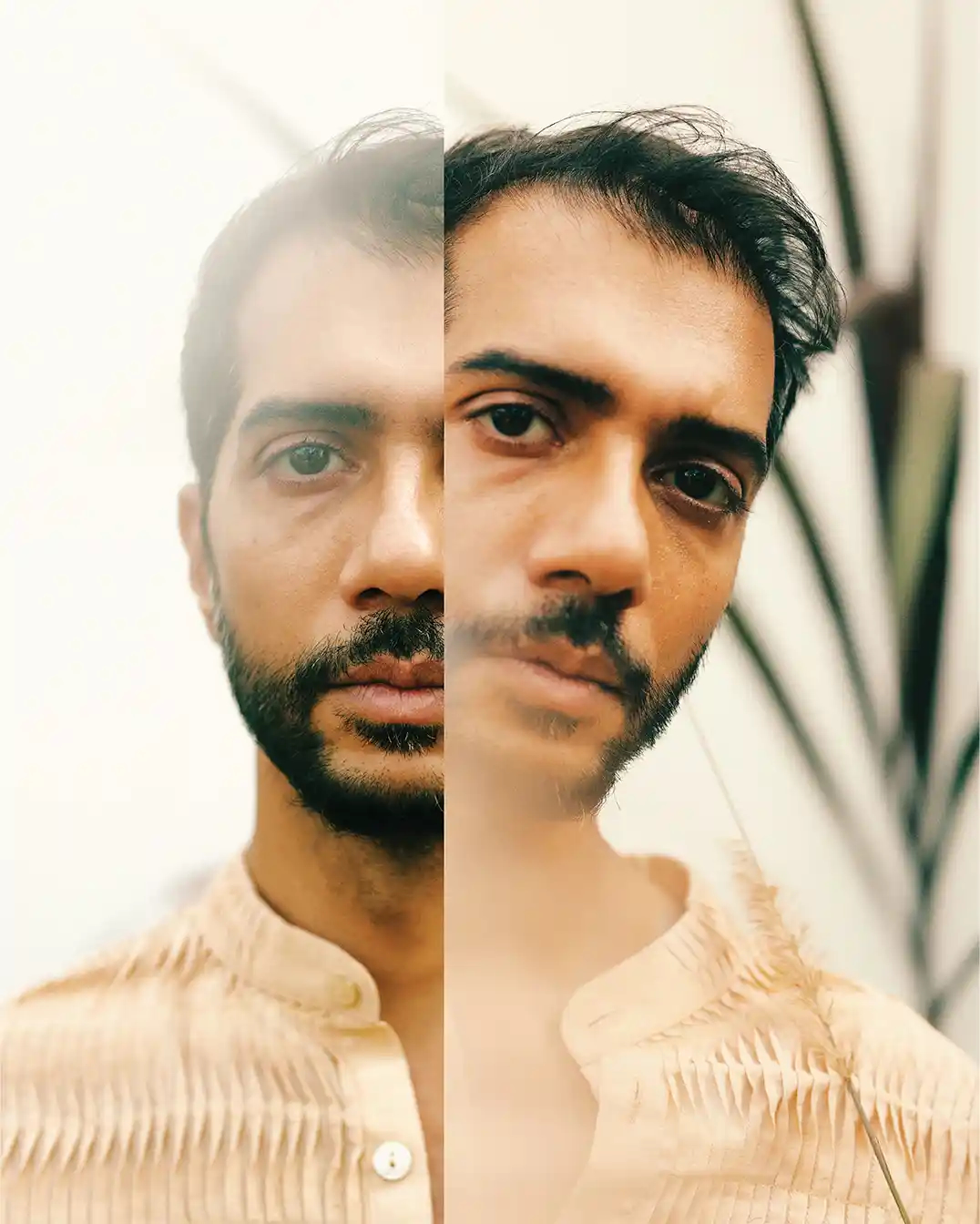
Forty-year-old Waylon D’Souza’s art is made up of installations, detailed collages, textile art and paintings of real locales that are beautiful but with problems like over-development, pollution or gentrification. These research-driven projects are as aesthetic as they are thought-provoking. Goddesses sit atop dammed rivers in his collages and watercolour paintings incorporate visuals of plastic bottles and trash piles. The Goa-based multidisciplinary artist and industrial designer bridges his concerns for climate change and species loss with his work and permaculture practice.
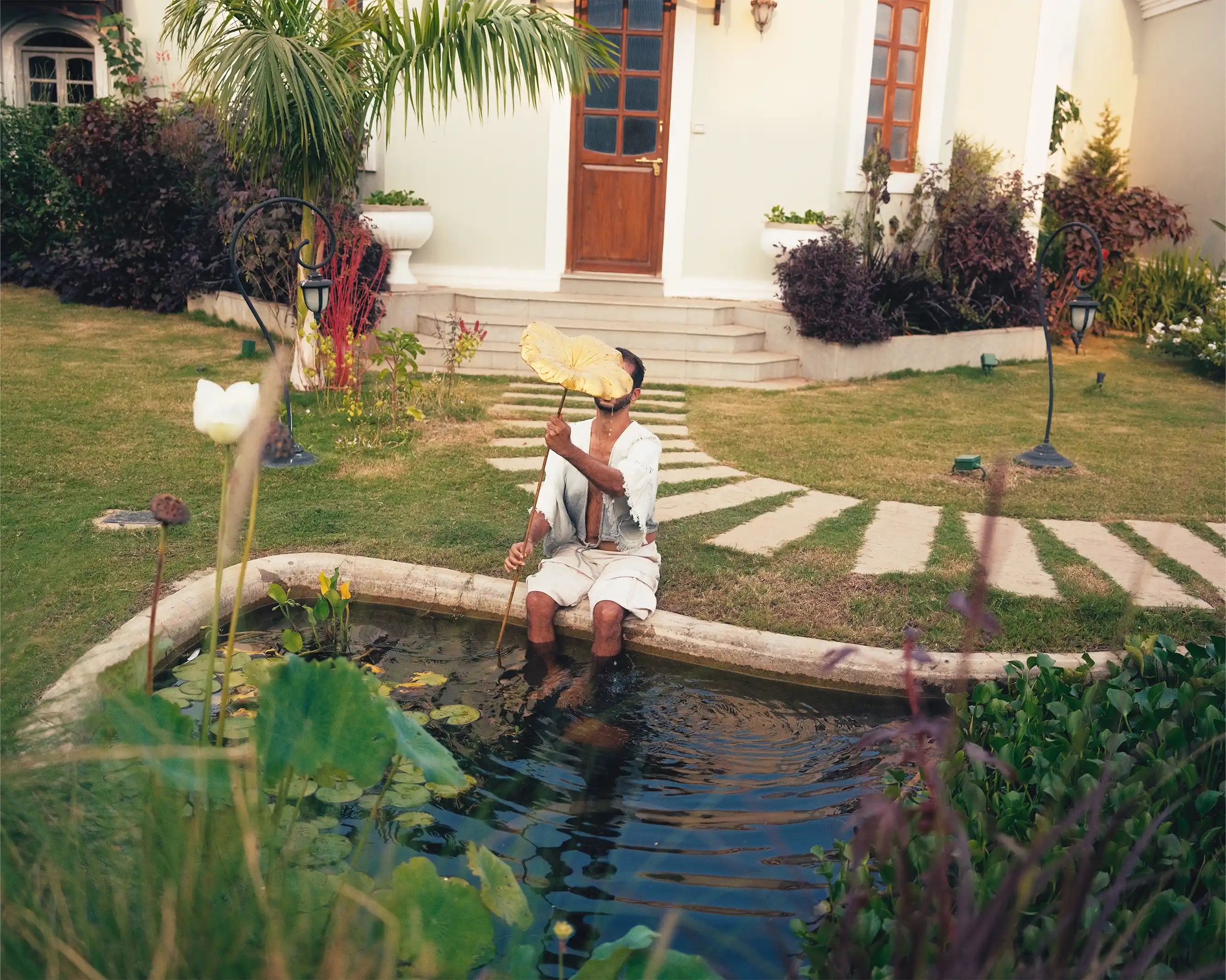
D’Souza studied fine arts, animation, aquaponics, permaculture, and industrial design at various institutes, including NID, Ahmedabad and The Royal Melbourne Institute of Technology. Disillusioned with the corporate world and big cities, D’Souza moved back to Goa. His projects now feature beautiful gardens, and he has carved a career out of designing and creating sustainable landscapes for large-scale properties in Goa.
Excerpts from the conversation…
When did you develop an interest in plants and the earth? What attracts you in particular?
I was just a kid when I first started experimenting with plants and soil; I wanted to become a zoologist or botanist. I am inspired by the geological history of our planet — discovering seashells on the Himalayas, for instance, just upends the idea of what the planet looked like before human beings inhabited it. Our idea of history is so young. Like when people say farmers have been slashing and burning the land for centuries — they don't realise we were nomadic farmers then. When movement stopped, and we had to stay on one piece of land, we mulched. Science supports that the microorganisms in soil would not have survived if our ancestors had been slashing and burning the same piece of land continuously. Soil takes years to form — not just the mineral content but also the fungi and its mycelium network which invertebrates the process further. It takes millennia for a healthy ecosystem within soil to be created.
What has it been like for you to bring sustainable landscapes to very large real estate development companies that are not sustainable at all?
It’s been a tough journey because most of the large companies I work with are BB2C (business-to-business-to-customer). Even though my clients include Goa-based developers for luxury villas, they aren’t the end client, their customers are. They will pay me to do my job — but the house owners will sometimes clear out the cushion of vegetation I’ve planted and replace it with a deck or something else. It is all about the Floor Space Index (FSI). I’ve realised in India, you can’t sell the treadmill till you call people fat. If people don’t know what the issue is they’re not going to understand that you’re giving them solutions.
Did this ignorance ever make you want to stop doing the work?
Several times. But I put on my rose-tinted glasses every time I meet a new client. What keeps me going regardless of the clients are the problems that they present me with. It is a privilege to see the world through the lens of permaculture — it gives you the power to create solutions, which is very empowering, whether they are appreciated or not.
Artists are supposed to highlight things abstractly so people get influenced subconsciously. Designing and planting a beautiful edible garden is generally not even counted as art by most people. My canvas is the land. My aim — through my work practice — is to plant the seed of social re-engineering by using practical solutions as well as my artistic interpretations to change people’s mindsets. But, like my friends tell me, I can’t solve all the problems in the world. However, in whatever way I can — like by planting fruit trees — I will continue to provide solutions.
How do you integrate the contradictions of being an artist with having to deal with commercial considerations?
I was in the Andaman and Nicobar islands recently to prep for an art and permaculture retreat that I was supposed to hold there. I was walking in Havelock island and doing research when I realised that the Areca palm plantations, which were planted after clearing the forest, were creating a heavy, topsoil run-off that was going into the ocean. It’s not just about the fertilisers and chemicals they use but also the fact that the soil makes the water murky which affects the scuba diving business here. But people don’t or can’t deal with the larger issues. I didn’t do the “work” that I went there to do, in the end. So, I do find it troublesome to find a balance between these two things — the commercial aspect with art and permaculture. It needs a longer time frame; one can’t reach one’s objective via very short projects.
It’s been a tiring journey but it gives me comfort to think that I’m trying to plant my ideas in people’s minds, not just as an artist but also directly through my work with industrialists and developers. An incubation time is necessary. People have been bred in a colonial education system that encourages rote learning and that makes it very difficult for them to not only think of creative solutions but to disregard them when they are presented. I have realised that people thus need time, and that it’s a slow process.
It’s lonely because on one side, there are the environmentalists, activists and artists. And on the other are the industrialists and developers whom I work with. I’m trying to be a bridge, bring those worlds closer. I am trying to bring my permaculture practice into my art now.
How does your experience with permaculture help you to create your art?
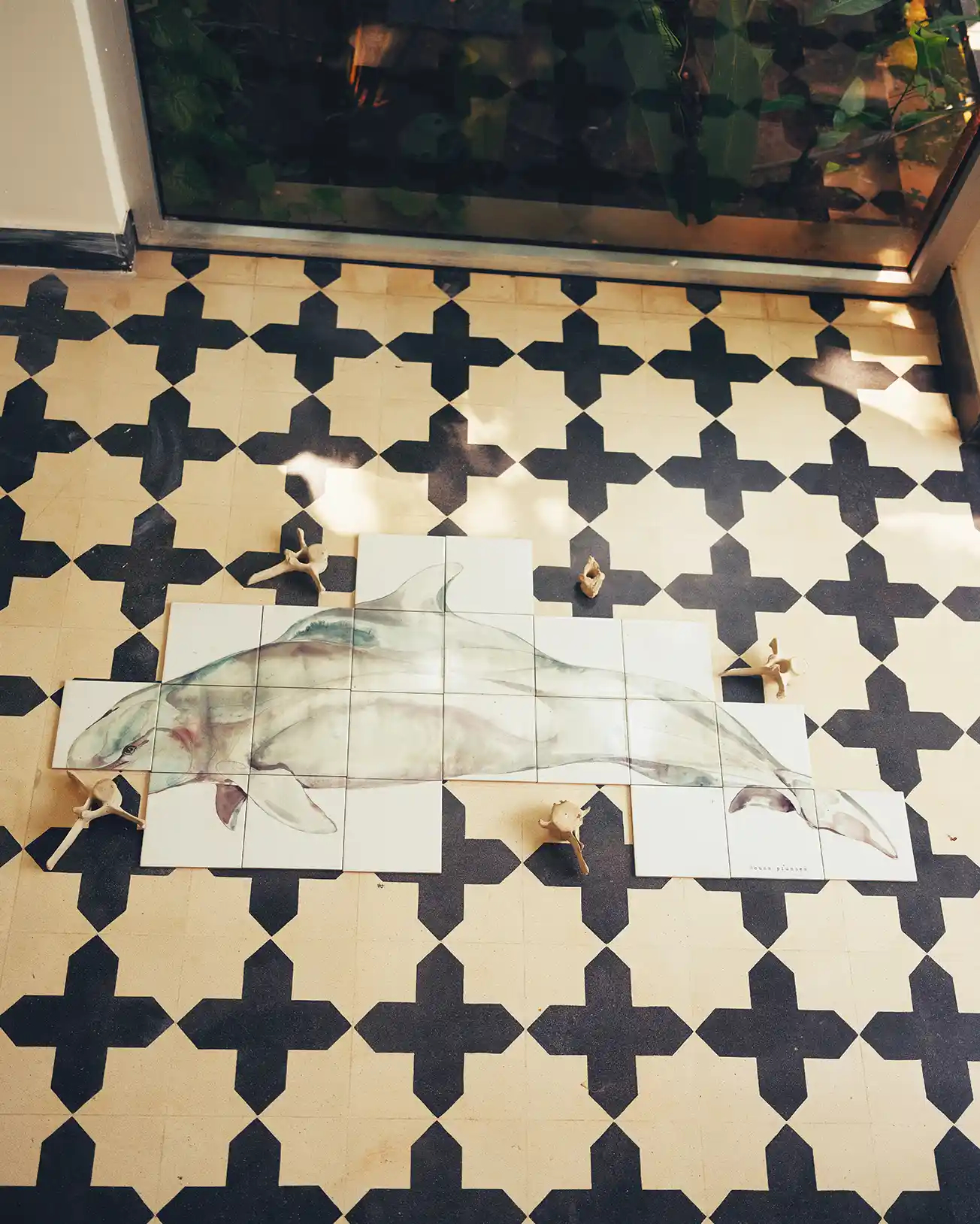
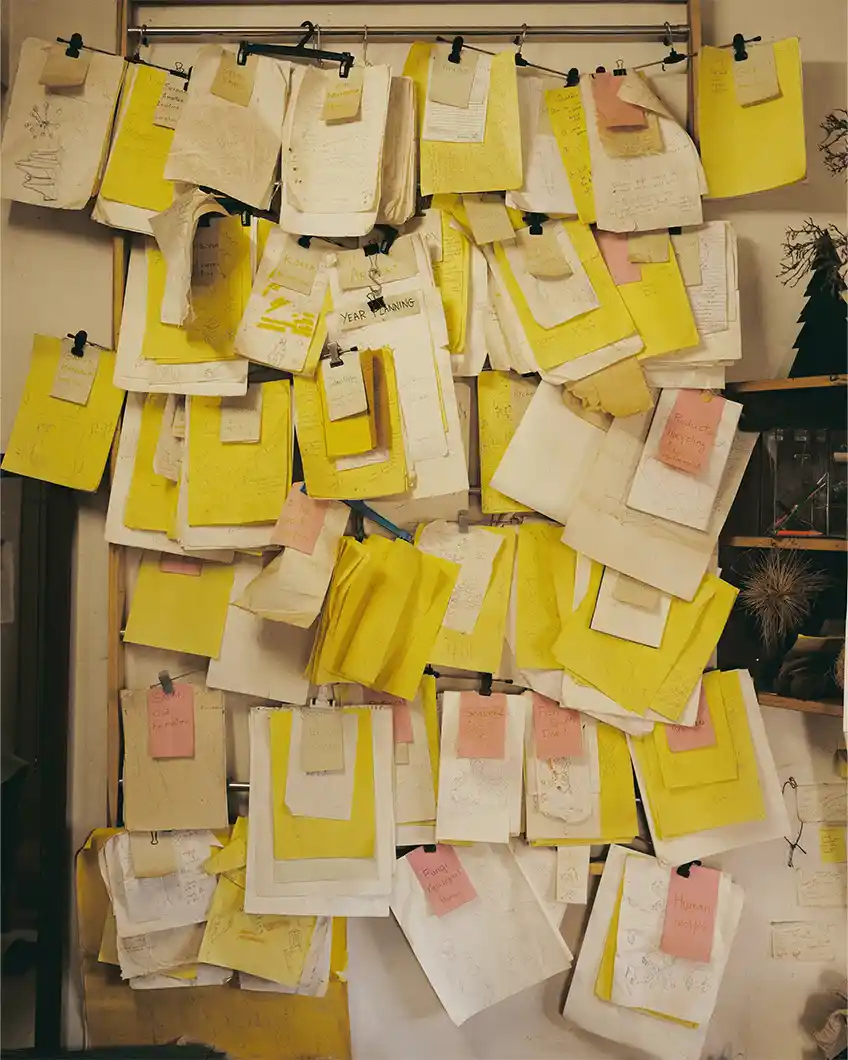
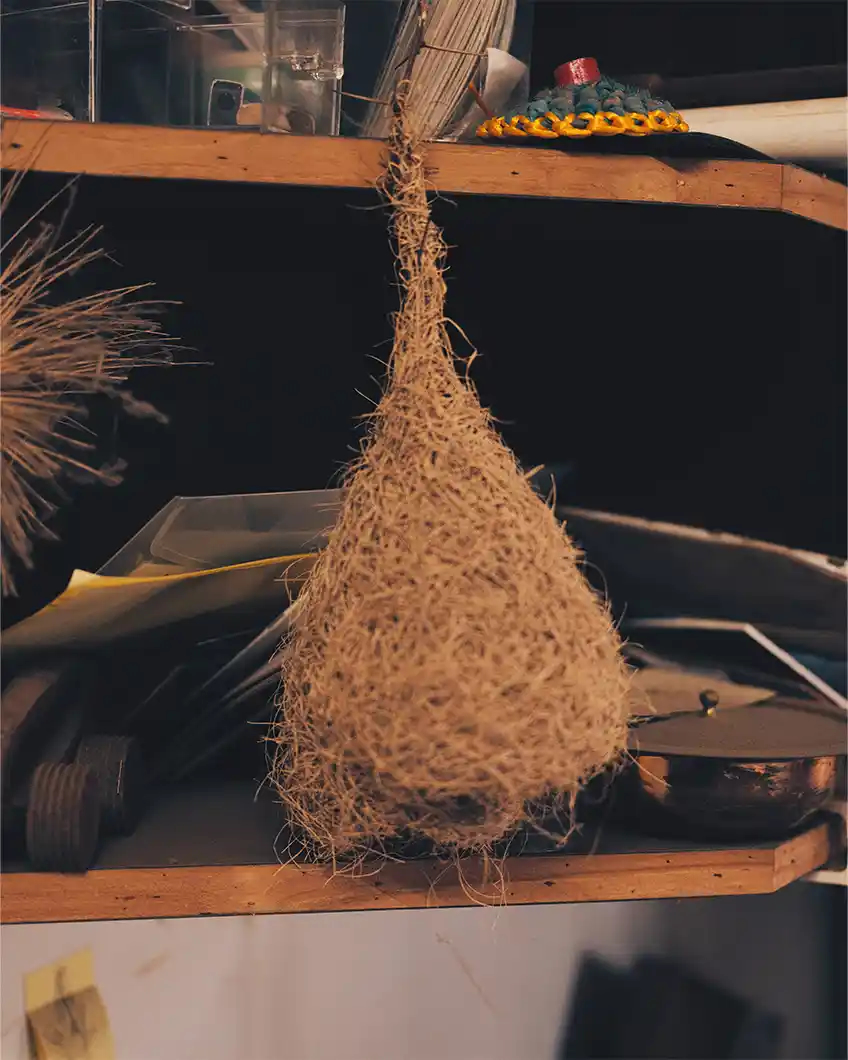
I had a beautiful opportunity to practise this while creating the installation for the Blue Carbon exhibition at the Serendipity Arts Festival held in Goa in 2024. I collaborated with an architect, scientists, data scientists, coders, a ceramic artist, a glass artist and a textile artist. The premise of the installation was the fact that corals are like cities. The singular organism that makes up a coral reef is called a polyp. Through millennia, coral has evolved so their organs are spread through each different polyp or mini ‘house’ that makes up a larger organism (or city). This not only supports the ecosystem, but also creates diversity along the way.
I was also making an analogy with humans and cities: us as these polyps, living in our glass towers. We use the same three elements, which corals are made of, to build our cities — carbon, silica and calcium. Except it’s concrete in our case, and our cities create destruction in their wake. I called the work Metropolyp.
I looked at the artists involved as different species coming together. There were conflicts and clashes between them but it was also an opportunity for them to work together. A kind of subconscious way to iterate that we are also a microcosm of a larger ecosystem — but in a natural ecosystem, no single species has dominion. During the installation there were labourers and children who also became part of the work.
Those who saw it were mesmerised by the work; it was much more than what I could’ve done on my own. The audience also understood that different thought processes had come together to create this. And once the artists saw their pieces interacting with others and how they looked, their small grudges disappeared. That kind of thing makes you optimistic.
Is the permaculture principle of “use slow and small solutions” a philosophy that you use in gradually changing people’s ideas and perceptions?
Yes, and it somehow ends up working. If you plant the seed of an idea in someone’s mind, they might think that they are the ones who thought of it and that’s much stronger actually.
Even most of the civil engineers and architects I worked with showed resistance to my ideas at first. But I do get the work, and I think that the work can act as a case study, for the future. Because permaculture is about mimicking nature. The longer a tree takes to grow, the stronger its root system will be. Working in the urban space for so long, I’m constantly thinking of innovative ways we can change. This planet is our home. So how do we figure out ways to change mindsets so that at the very least, the pace slows down.
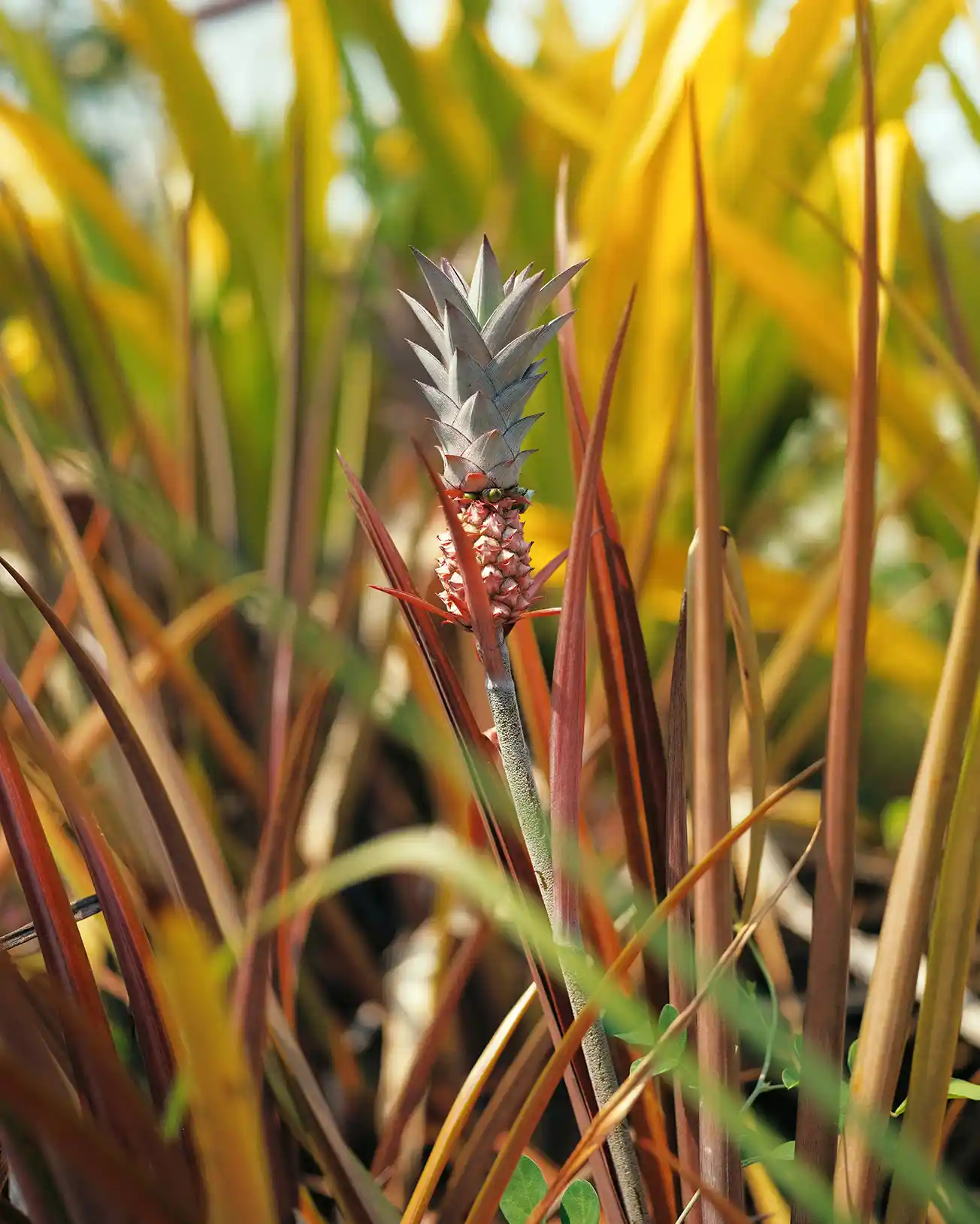
In permaculture, the solution lies in the problem. The urban space is where the most change can happen, I think. If you are growing pineapples and papayas in your terrace garden or in your gated community — you don’t have to worry about wild boar eating your crop. So there are benefits that we have to try to make the most of. We need to go inwards and see how we can make cities more sustainable.
Are you optimistic about that change?
I am. I want to create change in every way — whether subliminally through my art or practically through greywater systems. I can’t be very obvious about the problems when I work with large Indian companies because they don’t like being confronted with the problems that they themselves are responsible for. I’ve been asked to make my work more “cheerful” but this is the scenario and, unfortunately, people don’t want to see it.
I’m not going to take a big stand against the companies I work with; I am trying to create change from the inside. This is where the work really needs to happen. There is no point preaching to the converted. It is a difficult space to stay in but someone has got to do it.