Anand Puri’s Brave New Worlds: The Journey
Third-generation restaurateur Anand Puri has pulled off a fine balancing act. On the one hand, he has revived the nearly 100-year-old Kolkata institution Trincas; on the other, he is breaking new ground with the lesser-known establishment Tavern-Behind-Trincas — that is currently championing live regional music
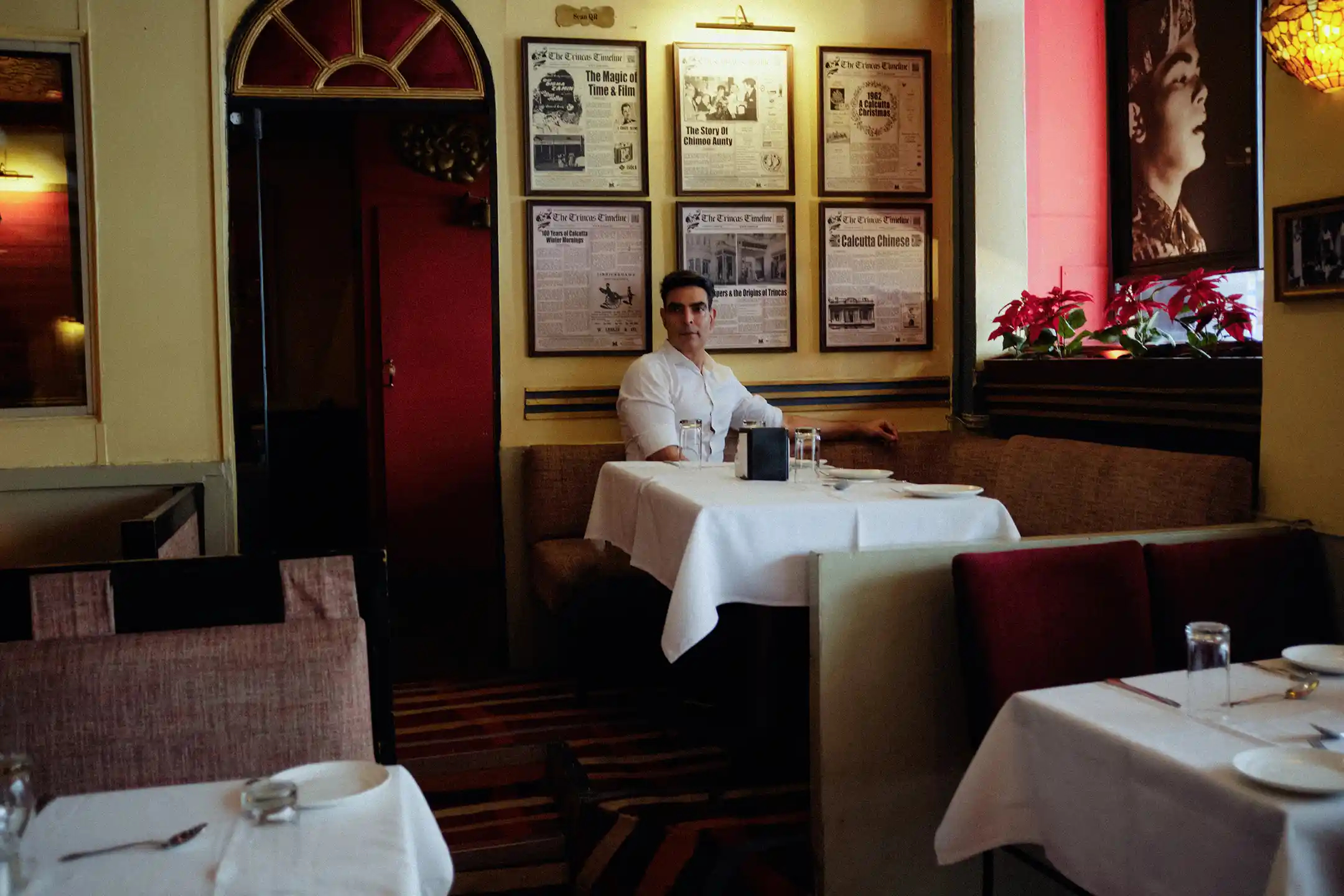
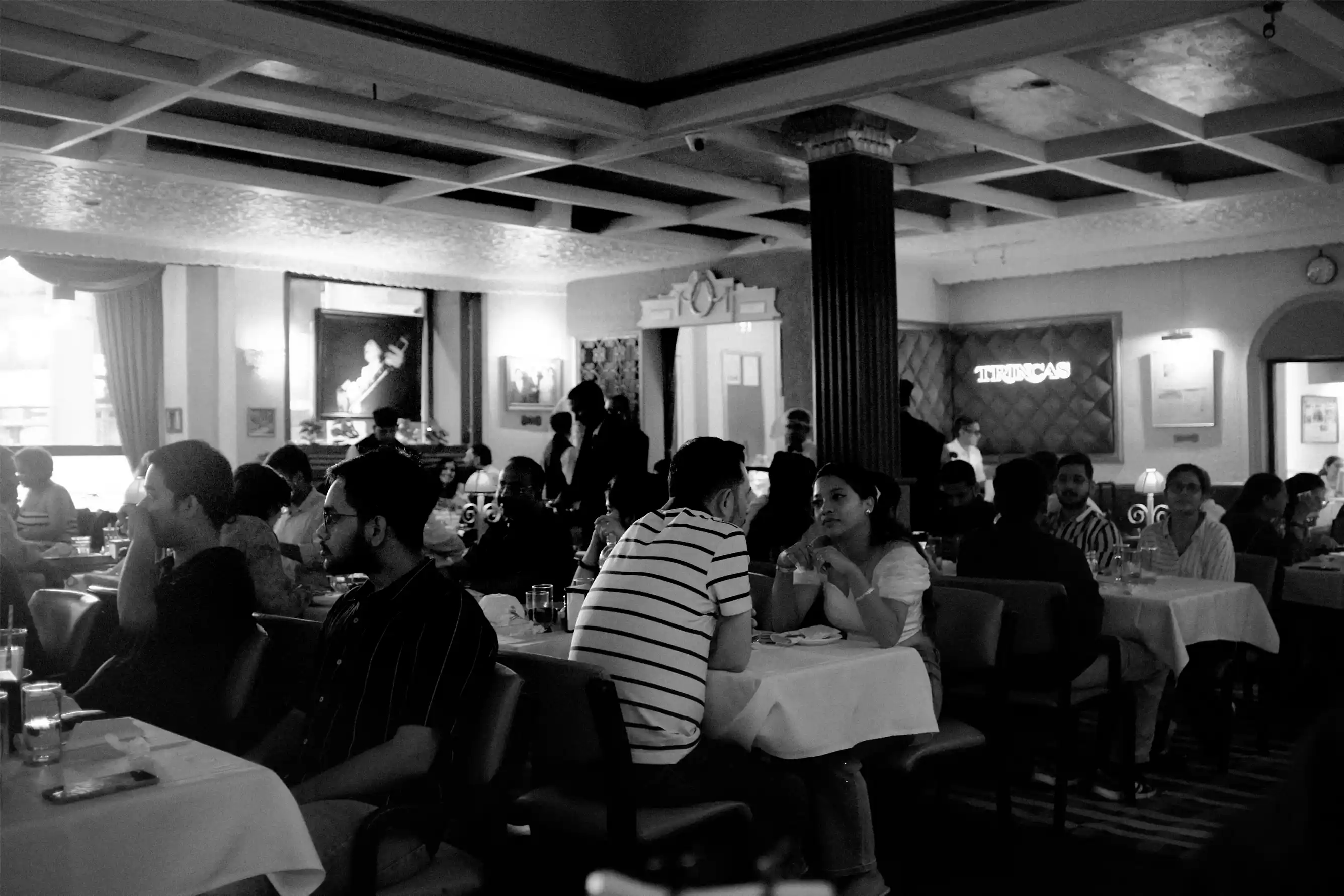
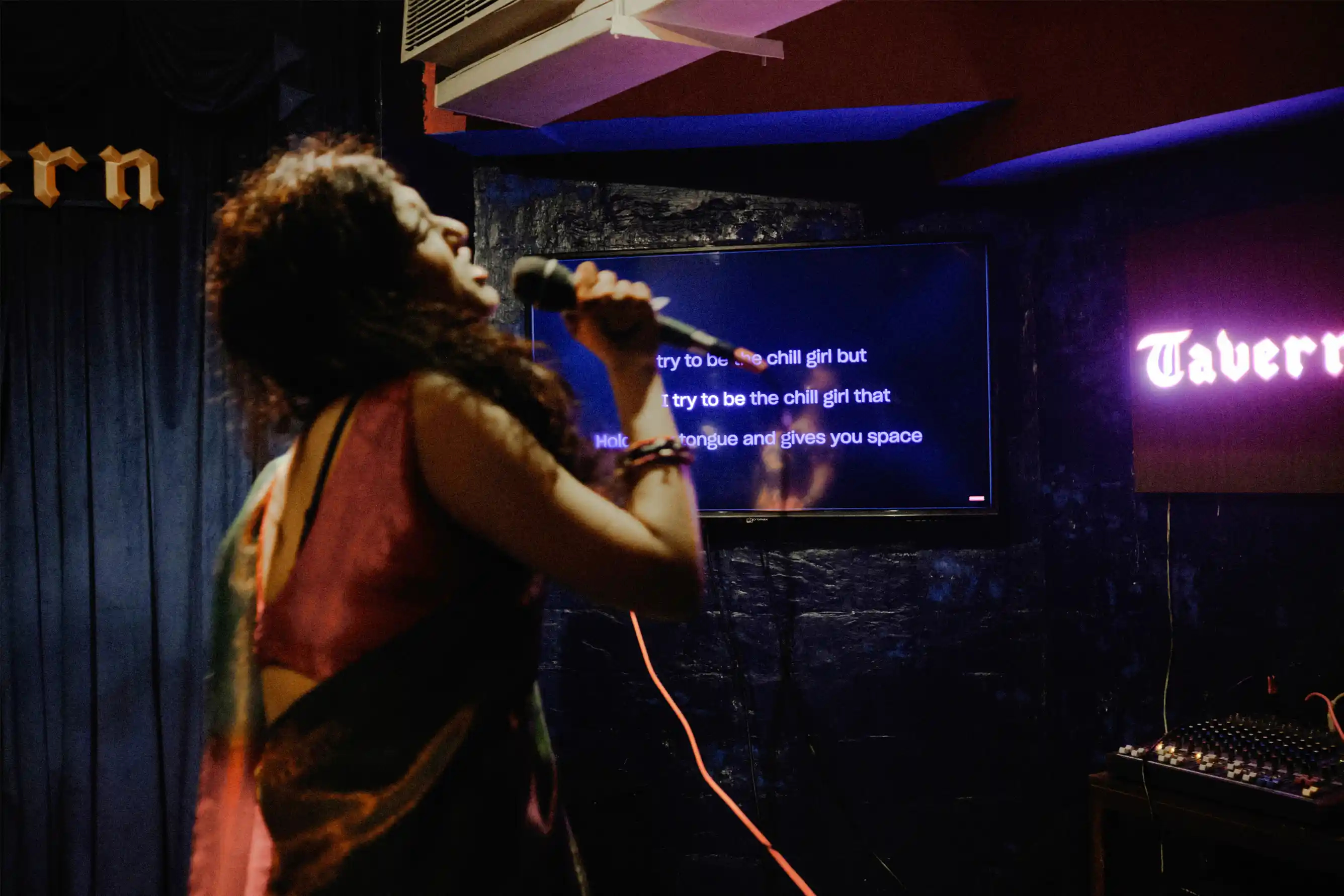
“It’s real,” remarked a Kolkata-based zillennial — who prefers anonymity — about the allure of Tavern-Behind-Trincas, offering the ultimate stamp of validation in a post-digitalised age. “It’s not a plain-old sit-down situation where you eat, drink and leave. It’s an intimate space and, before you know it, you’re engaged in a heart-to-heart with a stranger whom you’re sharing the table with,” added the 25-year-old, alluding to Karaoke Thursdays, the weekly queer nights that the restaurant has been hosting for over two years with the express motive of fostering connection. In fact, the seating is rearranged intentionally on these nights — every Thursday, like clockwork, the central row of tables and chairs are replaced with a few high tables, creating a casual setting that is more conducive to making conversation and mingling.
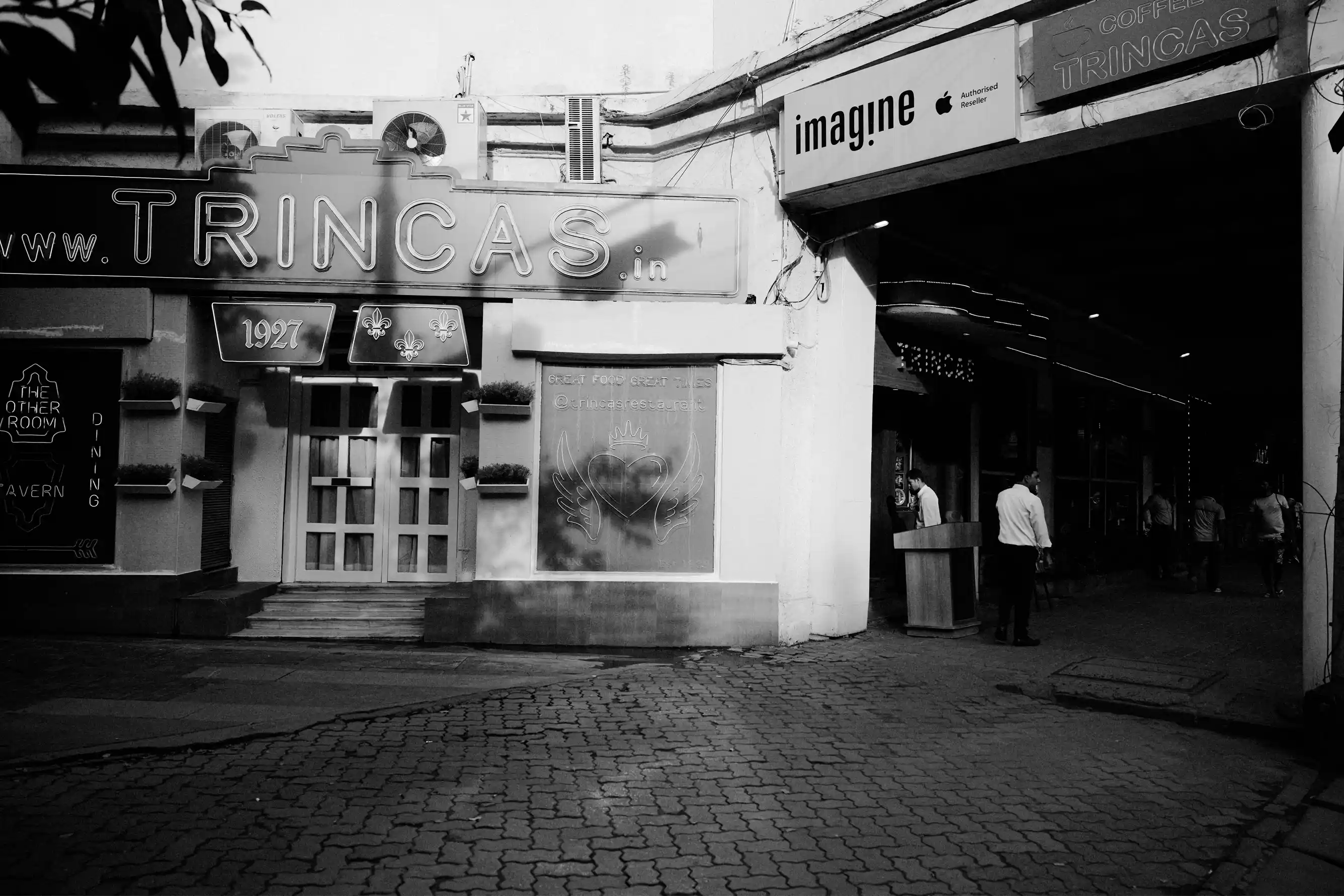
Their words stayed with me, mainly because the headlining act has always belonged to the legendary Trincas, the nearly 100-year-old Park Street restaurant behind which Tavern [as it is commonly referred to] is tucked away. For decades, it operated as a straight-up no-frills dive bar and lured customers with its lower price points. It’s only after the pandemic that the rates were hiked to match Trincas. Today, they share the same menu and a certain cross-section of customers who move freely between the two but the experiences they offer continue to vary substantially. For many, the common ground lies in the escape they offer from the daily grind. While Tavern offers a relaxed ambience for customers to socialise and come as they are, Trincas, with its storied history, continues to serve as a reminder of the city’s glory days — far-removed and untouched by the travails of current times.
In the ’50s and ’60s, when Calcutta’s nightlife took off, Park Street — with its stately colonial architecture — emerged as an entertainment hub with a distinct Western feel. Several neighbourhood establishments from the days of yore — including Trincas — still linger in public memory thanks to their impeccable service and cosmopolitan clientele, sophisticated continental fare and the variety of live Western music that thrived there. First-hand accounts from staunch regulars during the ’60s and ’70s paint an ultramod picture of the goings-on. Few other cities could rival the pizzazz of Park Street in its heyday.
By the mid-aughts, when I was a regular fixture on Park Street, all the restaurants — apart from Trincas — had discontinued live music. Some establishments had altogether disappeared into oblivion. And although I’d often pass by Trincas, given its prominent location, I never ventured inside. Over the previous decades, the clientele had changed; it was impossible to reconcile Trincas with the memories I had been made privy to while growing up.
When I returned to my hometown in 2019, after living away for about a decade, I found Someplace Else, next door to Trincas and the only bustling live venue on Park Street during my college days, flirting with electronic nights in a bid to survive. On the other side of the street, by the iconic tearoom Flurys, an outlet of gourmet foods chain Nature’s Basket stood in place of Music World, where I’d browse audio cassettes and CDs for hours.
Evolving tastes had spawned fresh distractions but, curiously, it was the revival of a heritage restaurant — at once familiar and new — that was creating a buzz on Park Street. The word on the street was that Anand Puri, the third-generation owner who had also made his way back to his hometown after years away, had turned Trincas around.
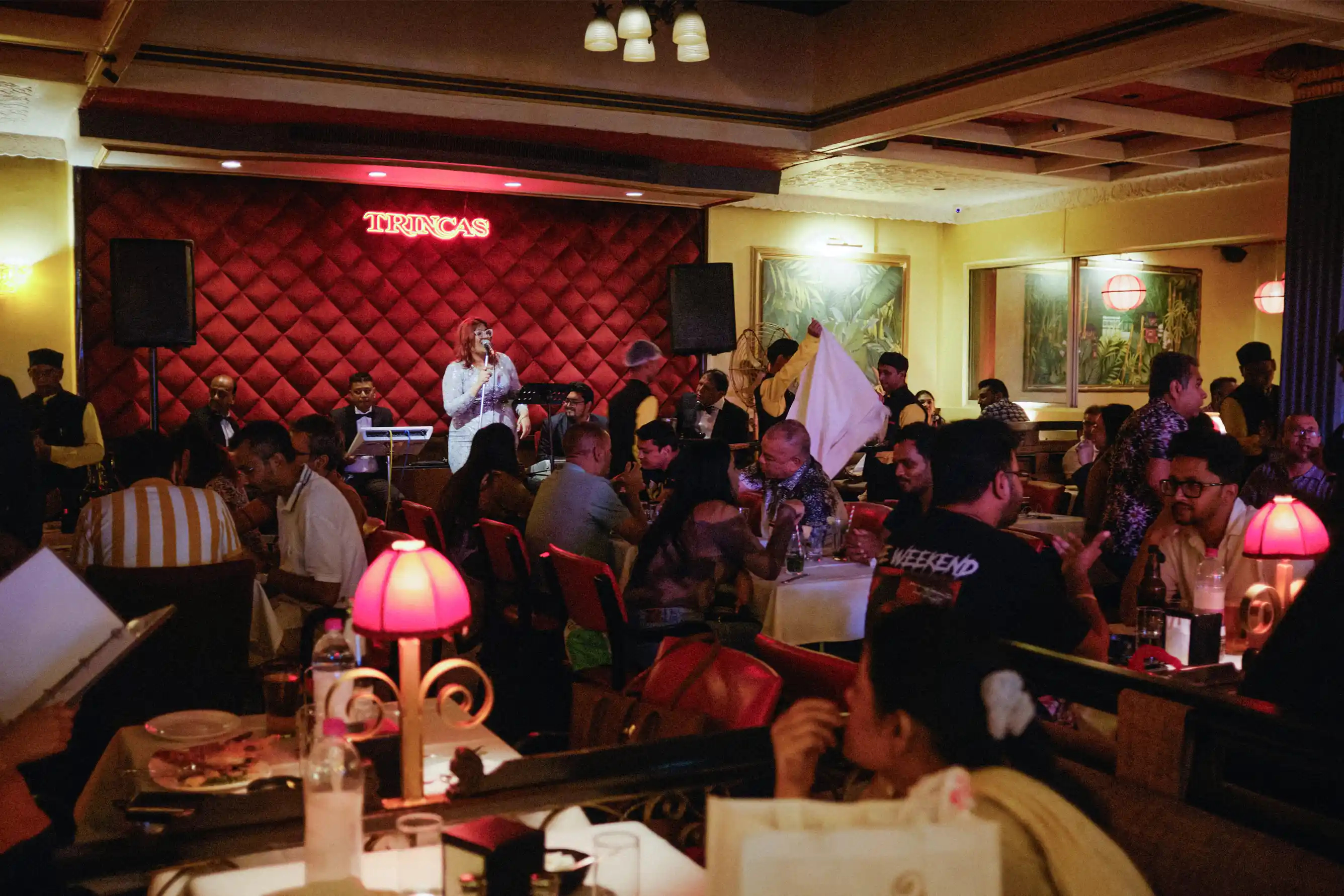
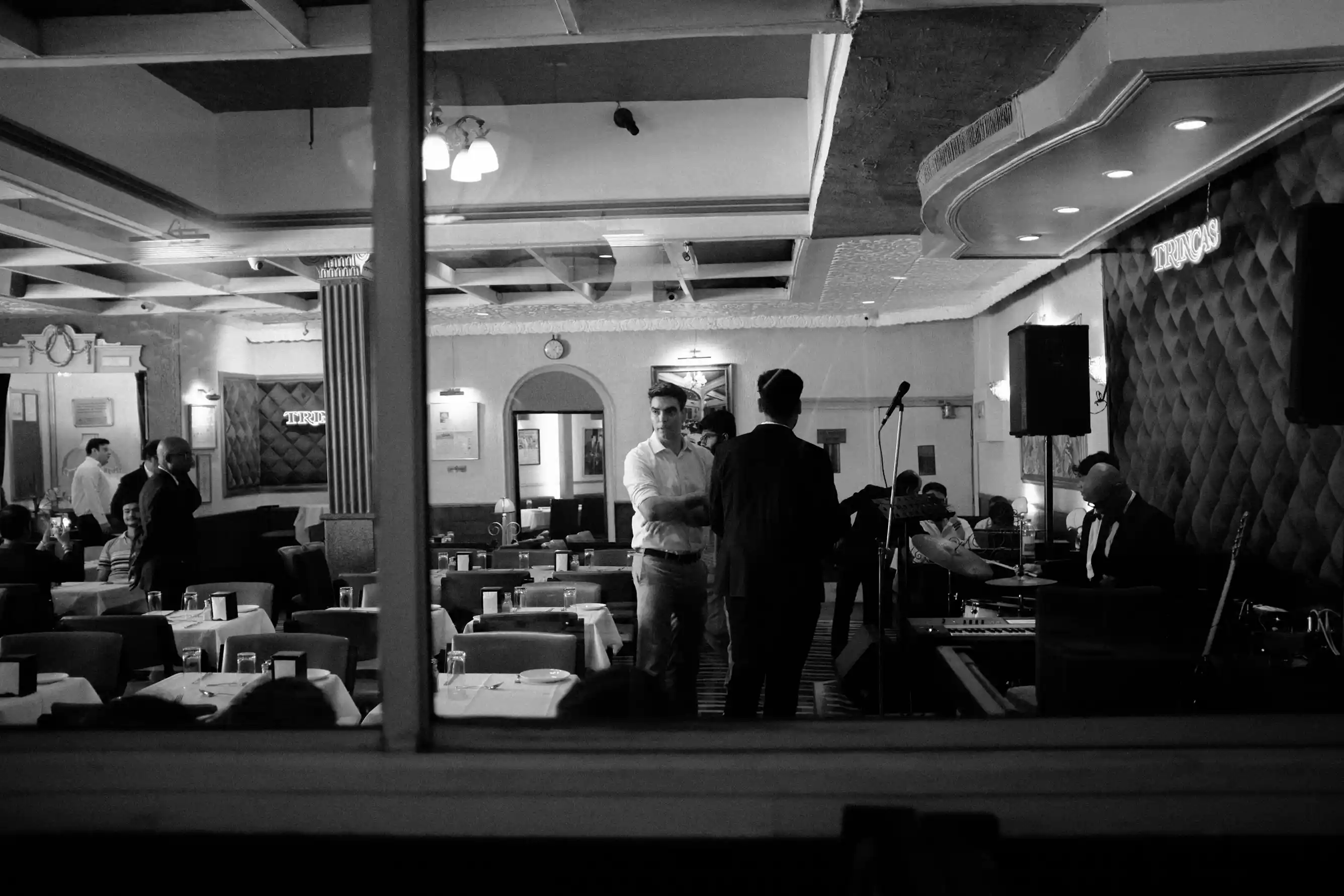
The Comeback Of A Kolkata Institution
The dash of scepticism with which I received the update — aware as I was of the sentimental nature of the city’s residents — was entirely entwined with a desire to be proven wrong. Trincas had regained ground and a large part of its appeal hinged on its old-world charm. But while the 45-year-old Puri built on the vintage look and feel of the establishment, he also infused newness from the ground up. For starters, he brought in a fresh batch of musicians and created an engaging social media presence. And he took it upon himself to position the restaurant as an institution with significant cultural and historical value — a genius move that made all the difference — through the Trincas Timeline Project (TTP). The labour of love seeks to track and throw light on the history of Trincas and, by extension, Kolkata through the last hundred years, linking the restaurant and the city in an inextricable alliance where one pushes the cause of the other.
Trincas became a talking point once again when Puri brought jazz back in 2021, after COVID-19 loosened its grip. The move spawned a renewed interest in the genre in Kolkata. “When I decided to start the jazz lunches, it was with the idea of doing them every single week. A couple of five-star hotels perhaps dabbled a bit in it but they are not accessible to everyone. There was no venue in the city that offered jazz on a regular basis at that time,” says Puri. He started cautiously, testing out the idea at lunchtime on Sundays since they already had in-house bands slotted for the evenings. It became so popular that he would expand the programming to Saturdays. “There are many who really took to it and, over time, several jazz ensembles popped up in the city. Now, if you look around, there may be a limited number of musicians but they play in all these various combinations around the city, which is exactly how it was in the ’60s,” says Puri.
Reimagining Tavern-Behind-Trincas
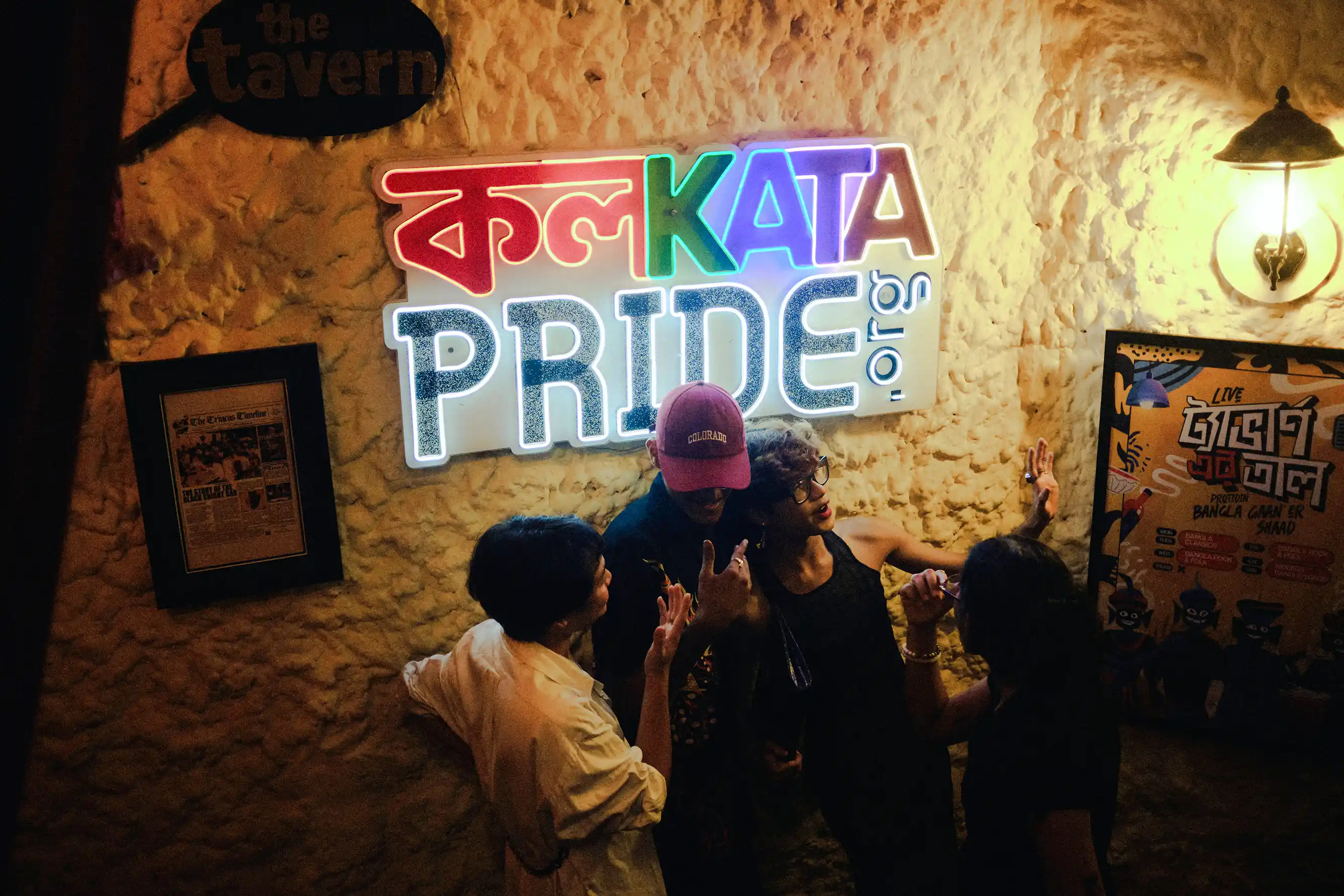
Puri’s penchant for experimentation has been plainly visible in the last six years when he took the restaurants through unexpected new paths that Kolkatans never saw coming. Among the breakthroughs is 53-year-old Tavern’s weekly karaoke nights that was originally conceptualised to commemorate Pride Month in 2023. Organised in collaboration with Kolkata Pride [a Community-Based Organisation that works for queer inclusion] to encourage the LGBTQIA+ community and its allies to come together and socialise, it was an instant hit and sent Tavern’s street cred soaring. “The level of enthusiasm didn’t waver and it became so popular that we never looked back. It has created a subculture movement. Tavern would get busy on certain nights but, in general, it was like a little forgotten cousin of Trincas which was always more popular,” says 47-year-old Navonil Das, fashion designer and co-initiator of Kolkata Pride. Perhaps, most significantly, it cracked the door open for various other LGBTQIA+ community-centric events that are now a common occurrence at the premises. “I’ve seen customers plan their travels keeping the karaoke nights in mind. I’ve met so many marginalised people — from different backgrounds — here. Tavern is transforming how queer people lead their lives in the city because it’s a permanent space where they can turn up on any night,” says Das.
For the longest time, Tavern was merely treated as a source of revenue. “Naturally, my family looked at it through a business lens. But my solutions are different. I looked at what’s missing in the market and what I needed to do if I wanted Tavern to stand out and be loved. It wasn’t just about the numbers. The changes I was making would take a while to come to fruition,” says Puri.
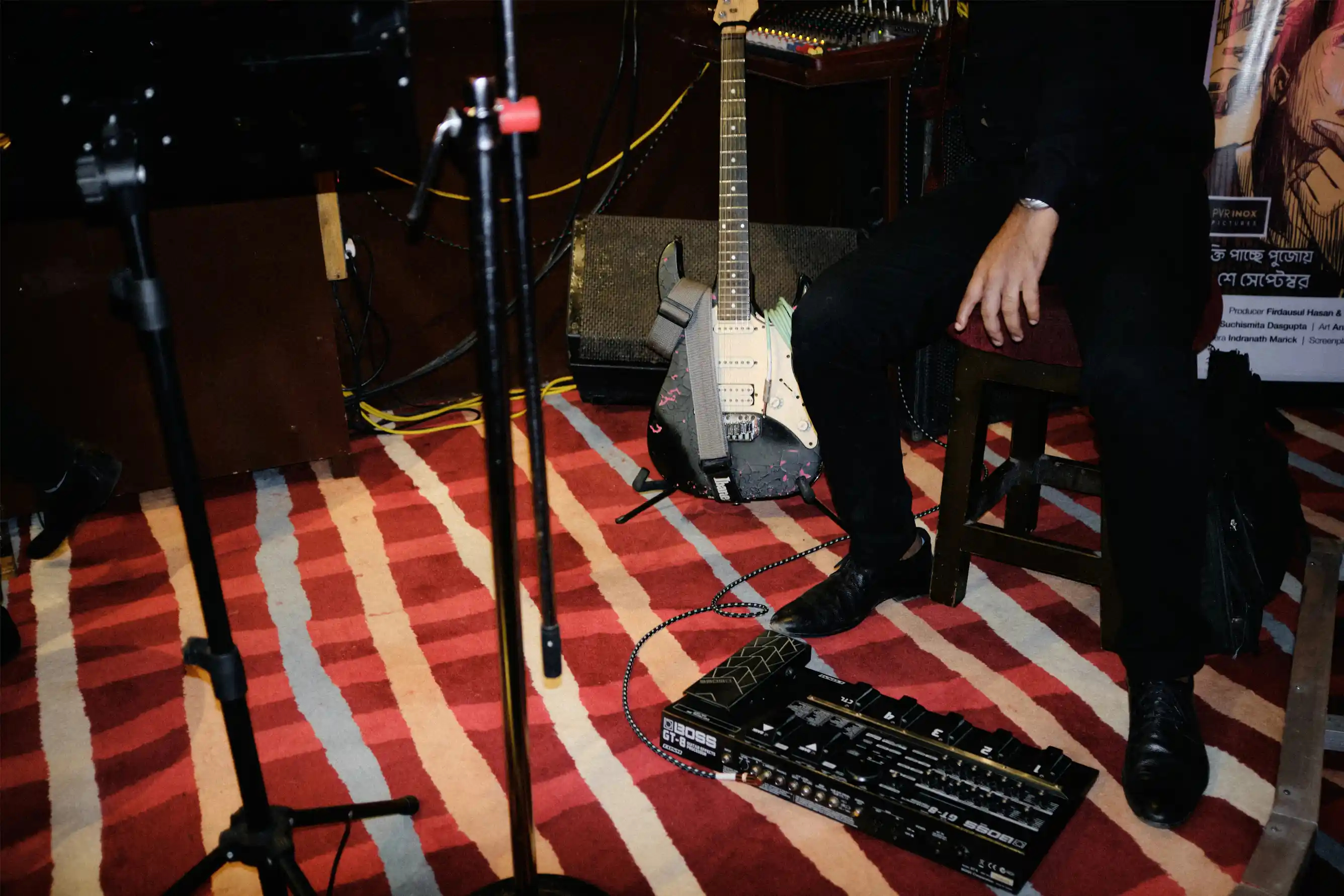
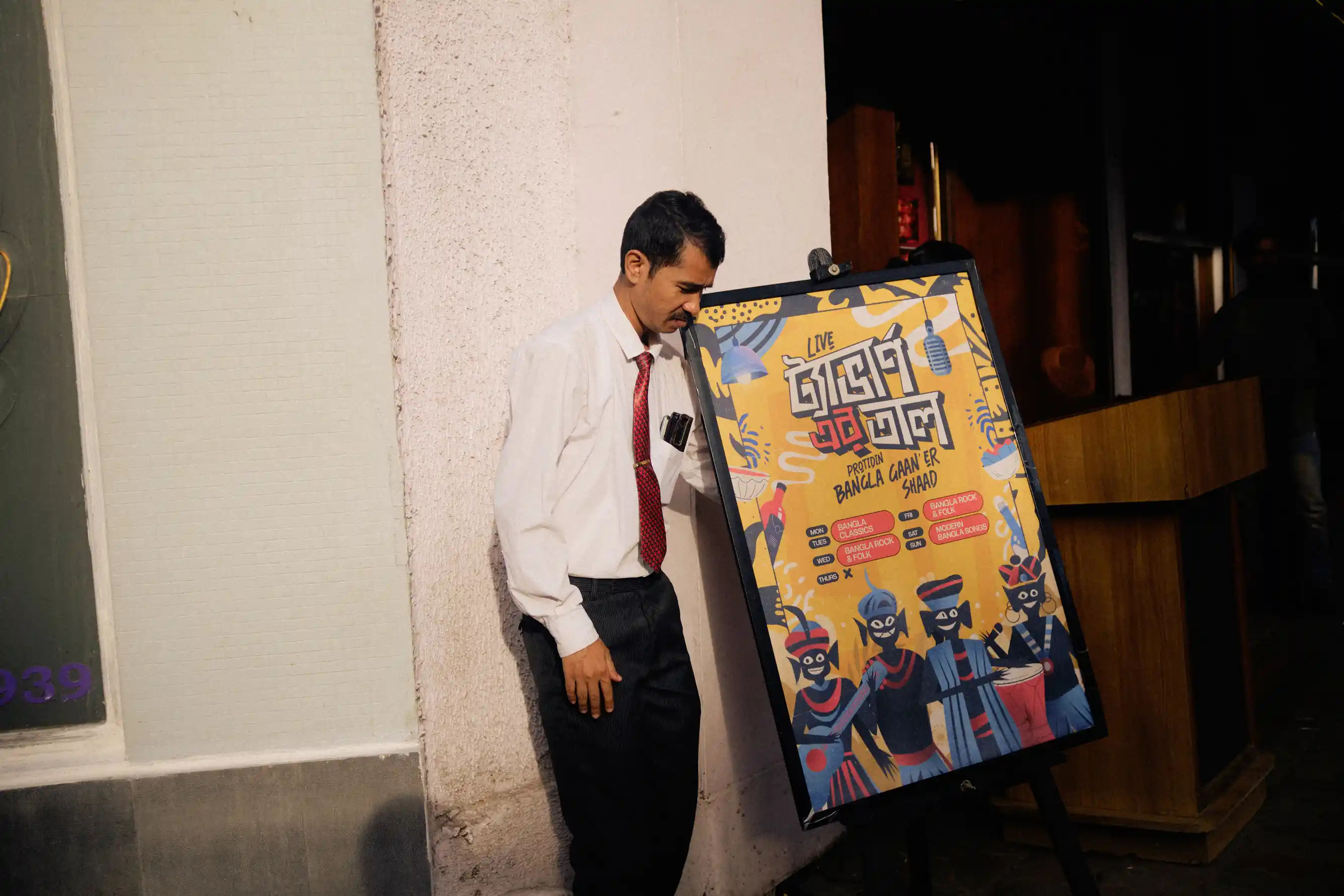
Tavern has a less polished feel that he retained, never seeking to sandpaper its distinct identity even as he gradually went about zhuzhing it up. As with Puri’s efforts around jazz, his approach towards revitalising Tavern was centred around community building. And this was also the governing thought behind gingerly introducing live Bengali music here in November 2024. Offering a stage to regional music, particularly on Park Street, felt off-kilter to many. But Puri went ahead and, with plenty of heart, launched their in-house Bengali music collective Tavern’er Taal. Another surprise success story that added to the cultural cachet of the unassuming space.
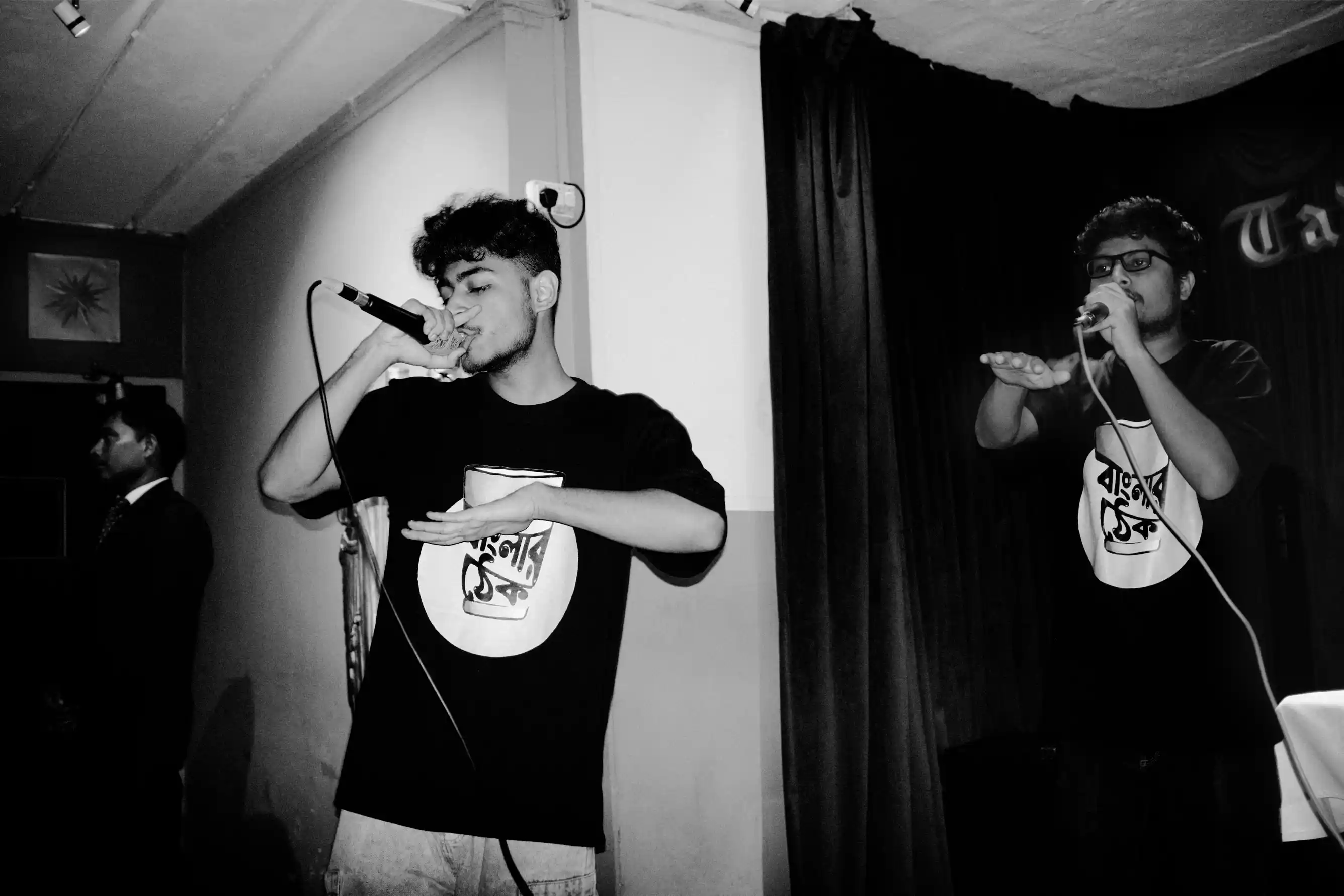
Last year, he conjoined their identities, using Trincas to highlight Tavern. “I rebranded Tavern as Tavern-Behind-Trincas to indicate its location. It also gives it some context and lends credibility because Trincas has a musical legacy and this is Trincas’er chhoto bhai [Trincas’ younger brother]. I used Tavern to experiment quite a bit — not all of it worked,” he says frankly. “For example, something that didn’t work was the open-mic idea. The Bengali hip-hop that’s on right now, before the karaoke on Thursdays, is hanging on a thread because Cizzy [Rounok Chakraborty], who’s been curating the cypher sessions, is now getting busy with his own projects. But, for me, it makes more sense if it’s meaningful and resonates emotionally with the public.”
The Impact
Trincas has re-emerged as a site that stands for exclusivity of experience. And Tavern has surfaced as a worthy counterpart with its propensity to take on the system, fill gaps in the mainstream narrative and subliminally renegotiate sociocultural hierarchies. Together, they have re-invigorated the local scene, operating as a microcosm of the old and new that perfectly encapsulates the city’s cultural shifts and tendencies. Patrons often flaunt Trincas and Tavern to visitors to give them a taste of the various facets of the city under one roof. And this, I would argue, is Puri’s secret sauce. While other Park Street restaurants follow the “If it ain’t broke, don’t fix it” rule, Puri made it his business to offer a more wholesome experience that goes beyond dining. Hence, he continues to diligently document the history of Trincas, whether it is through the “History-Blog” section of the website or the new book that he is writing. At the same time, Puri strives to make the spaces contemporary and multicultural, with an eye to the future. “Anand and I are always talking about how we can leave a mark, and we have realised that there’s a lot to gain from spotlighting niche cultures and interests. When he started the live Bengali music gigs at Tavern, nobody else was focusing on Bengali bands or the language and looking at how well it is doing,” says Das.

Bringing Regional Music Into The Mainstream
Walk into Tavern and you will find that it gives you the space to shed inhibitions. Forty-year-old Sudipta “Deep” Chakraborty, lead vocalist and manager of Tavern’er Taal, weighed in on the comfort zone that is Tavern, emphasising that its ineffable atmosphere can only be experienced, not described. “The identity is totally different from Trincas. When customers go to the main floor at Trincas, they conduct themselves in a certain way. For instance, they don’t go up to the band. If one wants to request a song, one has to write it on a paper napkin and send it over to the band. Here, we encourage interaction, and you hear people shouting out requests,” he adds.
Chakraborty feels at home here and he is not alone. There are many who feel seen to be sitting at Tavern and celebrating regional music that is shunned by premium establishments on the daily. He admits that before word got around and customers started queuing up, there were moments when the Tavern’er Taal musicians would express apprehension about the reception but he asked them to be patient. “I told them that when history was made at Trincas we weren’t around but history is being made at Tavern now, and we’re smack in the middle of it. Anand Puri was keen on creating a dedicated space for Bengali music and I fell in love with the idea because I don’t know of any cafe or pub that has a regular Bangla set-up,” he says.
Tavern’er Taal plays a range of Bengali music — from well-loved folk songs “by Lalon Fakir to [Bengali rock band] Fossils”. “We’ve selected artistes who can manage a variety of genres. Families love songs from the ’60s, ’70s and ’80s. Then, we have a group of regulars who only want to listen to songs by rock band Mohiner Ghoraguli whose frontman Gautam Chattopadhyay performed at Trincas in the ’60s. Diasporic Bengalis form a big part of our fan following. They keep saying, ‘Eita’r khub obhaab chilo.’ [This was deeply lacking],” Chakraborty says.
Outside performing hours, they used to play English and Hindi songs earlier. But, now, customers want to hear Bengali music throughout the day. To fulfil the demand, Chakraborty and his fellow musicians have created a Bengali playlist that spans a century. “People can really identify with it. Songs like Hoyto Tomari Jonno and Jibone Ki Pabo Na are very relatable for the queer community. Even when we play less popular songs, we find customers requesting them the next day — which means that they went home, listened to those songs and liked them.”
Going Local
Historically, neither establishment has had a Bengali focus. But for three consecutive years now, Tavern has kicked off Kolkata Pride’s pujo [as Durga Puja is locally referred to] programme with its karaoke nights. “Music and art are very much part of pujo. Many feel low during festivals so we try to involve them in plans that will make them feel comfortable. Karaoke works really well in these situations as it gives one that feeling of being part of a greater whole,” says Das.
The first event with a focus on Bengali culture took place in August 2023 when London-based Rabindra sangeet and Bengali folk singer Sahana Bajpaie performed at Trincas for a Kolkata Pride fundraising event, aptly titled Songs of Desire.
This year saw an uptick. In early January, Trincas offered support to the first edition of the Bengal Biennale, a month-long exhibition held across Kolkata and Santiniketan, by hosting its culminating event — a performance by jazz veteran Louiz Banks. Subsequently, Tavern launched Taal Baisakhi, a five-day-long Bengali music festival to celebrate Bengali New Year or Poila Baisakh, this April. Rapper and music producer Cizzy, who leads the Bengal-based hip-hop collective Banglar Thek, was keen to collaborate with Tavern’er Taal for the occasion. “It felt special because I got to add my own verses and spin to Bengali songs from my childhood,” says the 31-year-old. “Bengalis and Kolkata in general have always celebrated nostalgia. Newness isn’t always welcome here. But, thanks to the platform Tavern has given us, we’ve really been able to push a new sound, and culture, which is Bengali at its core and yet very 2025. Or, as I like to call it, very 1432, to reference the new Bengali year. My crew Banglar Thek has dropped a song called 1432 where we’re talking about change; it captures the essence of the new Bengali generation.”
Interestingly, the term “nostalgia”, like Trincas, is of Swiss origin. Trincas was originally owned by Quinto Cinzio Trinca and his wife Lilly, a Swiss couple who ran it as a tearoom and bakery for 20 years between 1939 and 1959. “Nostalgia”, coined by a Swiss physician in the late 17th century, was initially used to refer to a disorder that was thought to be neurological and specific to Swiss soldiers serving away from home, according to the Handbook of Experimental Existential Psychology (2004). As time progressed, it came to be regarded as a psychiatric condition, a form of melancholia. Today, the nostalgic experience, the handbook concludes, can serve as a coping mechanism or induce “positivity and even happiness”.
Puri has often described Trincas as “retro-cool” and this prompts me to ask him if he thinks that Kolkata feeds off nostalgia. He says in his straight-forward manner, “I hate the nostalgia trap.” He’d rather use nostalgia counterintuitively, “as the propellant to take you into the future”.
Maybe, nostalgia is not a Kolkata affliction anymore.