India’s Food Brands Are Drawing Up An Appetite
Since feasting first with the eyes is known to whet our palate, many food businesses are laying great emphasis on their branding, design and packaging. Verve looks at how illustration has increasingly become an effective emotional shorthand to communicate warmth, wit and individuality — and make eating an even more pleasurable experience for the customer
At Grumps, a bar in Goa, a cheerful, lavender-coloured mascot cheekily peeks out from where you’d least expect him to. He’s bald, lithe and always has a beatific smile, whether you spot him in a mural in the 100-year-old space, cast in ceramic in the form of custom-made chopstick holders or hobnobbing in social media creatives and menus, with the mascots of other restaurants, like BB, Bandra Born’s stocky, pav-inspired persona. Sometimes he has lavender-coloured “pals” like a toucan and a wine-sipping cat. “Slither in,” says the bar’s Instagram bio, and the purple fellow does just that.
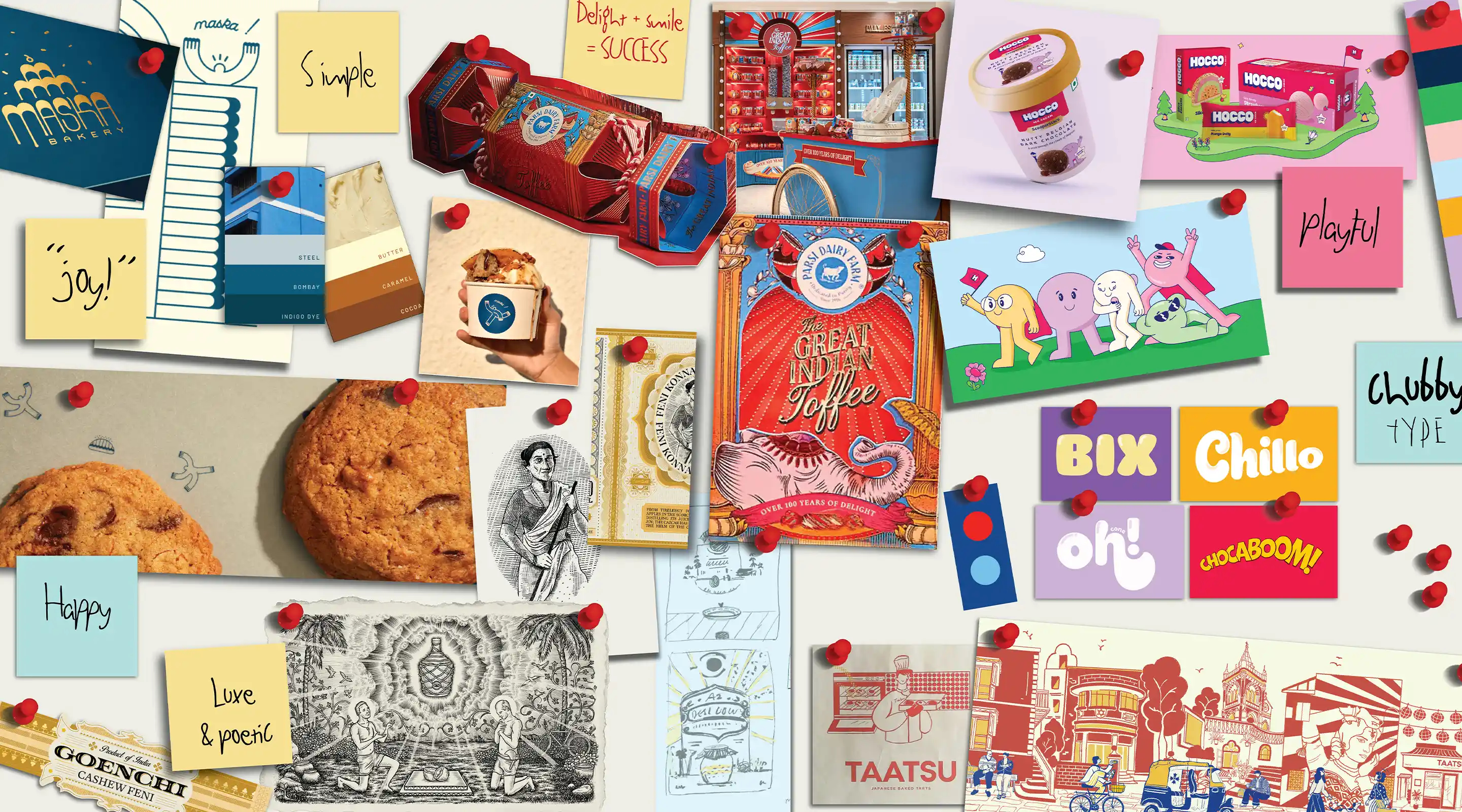
Doesn’t really sound like a restaurant, right? But a bird’s-eye view of many food businesses popping up across India also reveals a similar leaning toward branding and design. Saturated colours dominate, like the orange of Bène Pizza and Pastry, Pomodoro Pasta & Coffee Bar and The Croffle Guys, or the ultramarine blue of Boo La Jerry, TwentySeven Bakehouse, Jaago Cafe, First Coffee and Pizza 4Ps. Mascots abound, as seen in Hocco Ice Cream, Maska Bakery and Grumps where cheeky personas and tones of voice stand out. The result? A food landscape that’s maximalist, vibrant and playful — and increasingly illustrated.
“Food is all about eating with the eyes first, so a focus on branding and packaging makes sense,” says food writer and editor Joanna Lobo. “It showcases two things: that people truly care about the brand and have put thought into making it a pleasurable experience for the customer. And it tells me you are passionate about your product, and while it is a business, it is also allowing me to be a part of your food dream.”
Across industries globally, experts are noticing that Gen Z is driving a return to #throwbacks — think low-rise jeans, film cameras and cigarette candies. While dealing with climate anxiety, political uncertainty and a pandemic that brought the world to a halt, people across generations just want to feel good — and brands that deliver optimism that harks back to simpler times are winning hearts. Illustration has become an emotional shorthand, an easy way for brands to communicate warmth, wit and individuality.
Illustrations are infinitely adaptable. Changing flavours? Draw new characters. Launching a festival pack? Add cultural motifs. Planning a collaboration or takeover? Merge your mascots. Data shows that Indians love it — according to 2025 estimates by Hootsuite and Sprout Social, posts tagged #foodillustration grew by 170 per cent globally in the past two years, with India among the top three contributing countries.
Nostalgia is one of the key drivers in this new wave. The beverage brand Paper Boat was one of the first to successfully evoke happy childhood memories, reviving drinks like aamras, kala khatta and jaljeera. When it launched in 2013, its award-winning, soft pastel-toned, pouch-like packaging with flat, minimalist graphics and iconography was revolutionary, standing out on a crowded shelf of carbonated drinks and sugary juices.
A decade later, nostalgia has evolved — it’s now artisanal, hyperlocal and deeply designed.
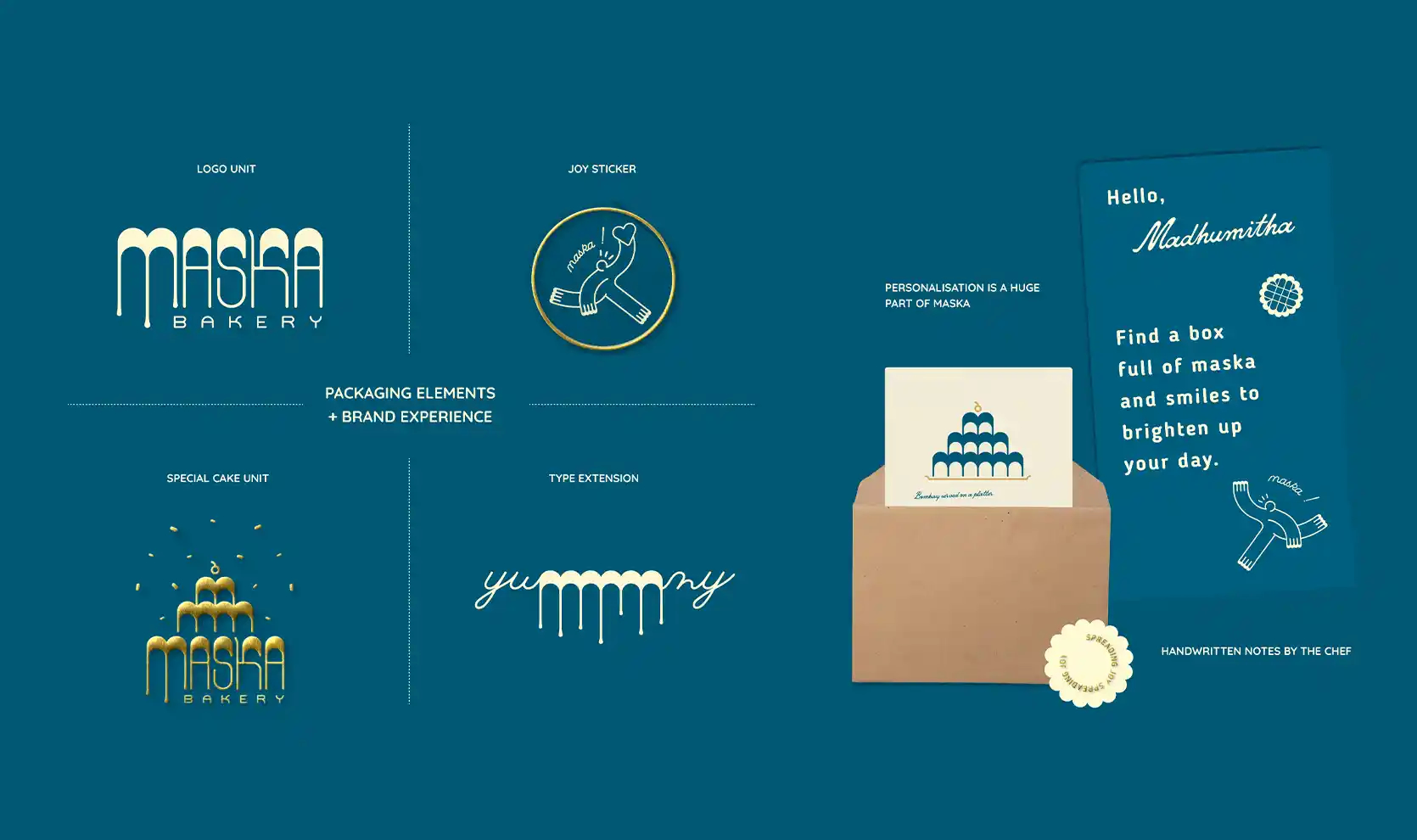
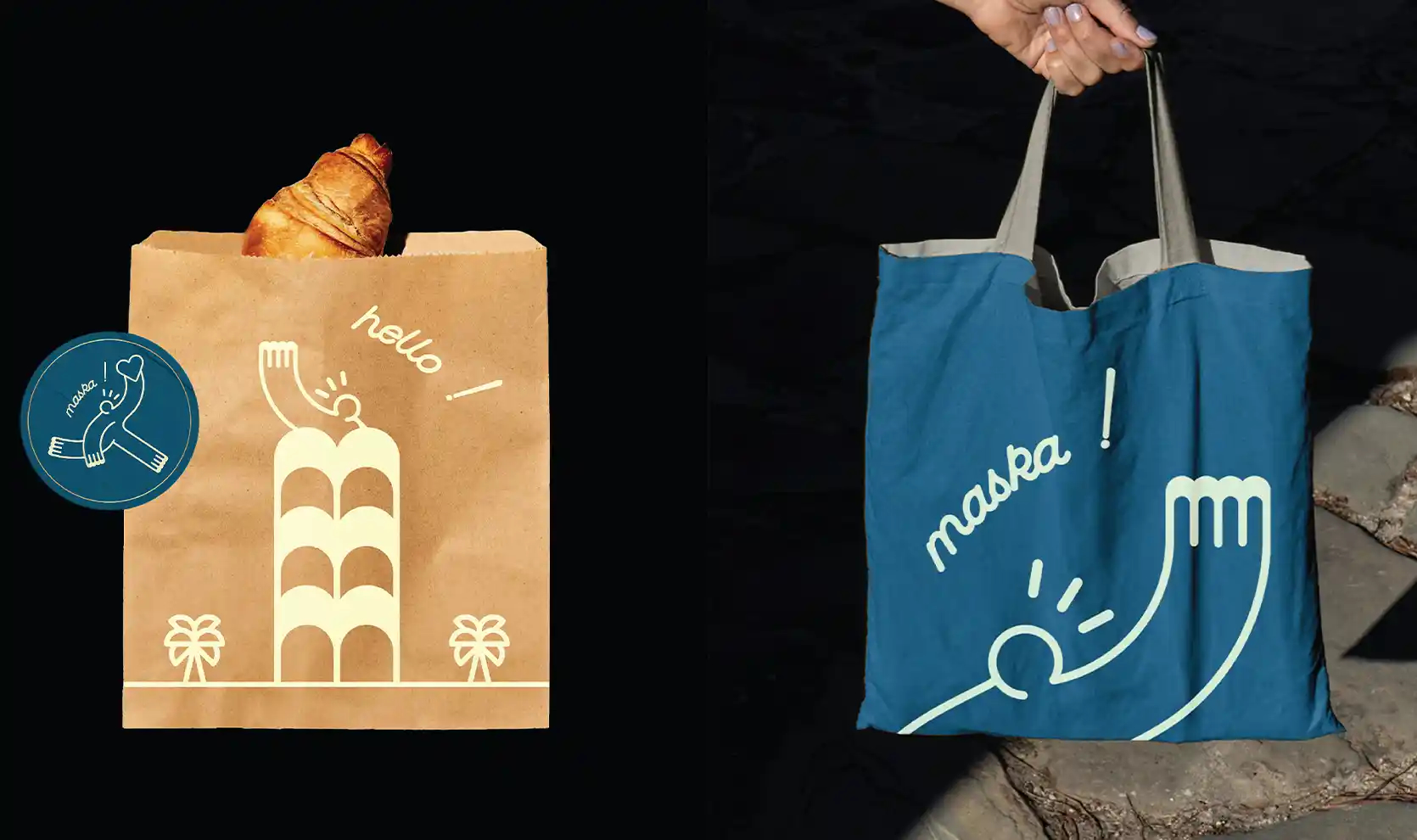
With Mumbai’s Maska Bakery, chef Heena Punwani and Shruti Singhi of Mother Tongue Design created an ode to Bombay’s neighbourhood bakeries of yore. This nostalgic sweetness permeates every element of the brand: the fluid arches of the logo resemble pillowy loaves of pav, the yellow accent colour evokes buttery aromas and the name itself is a cheeky throwback to Bombay’s maska pav (bun with butter).
Joy, Maska’s mascot, prances encased in gold across their blue packaging — holding a sparkler on Diwali hampers or surrounded by chubby modaks on Ganesh Chaturthi boxes. Where there’s a need to emphasise celebration and delight, there’s Joy. “We’re packaging a feeling,” says Singhi. “And that feeling has to be really familiar and be clear as soon as you see it.”
Maska is a cloud kitchen without a storefront, so design and menu must do the job of memory and smell. “I really like that Maska is a very proud Bombay brand,” says Lobo. “And I want to keep all their boxes just because they look so interesting! It definitely enhances the consumer experience for me.”
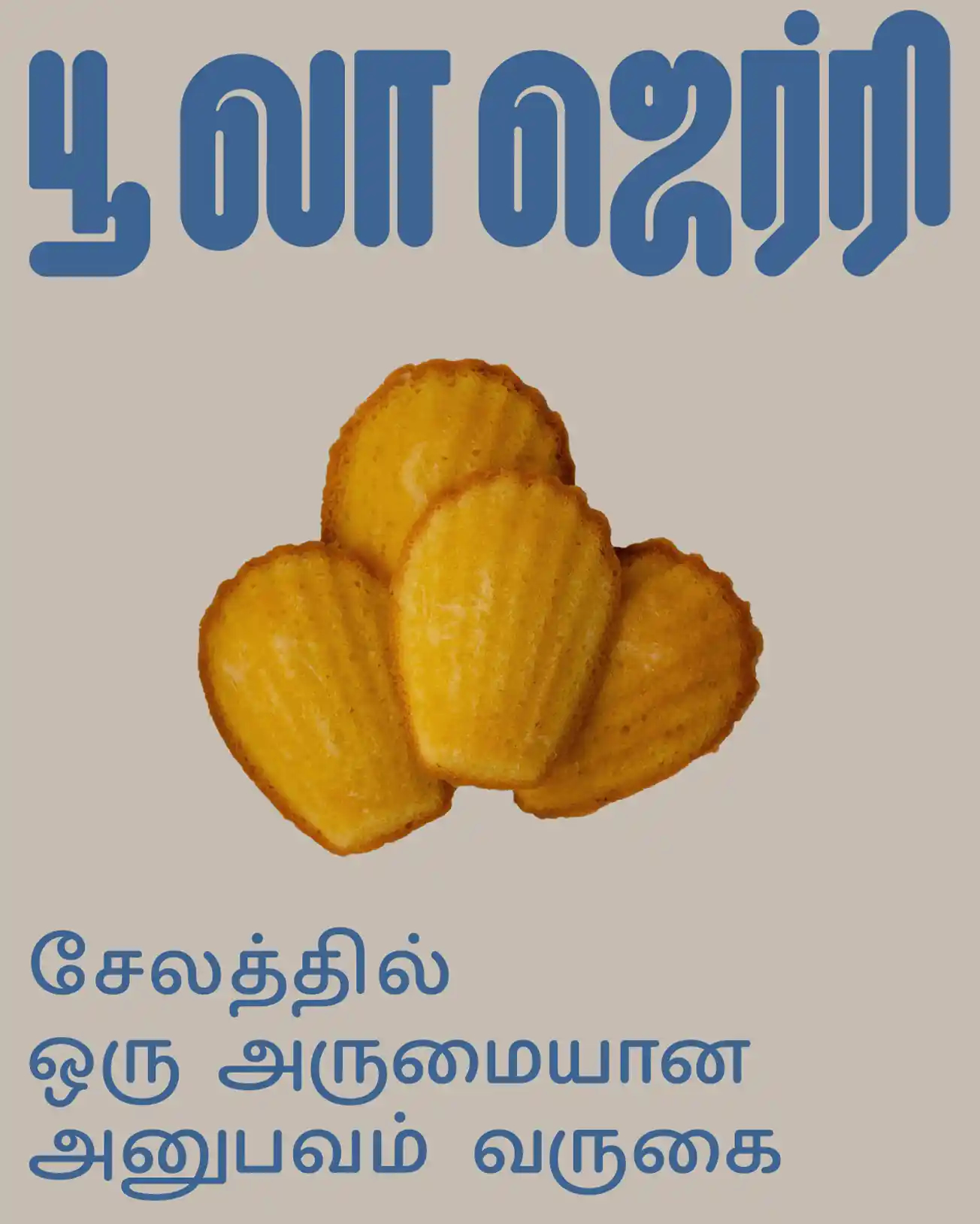
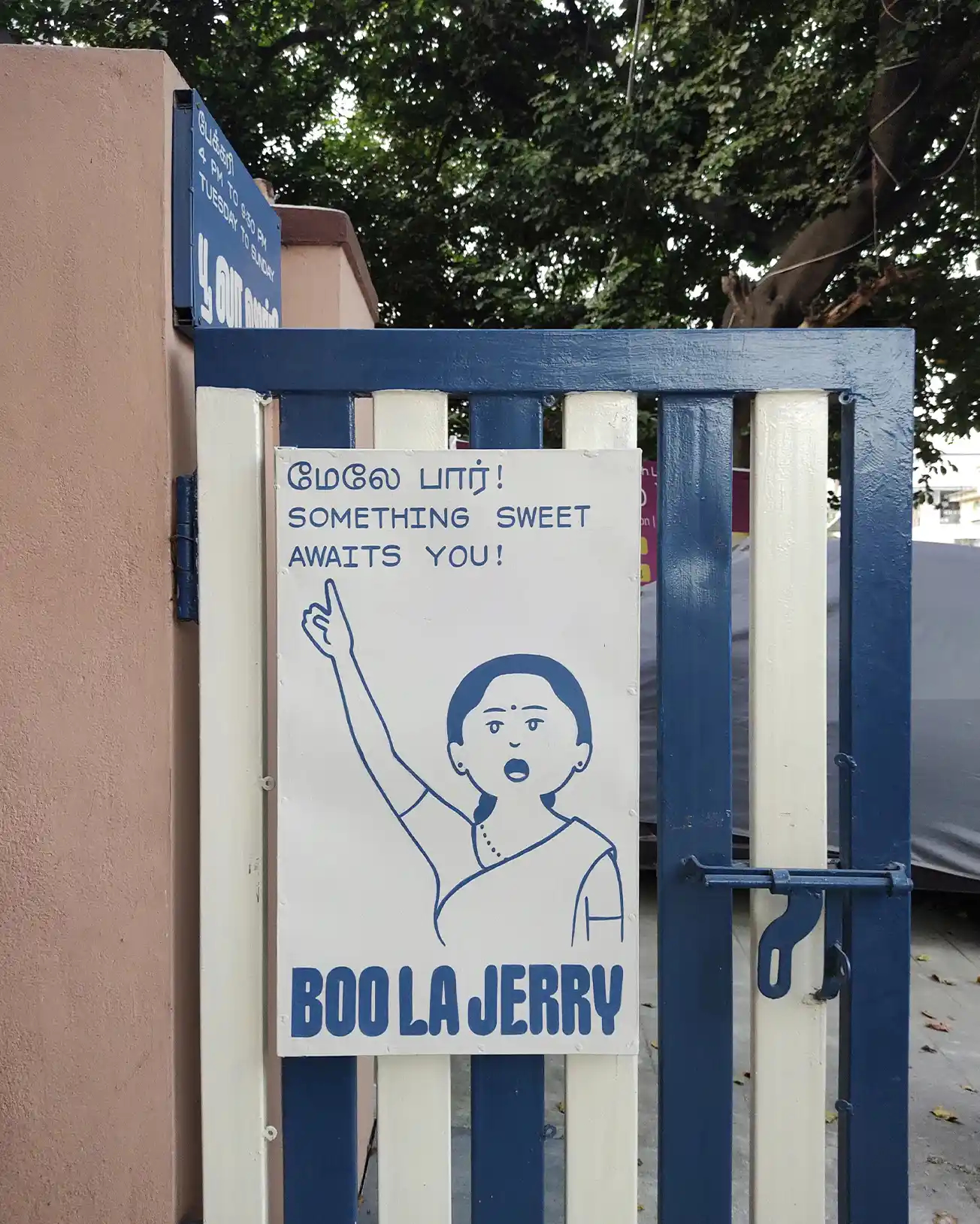
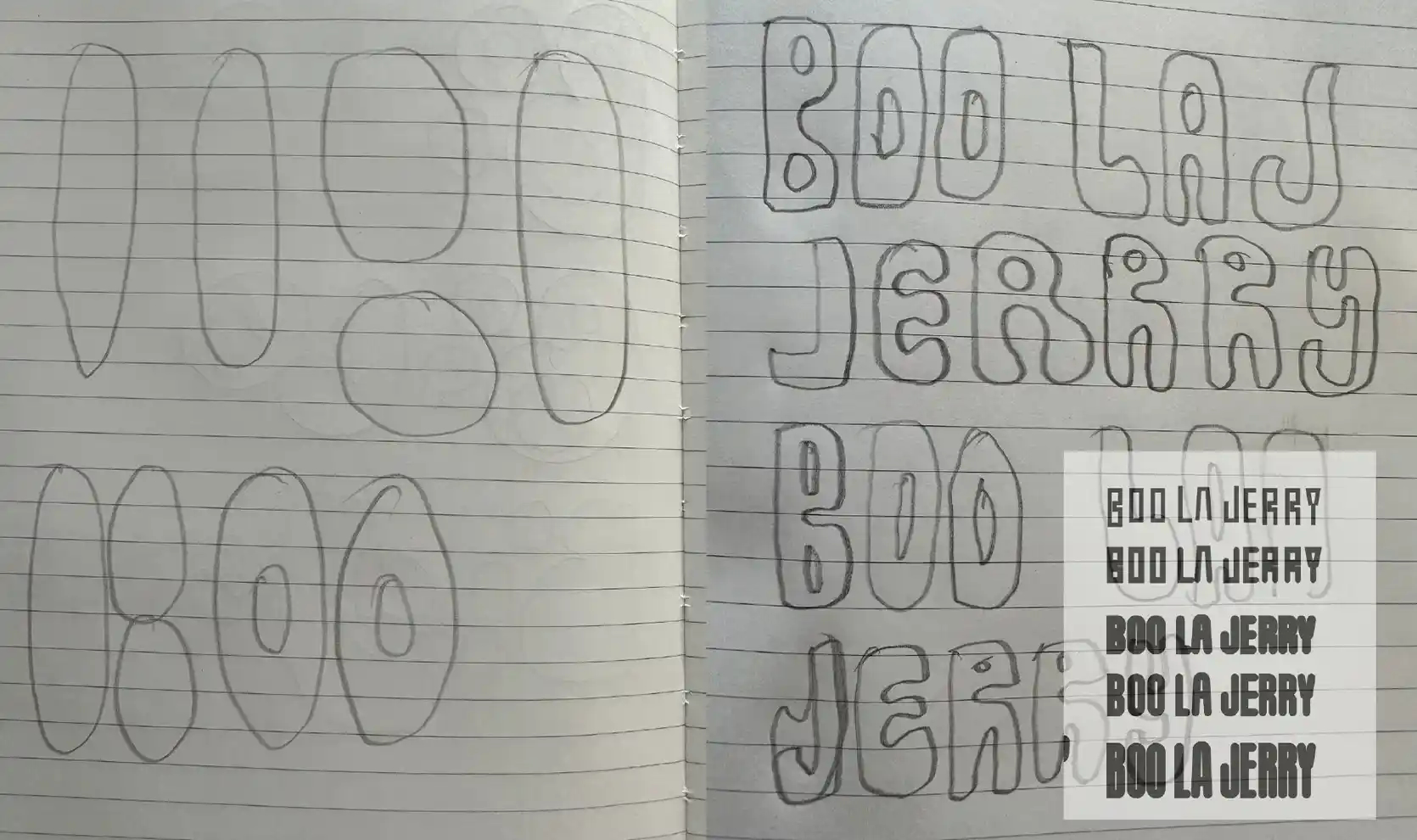
In Salem, a town about six hours drive from Chennai, a French-inspired bakery with a bright blue sign stands out among the baby pink and pastel yellow frosting-filled displays of the other traditional bakeries. Everything about it pays homage to France: the name, Boo La Jerry, is a simple, playful twist on boulangerie, the French word for bakery; the custom typography is inspired by the long slender form of the baguette; and the bold use of colour draws from the iconic Klein blue created by French artist Yves Klein. How are locals reacting to its unexpected design? “No one really questions the form or design. It is the name that stands out for them, something they have never heard before,” says Navackotti Sheerangan, chef and co-founder. “Most food establishments in town have common names with no deeper meaning. Our ambience and our shorter service hours are also quite different from what people are used to. It has even inspired other places in town to create a similar atmosphere.”
The emotional power of nostalgia, it seems, has only grown stronger. “While expecting a dystopian future, I think our newest generation is desperately looking for connection,” says Singhi. “They may have never eaten a bread and jam sandwich, but they want to connect with a product inspired by it anyway.”
Designers and brands are also harnessing illustration as a form of storytelling — one that bridges tradition and modernity.
“Now, people are buying the brand over the content of the brand,” says Manav Dhiman, type designer and founder of ManVsType. “You can sell one thing today and something entirely different tomorrow as long as people have bought into your story. That is successful branding.”
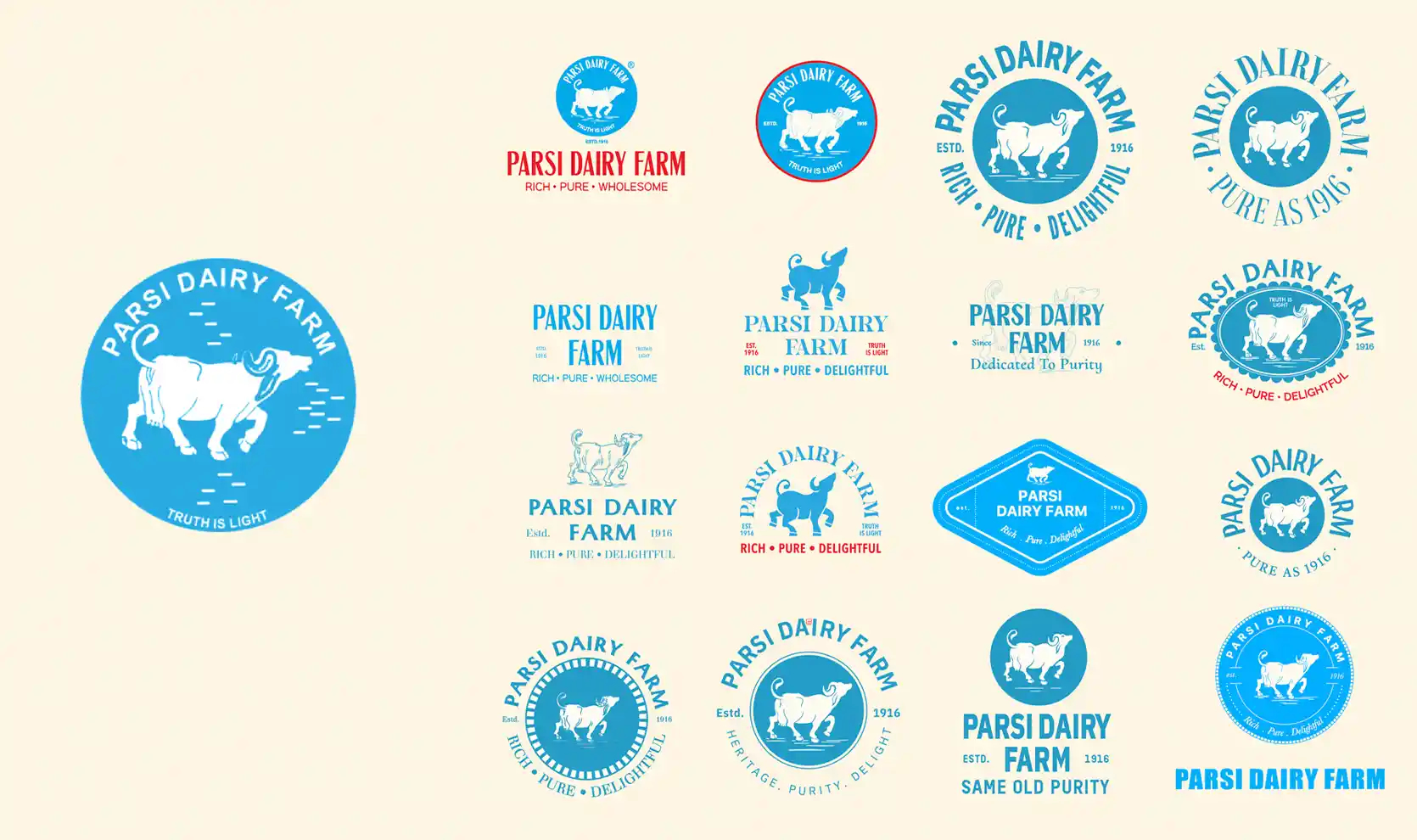
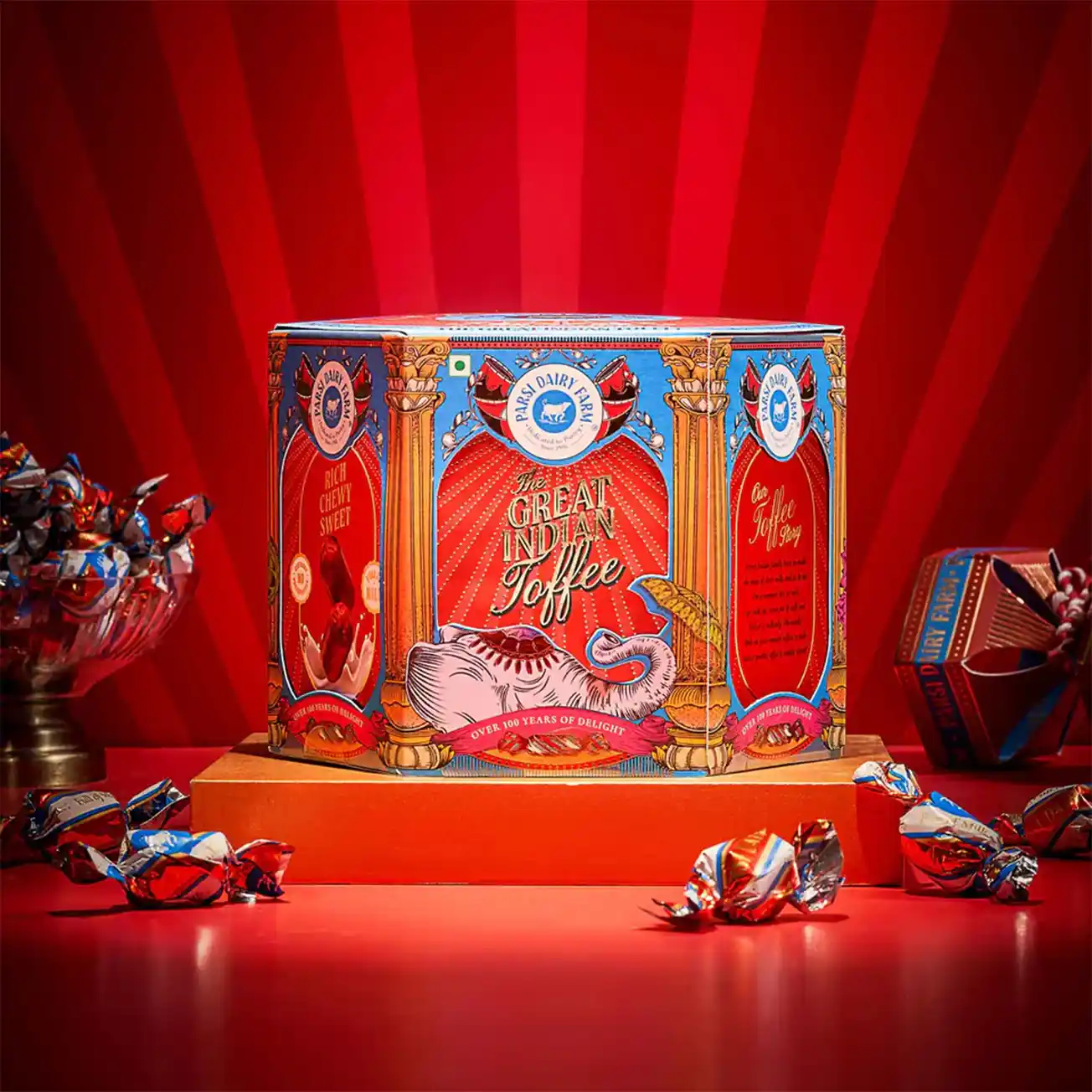
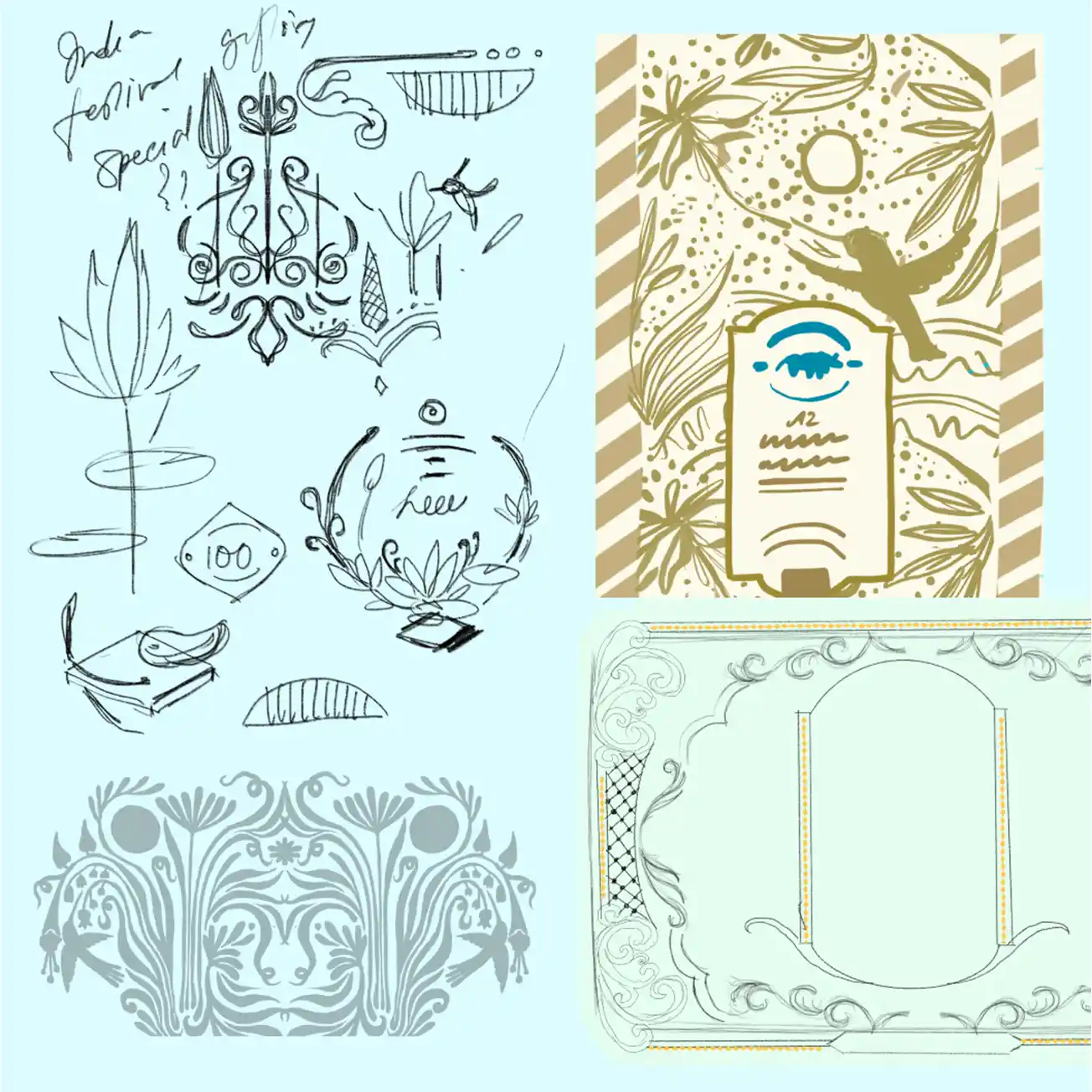
Please See’s rebrand of Parsi Dairy Farm, a 107-year-old dairy business, is built on the brand’s legacy with a fresh sense of play. The new packaging has a colourful, maximalist aesthetic inspired by American candy stores, with intricate patterns and realistic illustrations. Their “The Great Indian Toffee” box looks like a circus diorama, with swirls of colour and trumpeting elephants. Even the packaging of classics like their white butter features an illustrated curl of pale butter against a striped blue backdrop.
“There has to be honesty in what you’re building. And our job is to find some magic within that,” says Pritha Thadani, creative director, Please See. “Delight is an elusive emotion, but it is the goal. If the brand has made you smile, we’ve connected with you.” These smiles are good for business. Parsi Dairy Farm’s sales went up sevenfold after the 2023 rebranding and have since settled into a steady increase that’s four times the original.
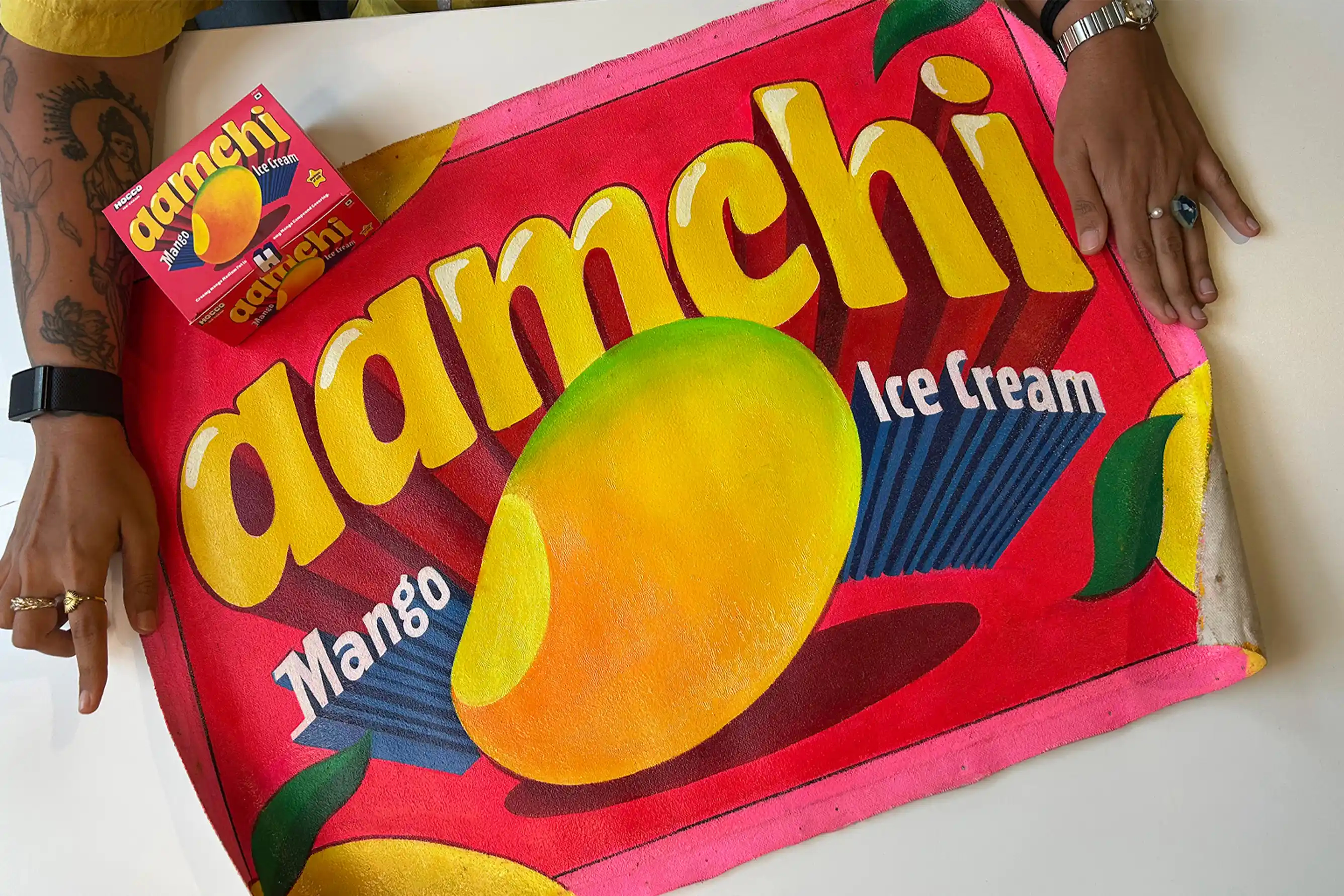
If Parsi Dairy Farm showed that heritage could feel fresh, Hocco proved that mass-market brands could feel crafted. Mango ice cream isn’t a novelty, but Gujarat-based brand Hocco used traditional Indian visual language to disrupt the entire category. Designed by Anushka Sani of Thought Over Design, Hocco’s mango ice cream, Aamchi, screamed Indianness — from its Marathi name to the mango peti-inspired packaging. Sani commissioned Kafeel, a traditional sign painter from Old Delhi, to hand-paint the logotype. The product itself was shaped and finished with edible spray paint to look like a real mango. It was different from what the competitors were doing and the older Hocco templates as well.
Aamchi exploded, being constantly sold out on Blinkit, partly because of the unique look of its campaign, and the global trend of unboxing videos (the demand is 10 times more than what Hocco can produce in a day).
It worked. “We stalked this brand as much as a man we like,” says food influencer The Carbies in an unboxing video, before rating it 11/10. Aamchi became the recipe for viral success.
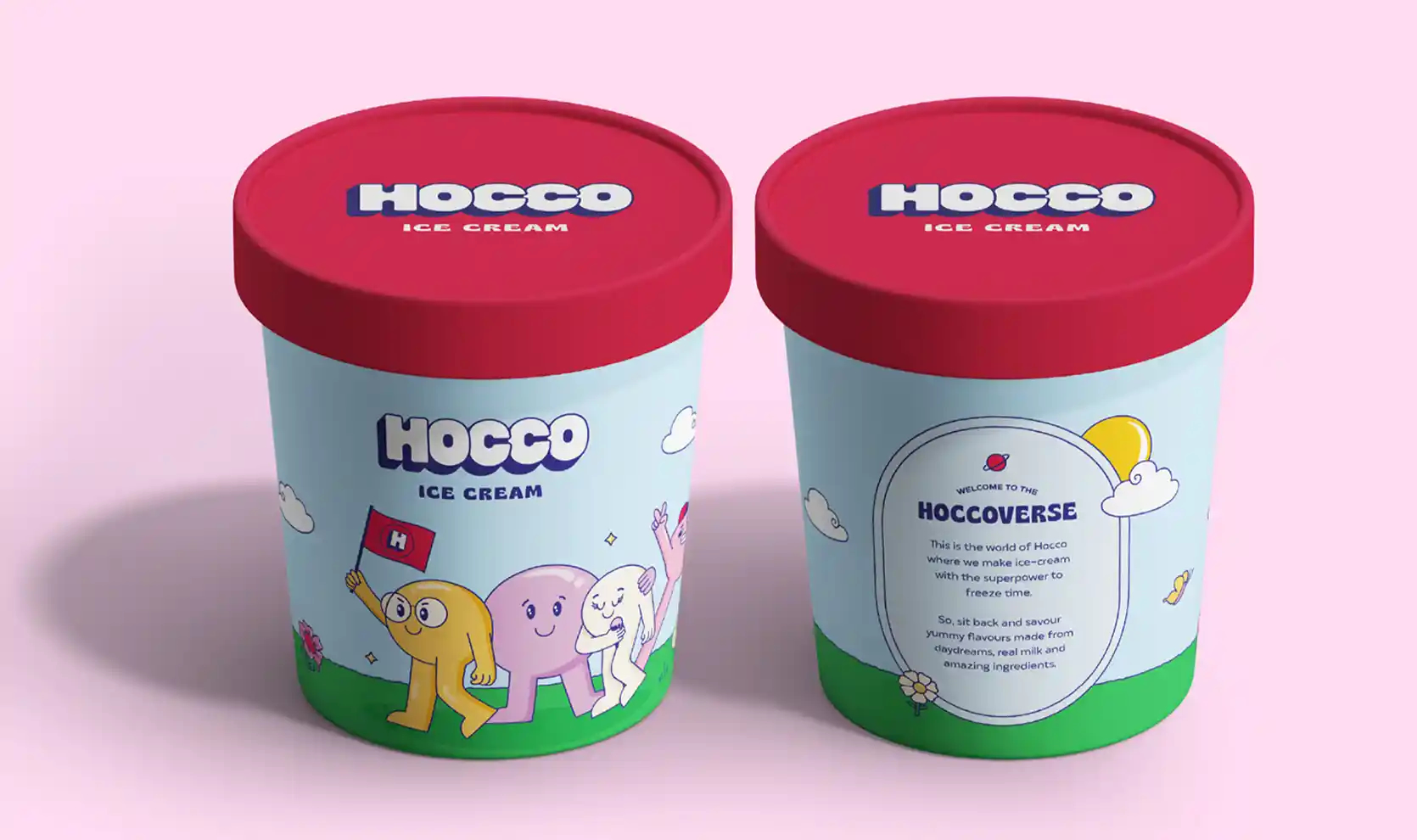
Hocco doubled down on illustration in other categories too, building what Sani calls the “Hoccoverse” — a pastel-hued world with raspberry red as the primary colour; a chubby, rounded logotype; and a family of zany brand mascots called Scooperheroes. A shout-out to Ben & Jerry’s iconic placid landscape and floating clouds, the Hoccoverse is idyllic and fantastical, like a child’s daydream come to life. The mascots float down rivers, lounge on beach chairs and frolic down slides — all the while eating ice cream, of course. “They’re happy to wipe your worries away with free hugs, love, laughter, and Hocco ice cream!” states Thought Over Design’s website.
“There is a need for newness, but there’s also a place for familiarity,” says Sani. “Balancing the two was critical in this particular category, because it is driven by distributors and retailers.” The result? A mass-market brand that looks premium, is photographed beautifully, and stands out in India’s chaotic freezer aisles. “The ice-cream industry is a fiercely fought category, but by being armed with a strikingly unique packaging design and brand narrative, we already have a leg-up on the competition,” says Ankit Chona, the company’s founder.
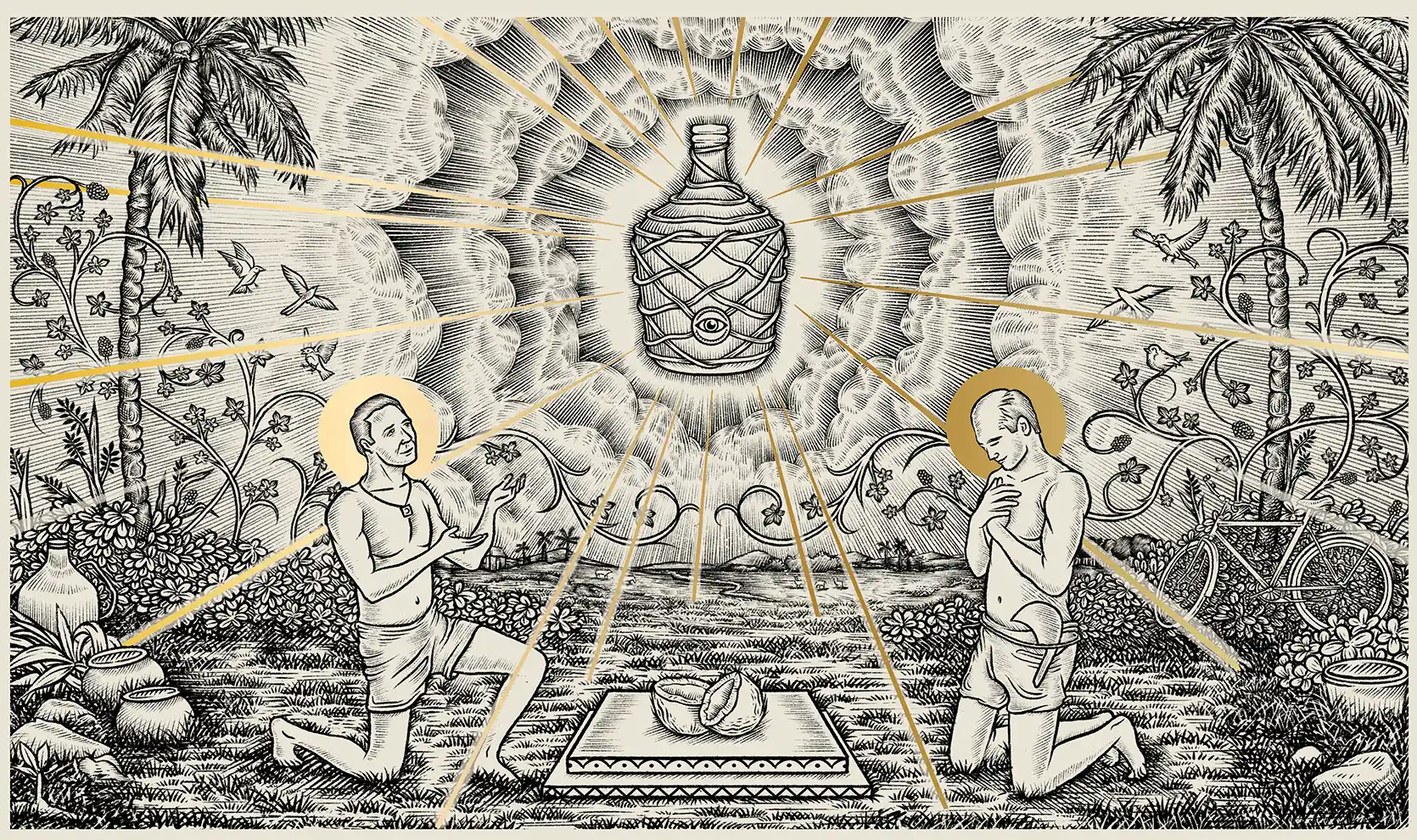
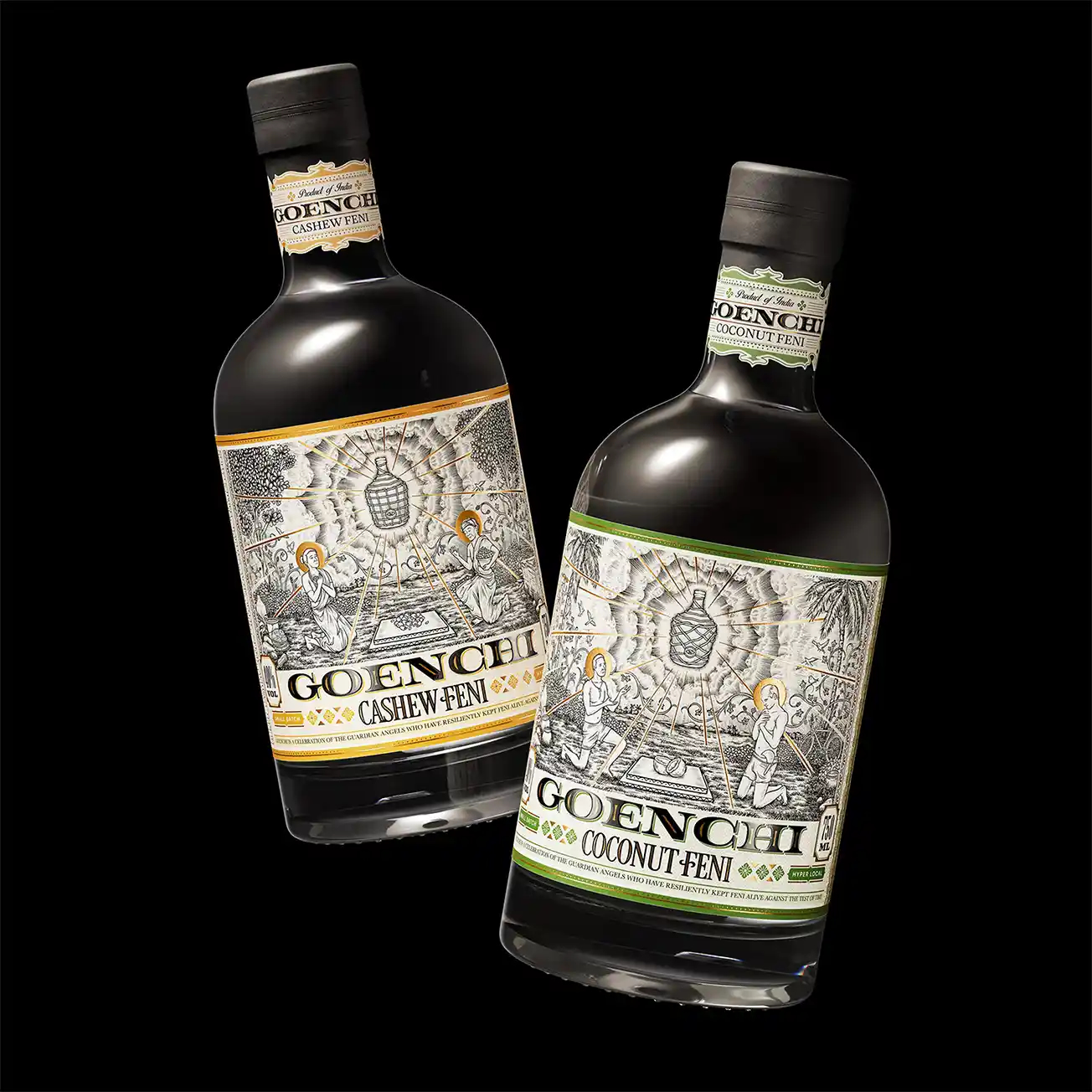
If Hocco is playful, Goenchi is poetic. For years, feni wasn’t taken seriously. Goa-based Goenchi set out to change that. “Feni has been a poor man’s drink, sold in plastic bottles, or novelty glass bottles in the shape of a ship, guitar or a Christmas tree,” says co-founder Yash Sawardekar. “It had become a souvenir that people would put on their shelves.”
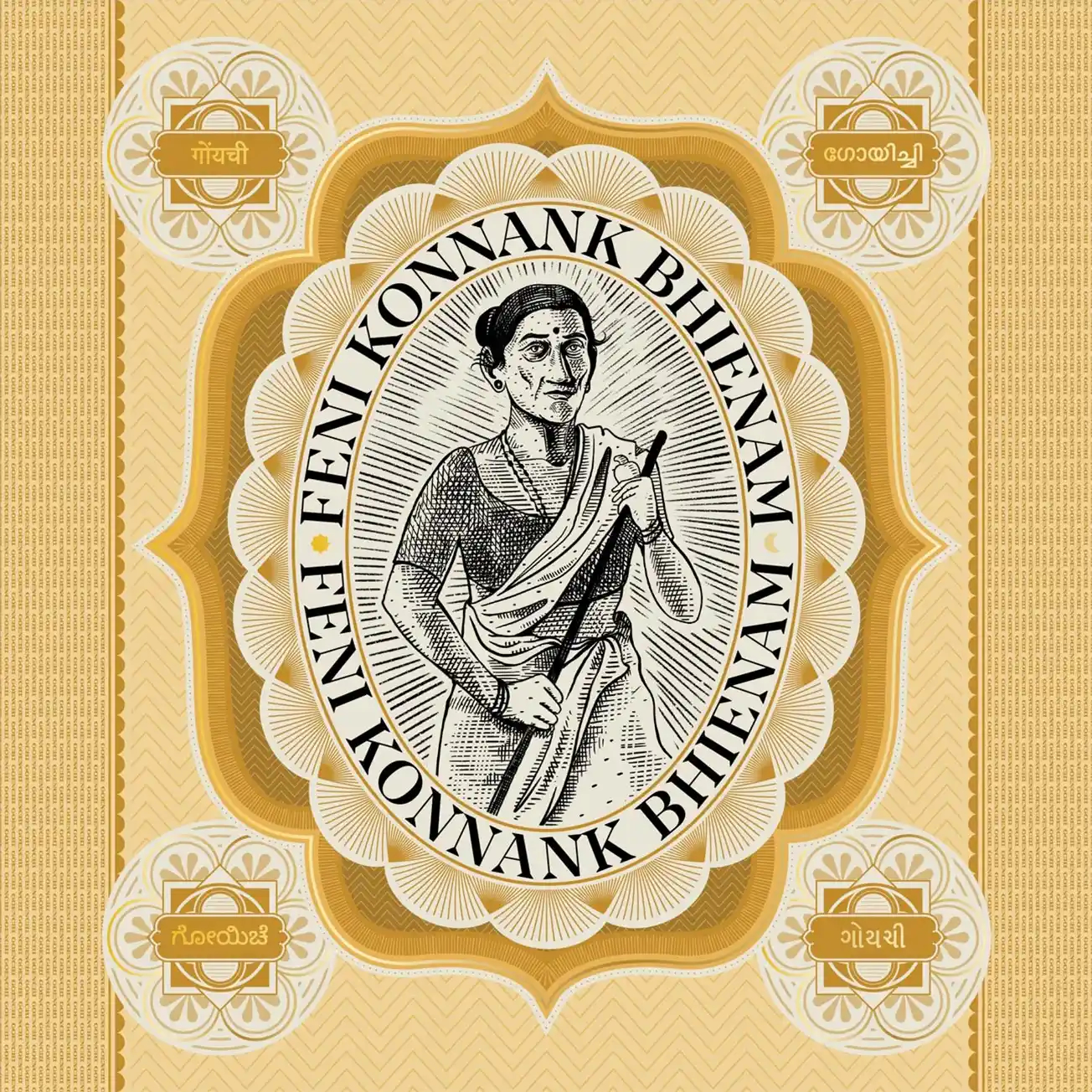
With no peers or references to draw from, Sawardekar teamed up with Aniruddh Mehta of Studio Bigfat to create a visual universe that would elevate feni and tell its story. Inspired by the intricate patterns of currency notes, Mehta’s design for the label celebrates the communities that make feni. The label features the iconic glass carboy or garrafão that was introduced to Goa by the Portuguese, depicted with a mysterious eye in the centre. Gold foiling details add an air of luxury. Every inch of the label is packed with illustrations, copy or pattern — a departure from the cool minimalism that most global alcohol brands use. “Feni is an Indian liquor, born in a land of excess,” says Sawardekar. “So our packaging depicts Indian culture in an absolutely Indian way.”
The design was strategic — it allowed Sawardekar to position Goenchi as a home-grown response to artisanal tequila or sake. In 2023, it won the Kyoorius Design Award for luxury packaging.
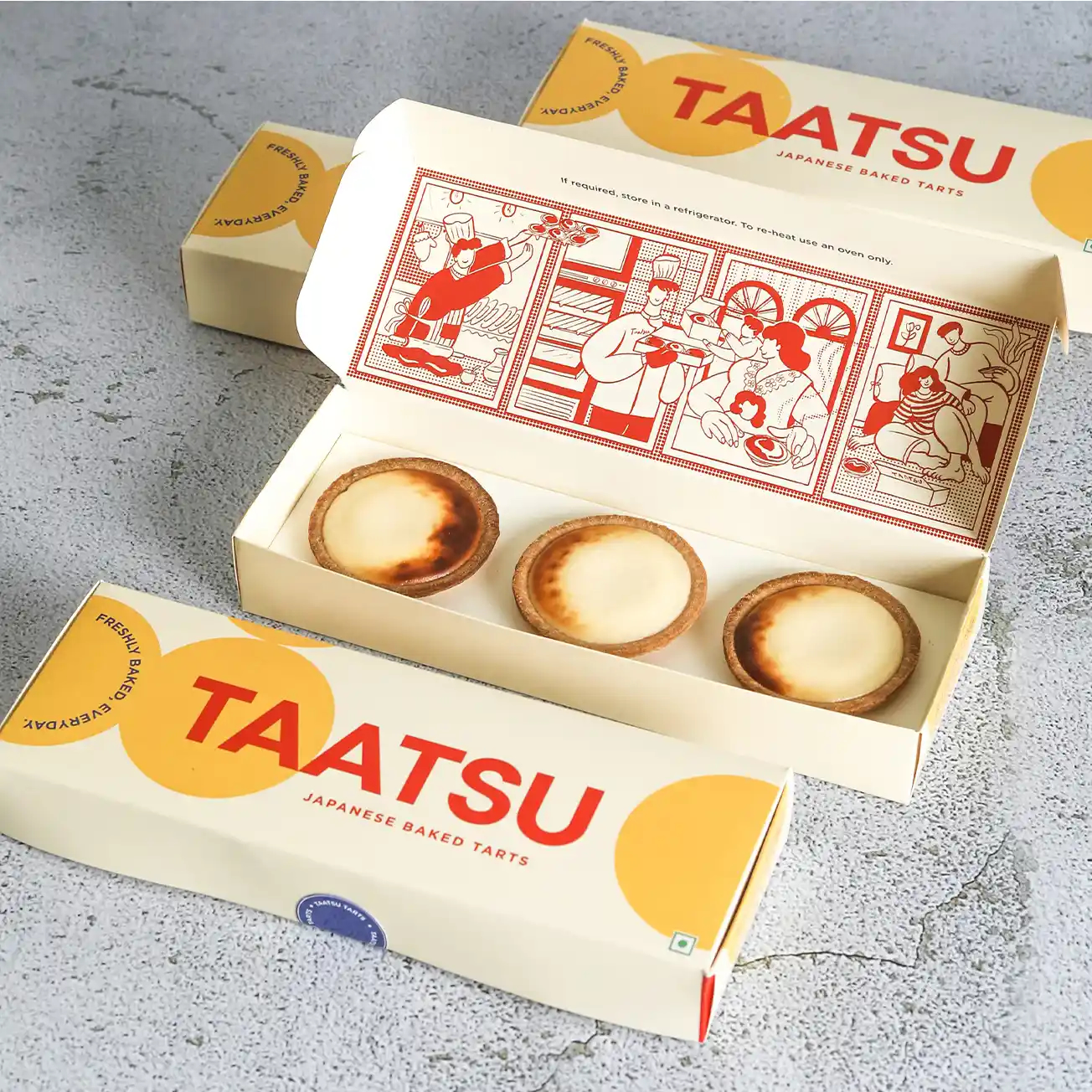
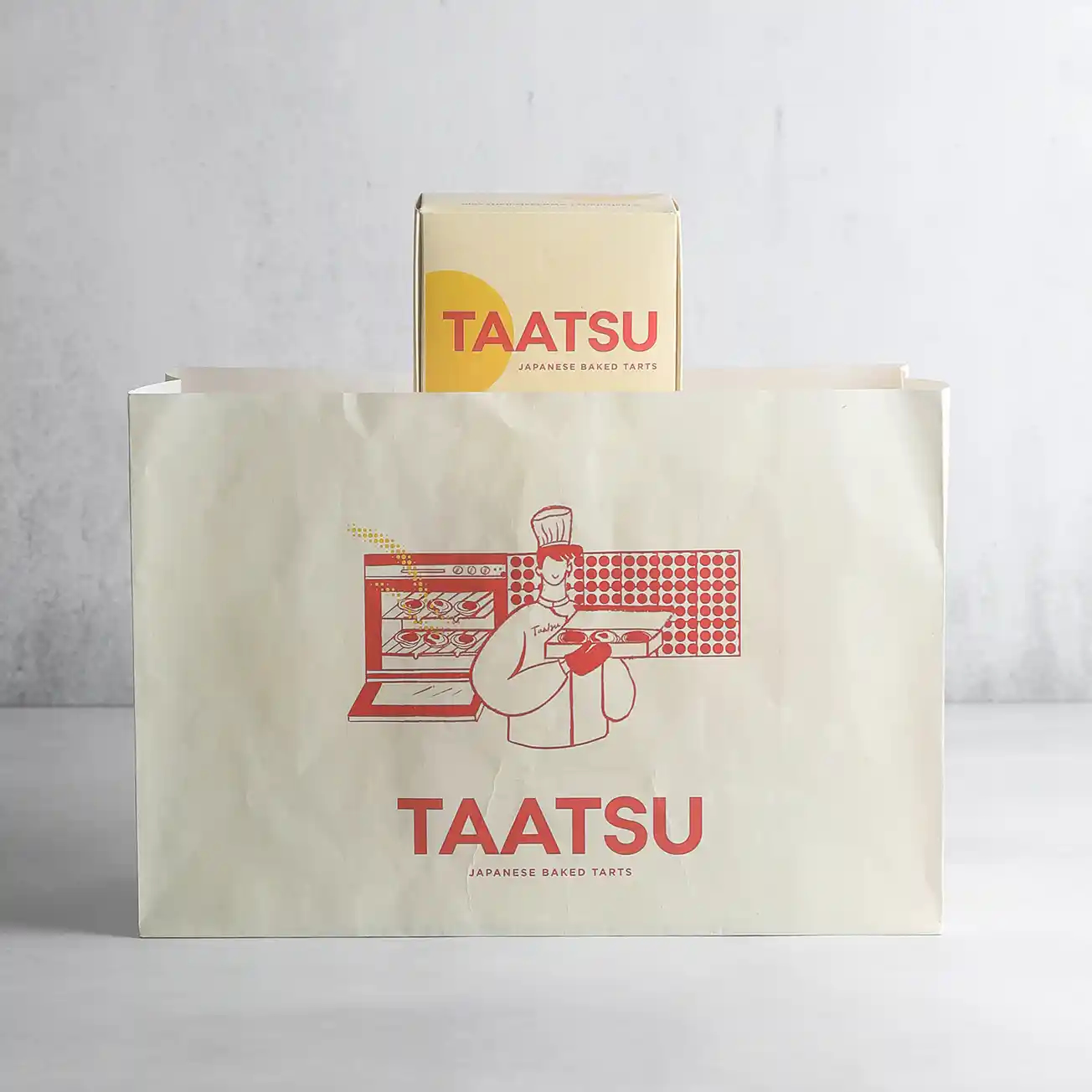
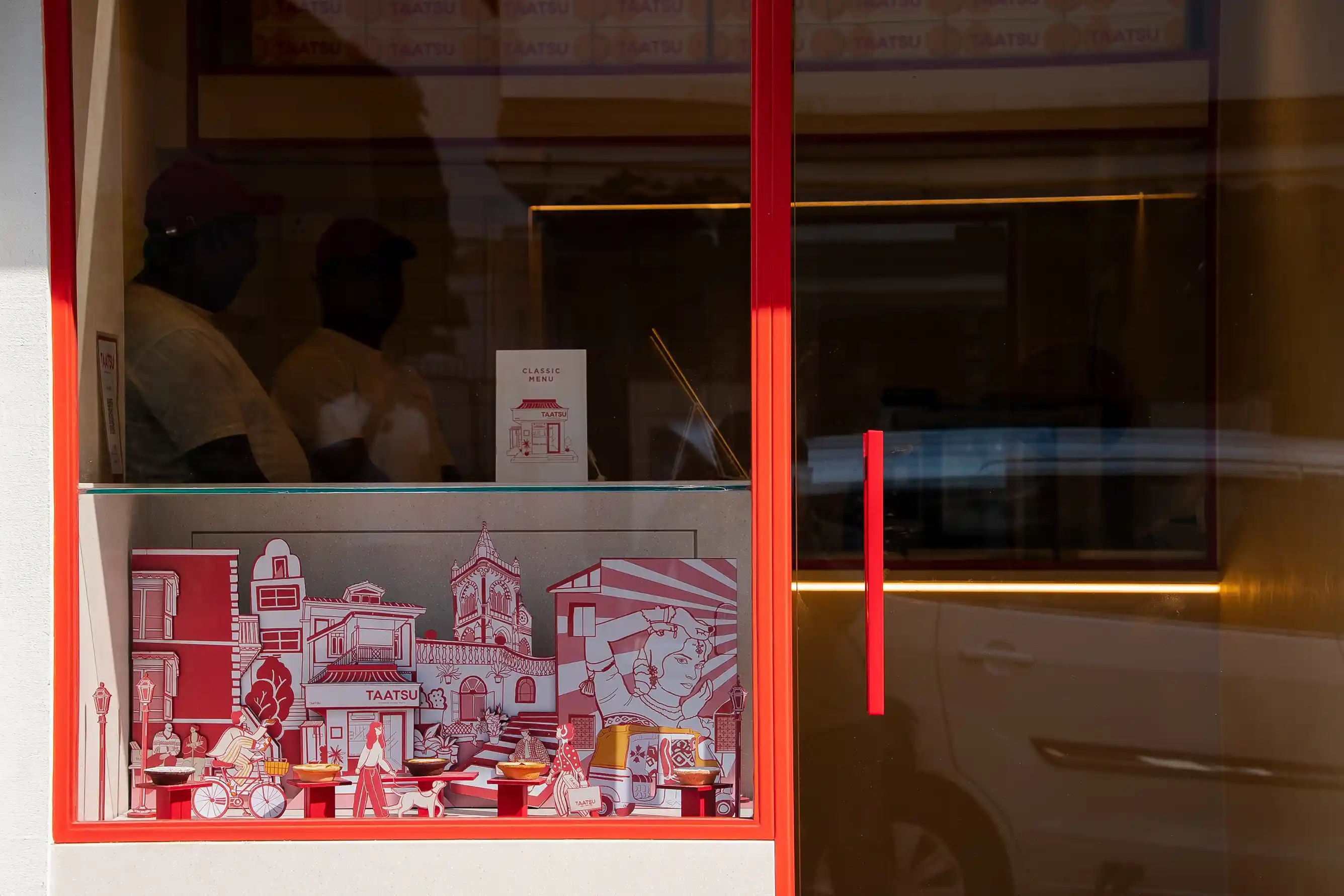
Illustration also makes complex information — like ingredients, cooking methods, or emotional cues — instantly engaging. While designing the packaging for Taatsu, a Mumbai-based Japanese tart brand, illustrator Shreya Parasrampuria created a storyboard showing chefs baking tarts and families sharing them at home. The idea was simple: show warmth, don’t describe it.
“Illustration makes information much more appealing,” says Parasrampuria. “You spend more time looking at it and admiring it.”
Even quick commerce giants like Zepto, Blinkit and Swiggy Instamart use hand-drawn illustration styles on their brown paper bags, depicting everyday Indian food moments — from street vendors to post-work indulgences.
Advances in technology are driving this shift. New tools on Procreate and Adobe Illustrator allow designers to create organic, tactile visuals like the logo of Gurugram-based Café Però. Quick commerce has introduced new design pressures: packaging must spark joy from a thumbnail on a screen to a doorstep delivery. And social media has amplified this visual playfulness — because today, the camera eats first!
But the format isn’t without its limitations. “Brands struggle when it comes to sharing their illustrative style digitally,” says Parasrampuria. “Social media today requires video content, which means animation, which is very labour-intensive compared to photography.”
A recognisable visual icon goes a long way in any business and food is no different — think the enduring influence of McDonald’s Golden Arches or the familiar Amul Girl. But the F&B landscape in India today is no longer dominated by a handful of large corporations. Estimates suggest that India has added around 2.3 million new food business operators under FSSAI (Food Safety and Standards Authority of India) in the past five years.
“There is a huge opportunity for businesses because people are willing to spend a lot of money on food,” says Thadani. “Food was our easiest form of play and joy during the pandemic, so it’s no surprise that it ended up becoming something that people paid a lot of attention to.”
And India’s new food landscape is being constantly redrawn, one cheeky lavender mascot at a time.