Comfort Couture
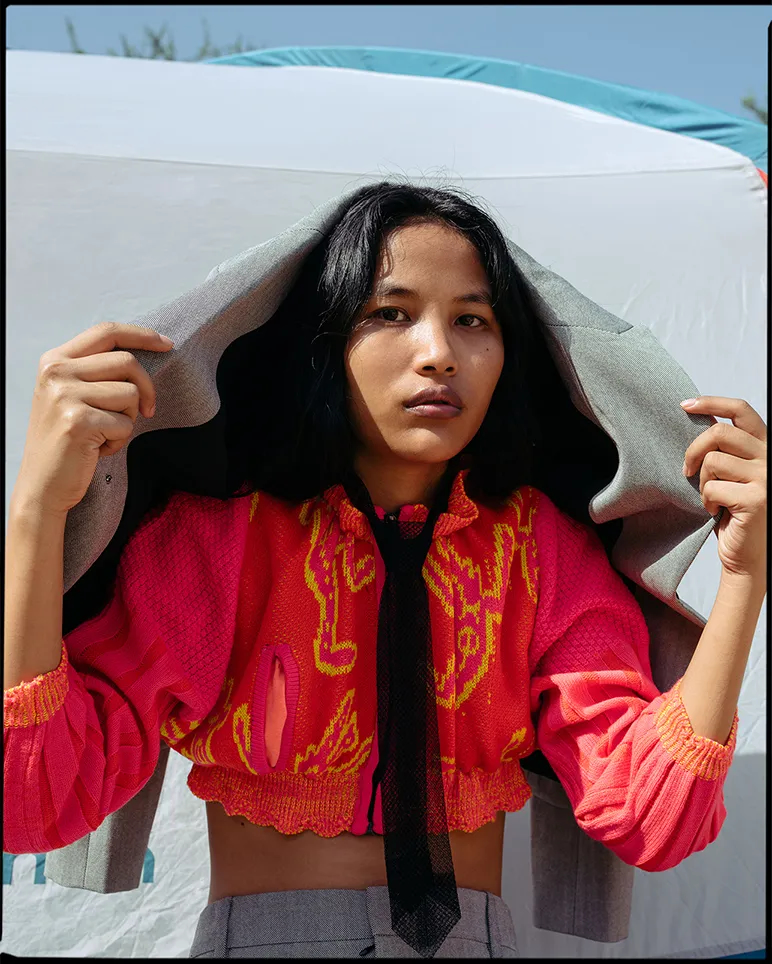
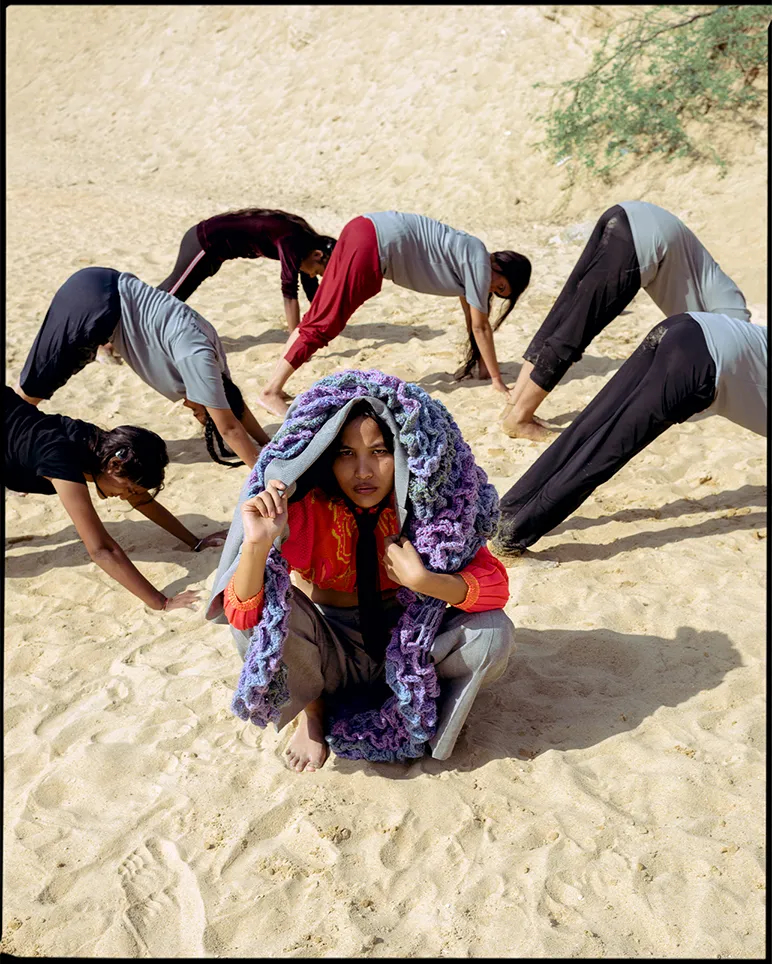
When I was a child, around eight or nine years old, I had this one sweater with a unique chevron design in fuchsia, black and white wool. It was a flashy colour scheme, something I wouldn’t even wear in my dreams now, but back then it was my favourite sweater. The reason it was so special was that I had seen it come to life – my mother had woven it with these coloured yarns that I helped untangle. She knitted for days and days (her hands moved deftly even while she was talking) and made me this sweater, which I ended up wearing until I was almost 15. Like me, many of my friends and relatives own treasured knit or crochet heirlooms. That’s the beauty of knitwear; it stays with you and holds the handprint of the creator – in its design, in the interwoven knots and the minor irregularities, which make it more special.
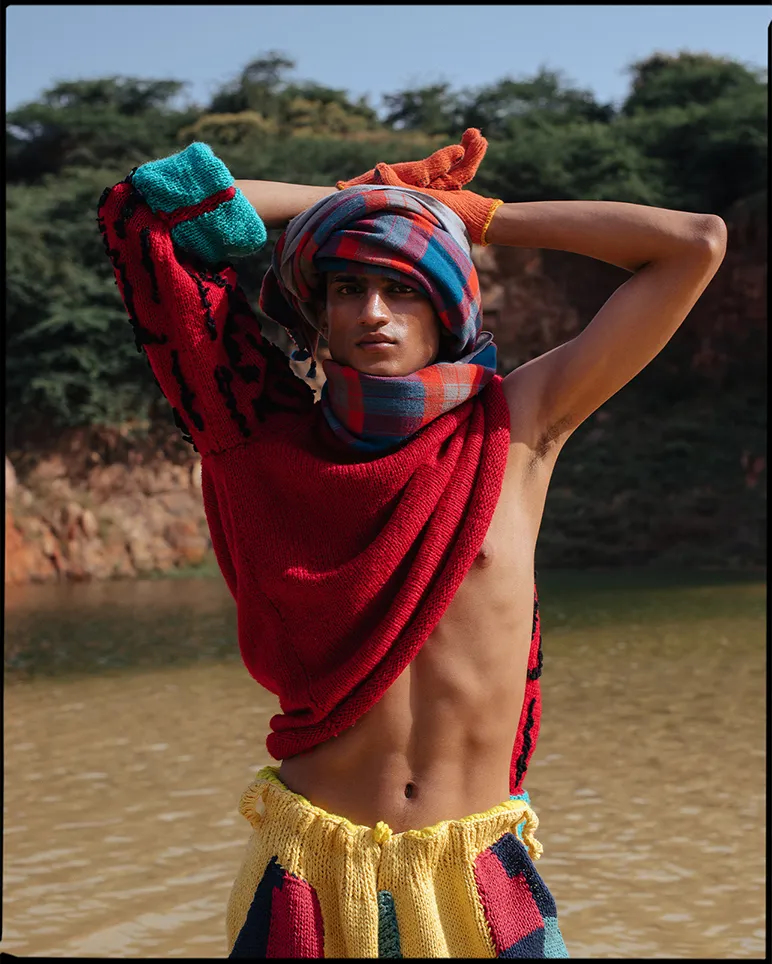
I remember how, back in the day, ladies in the neighbourhood used to exchange notes on their progress. Knitting was a community exercise, and women were so adept at it that they could identify knots simply by scanning a piece with their naked eyes. It was also a craft that was passed down the generations; my mother learnt it from hers and my grandmother, from hers.
So, who invented knitting? According to researchers, there’s no precise evidence that could pinpoint its exact beginnings, but it has been proven as one of the earliest craft forms. The Victoria & Albert Museum in London claims to have one of the oldest woollen items – a pair of socks – from Egypt dating back to between the third and fifth centuries AD.
From the Middle East, knitting made its way to Europe via the Mediterranean trade routes. In the painting Visit of the Angel (1400-1401), German artist Master Bertram of Minden has depicted the Virgin Mary knitting. There was even a Cappers Act of 1571 passed in England, which stated that every English resident over the age of six and below the rank of “gentleman” must wear a wool cap on Sundays and holidays. This law was introduced to protect the interests of the local cap-making industry. A neat example of the 16th century’s very own “Vocal for Local” campaign.
Moving forward to the mid-1920s, fashion designer Gabrielle “Coco” Chanel launched knitted jerseys in her collection after perceiving the popularity of knitwear across social classes. She is also credited for bringing knitwear out of its “dowdy” past. In 1926, she designed a “cut-and-sewn” little black jersey dress with a knee-length hemline (a first for that decade). In 1927, Italian designer Elsa Schiaparelli launched her debut collection with a line of graphic hand-knit sweaters. Over the decades, industry influencers like Missoni, Louis Vuitton and Marc Jacobs have put a glamorous spin on this craft and brought forth classic knits and cashmere designs, which are an aspirational commodity even today.
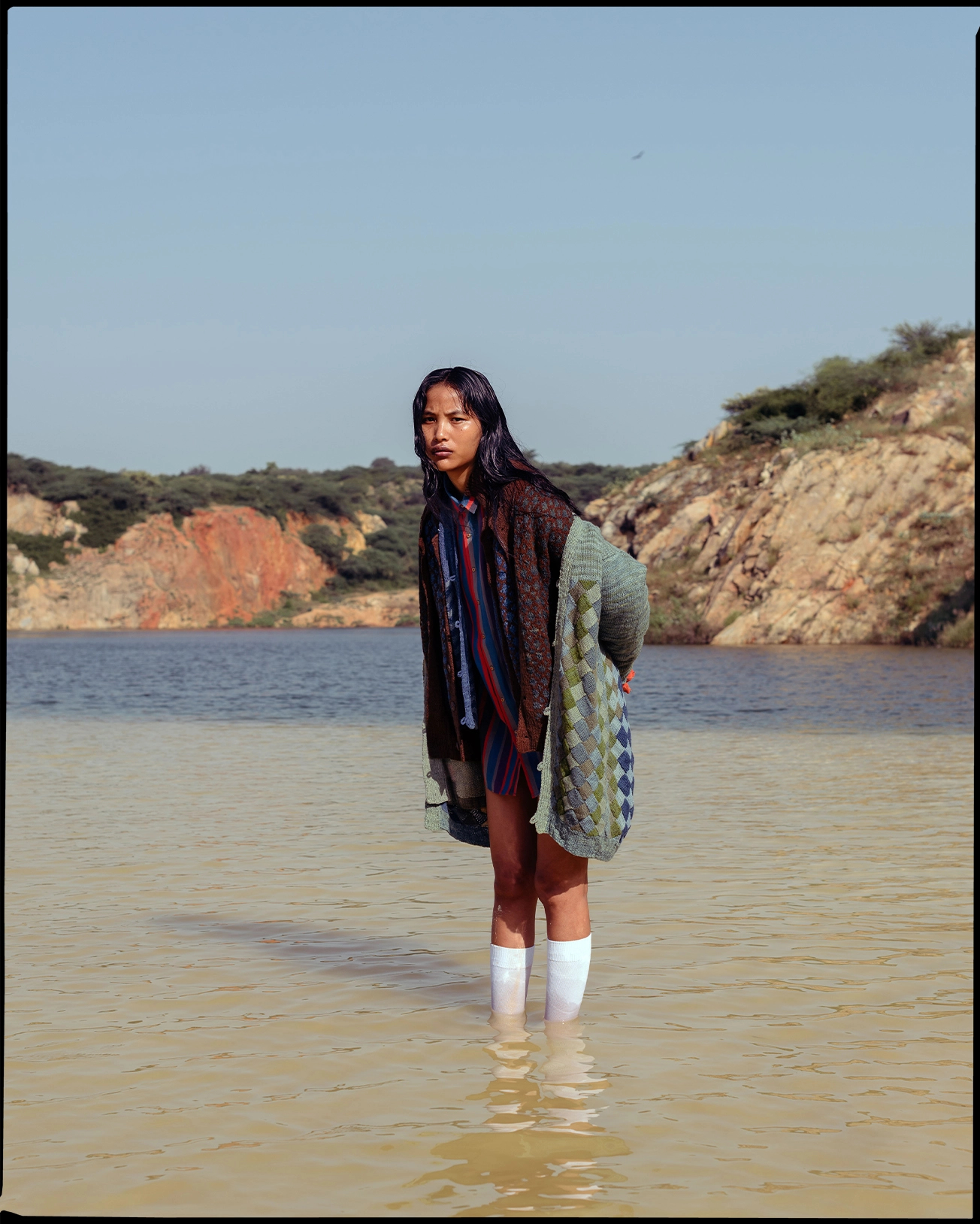
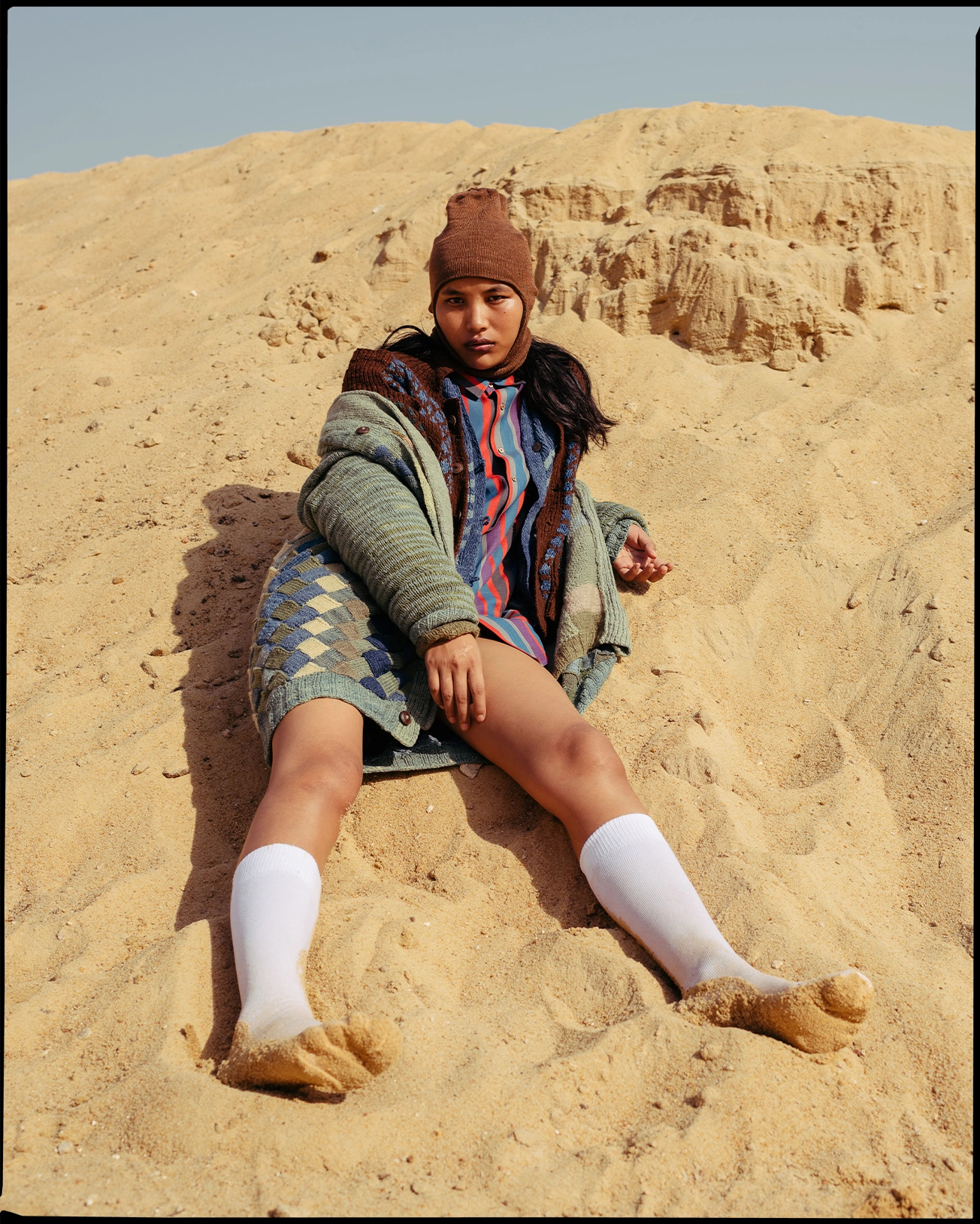
On the heels of knitwear turning fashionable, the art world also began developing a close affinity towards this highly flexible craft form, mainly because of its malleability and fascinating surface textures. Prior to the Industrial Revolution, producing high-quality yarn was an expensive and laborious process, and so knitting was largely restricted to clothing and household items. Though power looms did streamline the process, it was still considered to be “women’s work”.
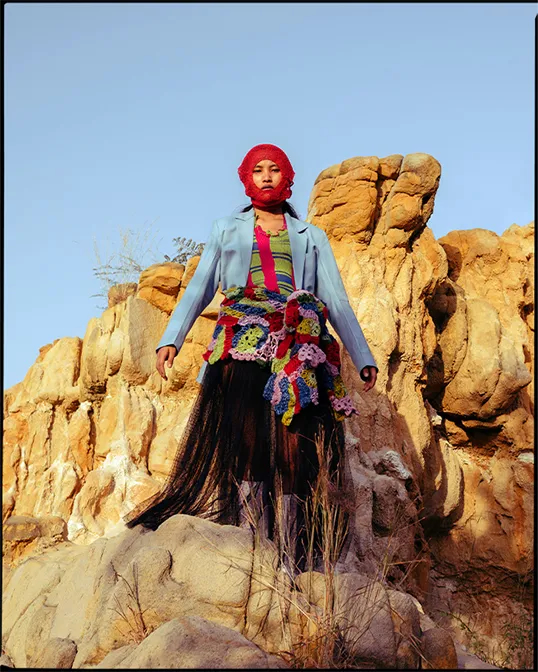
Perceptions were altered as late as the ’60s and ’70s, when female artists like Louise Bourgeois, Sheila Hicks and Rosemarie Trockel reclaimed the textile art space and displayed knitting or crocheting with the highest levels of craftsmanship. In 1979, Japanese artist Toshiko Horiuchi-MacAdam created her first crocheted children’s sculptural playground for the Marine Expo Memorial Park in Okinawa. Since then, she has designed many similar textile parks.
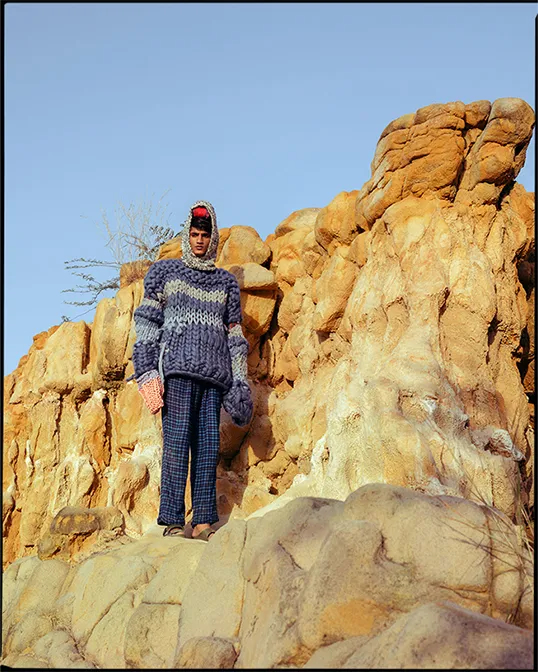
At the turn of the millennium, artists truly started innovating with yarn and fibres. English artist Lauren O’Farrell is widely known for her significant role in the UK graffiti knitting scene. She is also attributed as the creator of the term “yarnstorming” – a gentle way of adorning public spaces with colourful yarn fibres. Contrary to yarnstorming, there is yarn bombing, a satirical art movement practised by Polish artist Agata Oleksiak, in which she unleashes her crocheted installations over public spaces to highlight political and cultural issues. In 2013, Danish artist Inge Jacobsen created splendid needlepoint works of high-fashion magazine covers using cross-stitch and embroidery. Today, artists are also trying to push the boundaries of moulded artwork by experimenting with non-traditional yarns. Canadian-American sculptor Carol Milne creates unusual, knitted sculptures with glass fibres.
In India, too, there isn’t a definite time in history to when one could trace the origins of knitting. The earliest instances of this heritage date back to the early 15th century. Under the reign of Zain-ul-Abidin, Persian craftsmen were brought to Kashmir through the Silk Route to develop the famed hand-knotted Kashmiri carpets. Zain-ul-Abidin also established the first karkhanas or factories where carpet-making was practised in an assembly line fashion.
In the mid-19th century, a Protestant organisation known as the Moravian Mission was established in Keylong, Himachal Pradesh. They were credited with popularising the craft of knitting gloves and socks among the womenfolk of the region.
Tiruppur, in Tamil Nadu, started with the production of inexpensive cotton hosiery items during the ’30s, and the city gradually emerged as a prominent centre for knitwear in South India by the next decade. It is now known as the knitwear capital of India. During the Indo-China war in 1960, the craft witnessed noticeable growth as women knitted accessories for the troops stationed in the Himalayas. With the rise of power looms in the knitting sector, manual knitting took a back seat. In recent times, however, people are rediscovering the luxury of a handcrafted product, and knitting has once again found favour. And thanks to the current pandemic and subsequent lockdown, many have even gone back to reviving this hobby while they are at home.
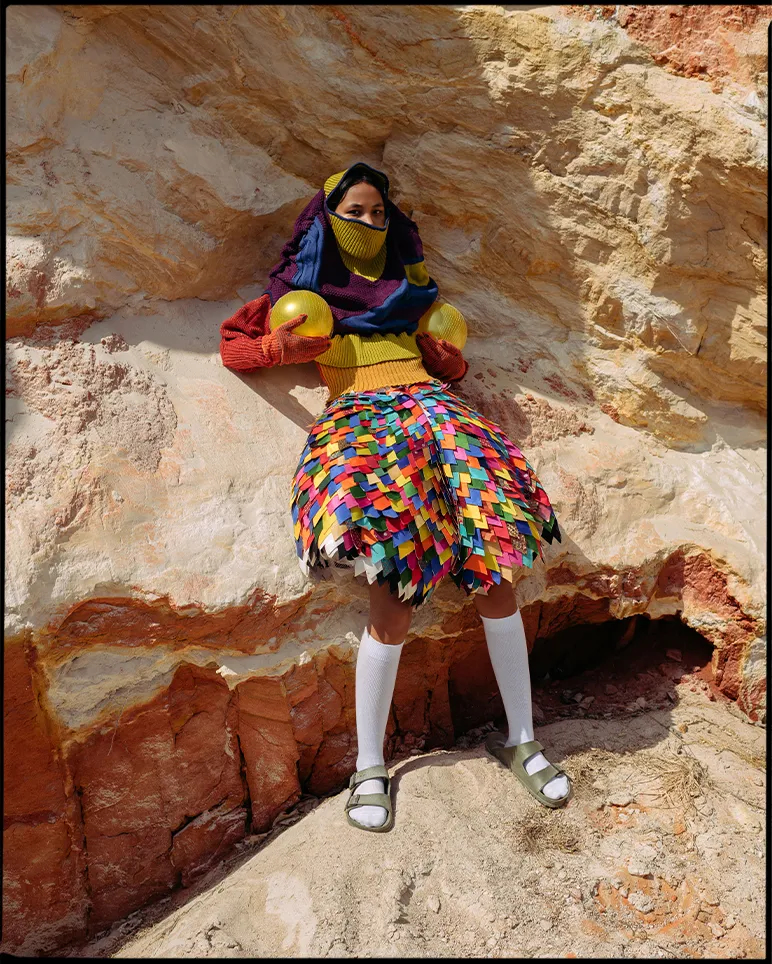
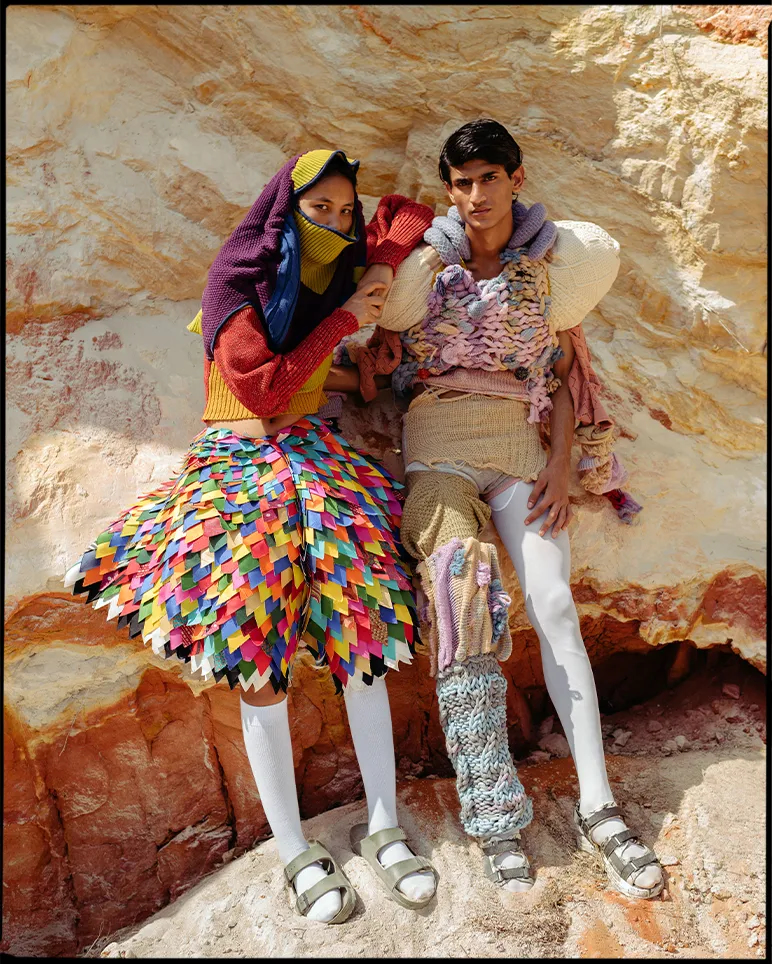
Knitted fabrics are constructed by interlocking a series of loops made from one or more yarns. Loops that run lengthwise are called “wales”, and “courses” are crosswise. Due to the interlocked pattern, a knitted fabric has substantial elasticity, and it can be moulded according to the creator’s fancy. In India, needlework on woven cloth already had a strong foothold in the country’s craft communities, so people started referring to knitting as bunaai, from the vernacular expression silaai-bunaai (stitching-knitting). This term was commonly used to describe the skills that a “homely” woman should have.
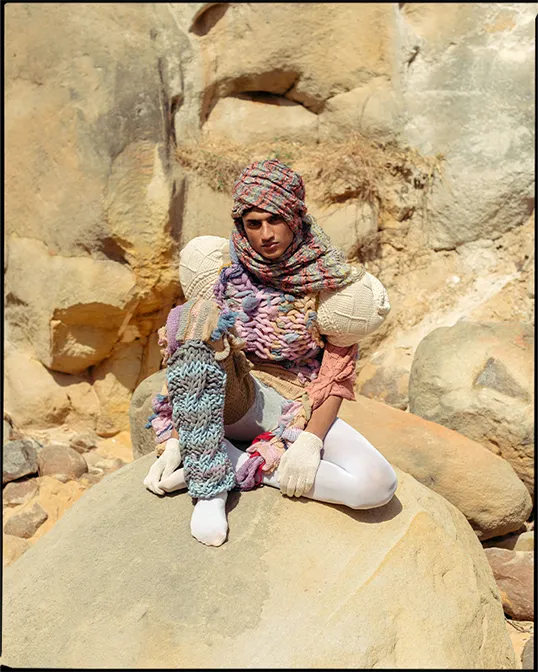
Today, knitting is not merely a woman’s craft but a professional skill that you learn, hone, and develop over time. Knitwear designer Tanya Maheshwari creates quirky, inspiring embroidered pieces that she calls “wearable art”. Her stunning self-portraits are a lesson in gender roles and feminism, through which she is continuously trying to subvert the male gaze. Designer Rimzim Dadu works with steel-wire loops and ripple corded saris to display persistent innovation, breaking apart materials to create unique textiles for her silhouettes. In a recently published piece, fashion commentator Varun Rana described a sweater that “set the mood at Lakmé Fashion Week Festive 2020”. He spoke about the “simplicity of a single indigo-dyed jumper, shown being made by hand from scratch” that had stuck in his mind. It depicted the simple luxury of a handcrafted piece, of a yarn being knit into a sweater, which pulled me back to the childhood memory of my own favourite sweater.