
It is a mind-numbingly cold morning. We are the first call — before daybreak — on the coach taking us into snow-clad Swiss mountains to the Italian brand’s watchmaking atelier. Bvlgari is best known for its jewellery (Elizabeth Taylor was a long-standing fan) and luxury goods including fragrances and leather accessories, and hotels. It is the brand’s incredible watchmaking journey, however, that is the focal point of discussion between the journalists of various countries today.
Upon arrival, we disembark at Le Sentier, a town tucked away from the world. Pascal Brandt’s passion (and attention to detail) is deeply evident as he greets us. The communications director for the Bvlgari watch division has a background in journalism, and having previously worked with other watch brands like Vacheron Constantin and Panerai, he immediately comments on the watch on my wrist.
The first Bvlgari watches were made in the ’20s, but it was only at the end of the ’70s that the firm presented its first important collection. Following the success of the Bvlgari Roma launched in 1975, the Bvlgari Bvlgari watch was created, a model that is now considered a classic and an icon, and continues to be one of Bvlgari’s bestsellers.
The brand has come a long way, horologically speaking, since it founded the company, Bvlgari Time, in Neuchâtel (the heart of Swiss horology) in 1982. Today Bvlgari’s range of watches include several lines of classic, sporty, complicated and precious timepieces. For instance, 2014 saw the launch of the Octo Finissimo Tourbillon, the thinnest tourbillon movement ever made — creating a world record.
Guido Terreni, the gregarious managing director of Bvlgari Watches, said to us at the Baselworld watch fair two years ago, “To be credible in luxury, you have to be credible in terms of style and craftsmanship both. That’s why we have developed the know-how internally. After all, the ladies are buying competence!” To that effect, Manufacture Bvlgari fully masters the production of the mechanical watch movements ranging from grand complications to the ultra-thin hand-wound calibres, as well as the standard Solotempo self-winding base movements. Production of the external elements — metal cases, bracelets, high-end dials — is also done internally. The Manufacture’s vertical integration strategy — evidenced by a string of acquisitions from 2000 to 2007 — has enabled the brand to progressively secure the skills required to make a complete watch, catapulting Bvlgari into the cluster of elite watch manufacturers.
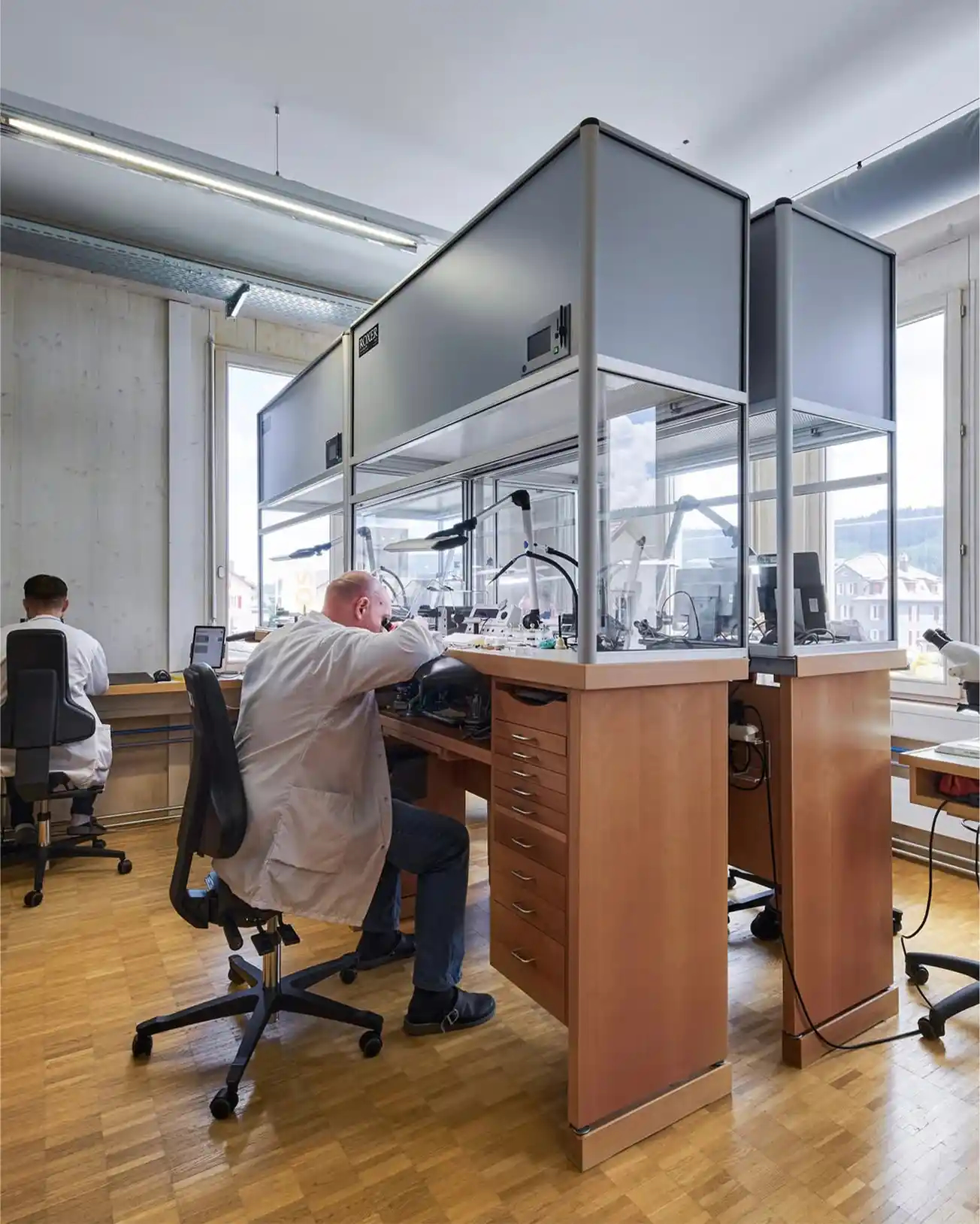
The 350-plus workforce is spread over four sites in the Jura mountains: Le Sentier (which we are visiting) for the grand complication, ultra-thin Finissimo movements and the production and assembly of the Solotempo calibre; the Saignelégier facility for the gold and steel cases and bracelets production; La Chaux-de-Fonds for the manufacturing of high-end dials. Assembly and the final controls on the watch are at Neuchâtel, which continues to be the seat of the operations. What ties all the facilities together is the drive to succeed and the quest for perfection. After all, the journey to watchmaking success for Bvlgari has been uphill; and now that they are at a remarkable height, it’s not one they will surrender easily.
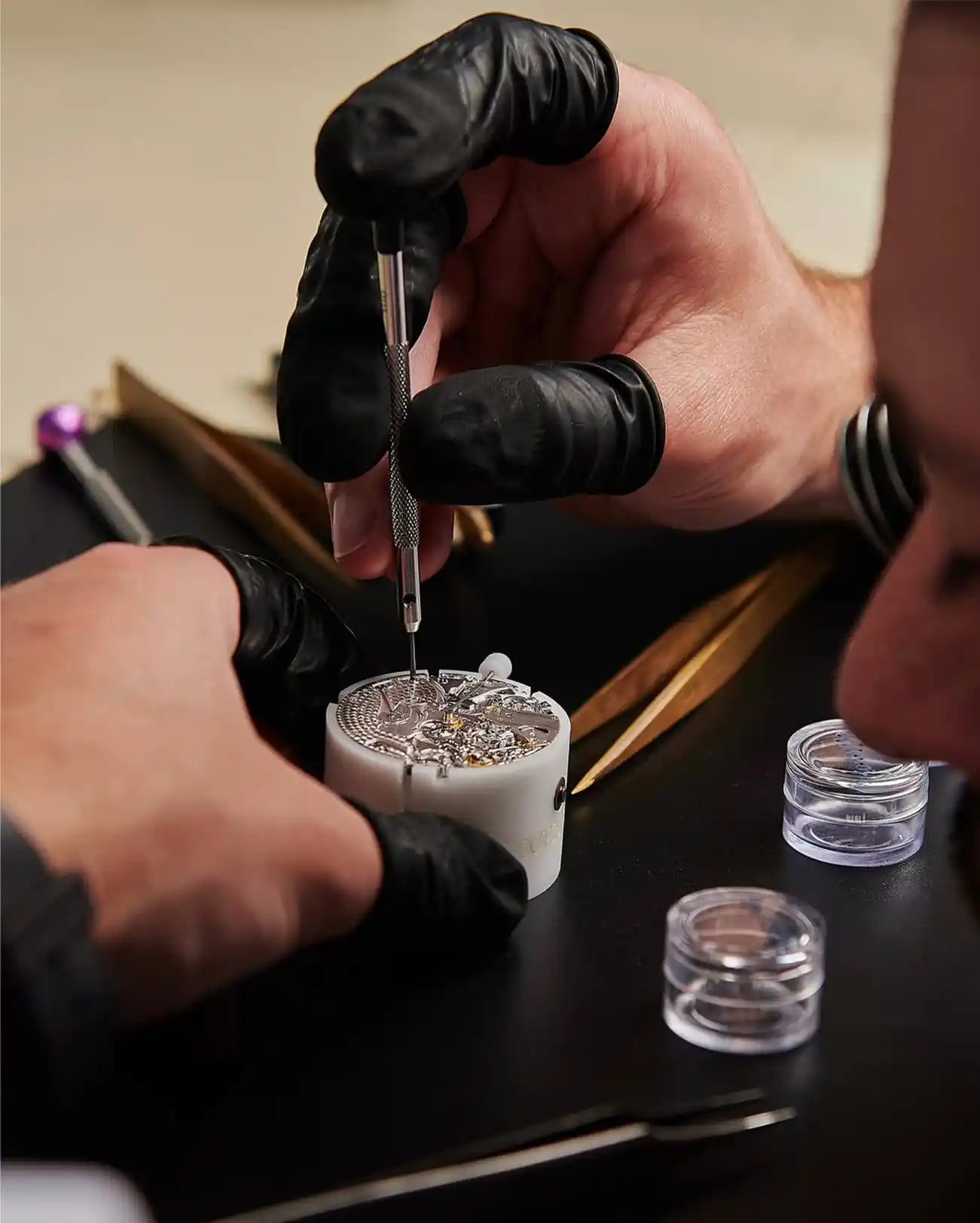
As we look out from the large windows of the Le Sentier facility in Vallée de Joux, it’s lonely and quiet. The kind of place that permits you to hear your thoughts, to explore silence and musical notes in précisément. Besides the variety of ‘classical’ sophisticated complications such as the tourbillon and the perpetual calendar for instance, Bvlgari is at the top of its class in its ability to craft the whole range of highly acclaimed chiming watches. Its expertise is evident as we stand watching master craftsmen at work in the manufacture de haute horlogerie’s dedicated chiming workshop. Each watch component is assembled (with up to 1,000 components), adjusted and decorated entirely by hand: it takes around one year for the master artisans to complete a single grand complication timepiece. We meet Bvlgari’s John Sheridan, the industry’s youngest watchmaker to work on minute repeaters, which require incredible skill and knowledge by virtue of their extreme technical demands. Bvlgari has four of the 12 minute-repeater specialists in Switzerland — they need at least 20 years of experience. For Bvlgari, as Brandt puts it, the Swiss high watchmaking tradition is in the hands of one Irishman, two Frenchmen and one Portuguese!
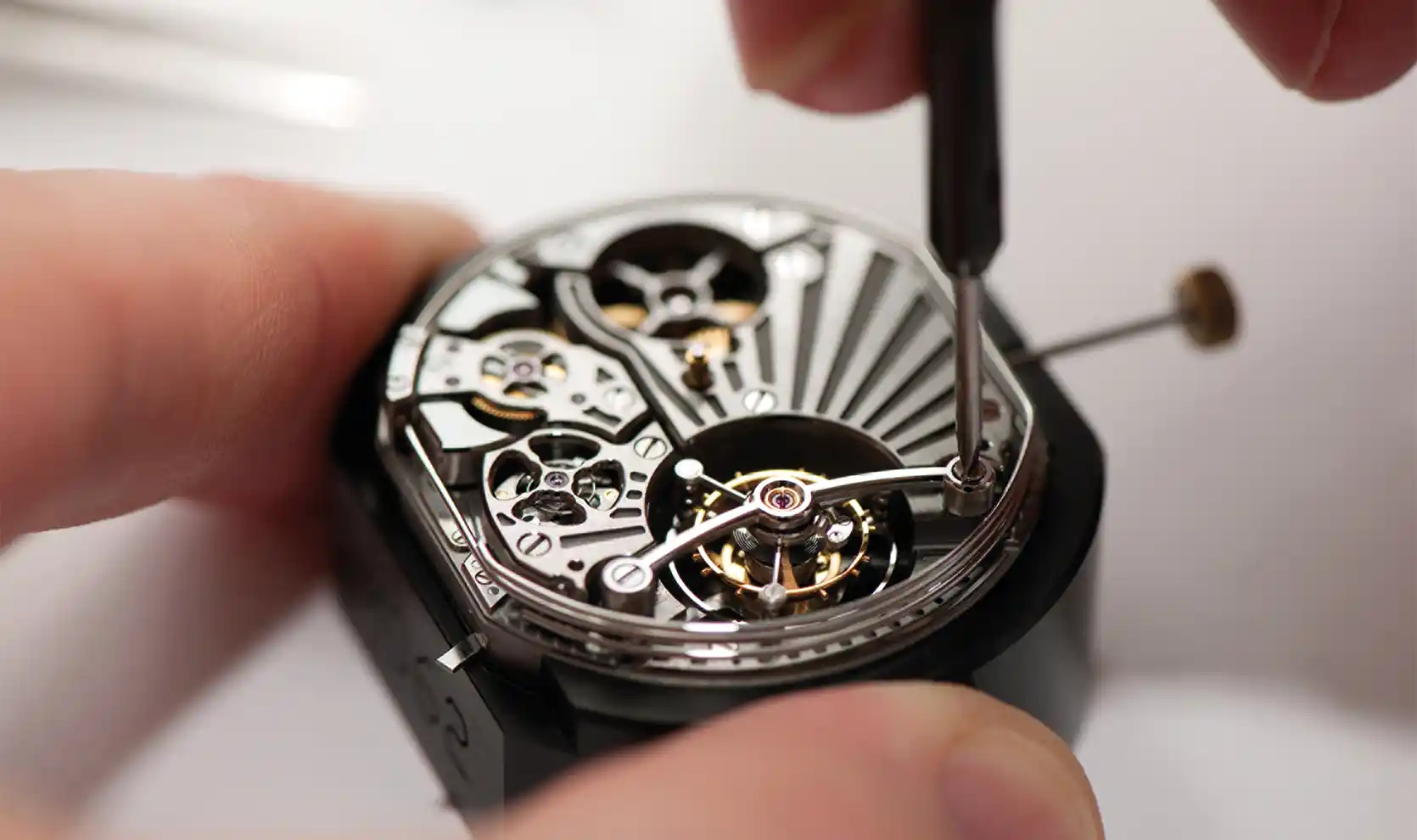
You can’t help chuckling at the calendars on the wall — they are in the form of moonphases. The facility includes the technical office, the hotbed of the research and development of movement-related projects, and the production office where the complicated (and super-complicated) watches are produced. They are working on everything from pre-ordered pieces to a futuristic five-year plan, including some top-secret stuff that we may (or may not) have seen.
As we head back, driving into sunnier skies, and stop for stunning photo ops at the frozen lake just outside our lunch spot, Bellevue Le Rocheray, we take a moment to admire the calm that is spread out around us. In that coolness of spirit, lethargy doesn’t prevail; rather the sounds of perfection sing through the hills. Bvlgari as a watchmaker believes in quality assurance over quality control. The inspection is carried out not only of the final piece but also at three specific stages: during the creative phase, after each individual component is made, and during assembly. Every stage in the production process is monitored both by the watchmaker himself and by the quality assurance inspectors, who check functions and compliance with rigid quality parameters.
Terreni had said: “We are the only brand that thinks about technique and design simultaneously, we are not selling to watch freaks; we are selling to people who know what luxury is about and can recognise the authenticity of an idea and the craftsmanship in the watch. I love idea generation, to see the design grow, to see the prototype become true…but your emotion is the true reward of all this work. I don’t look for ‘I like’, or ‘I don’t like’; I look for ‘Wow’.”
Admittedly, now, having seen it with our own eyes, a Bvlgari timepiece is the happy marriage of Italian creativity and Swiss technical craftsmanship. It speaks for itself that although last year saw the luxury industry on shaky ground, Bvlgari finished the fiscal year, as Brandt puts it, “on a very, very good note!” After all, the Octo Finissimo minute repeaters (in their extra-thin collection) that were launched last year were all sold out. Brandt says simply, encompassing the enormity of what they do to be successful: “All the pieces are very wearable”.