The Melody of Time
In their quiet sanctuary, modern-day techniques coexist with age-old practices of watchmaking to create coveted timepieces. On a visit to Le Brassus, Verve walks through the Audemars Piguet Manufacture — a favoured destination for every aficionado of haute horology
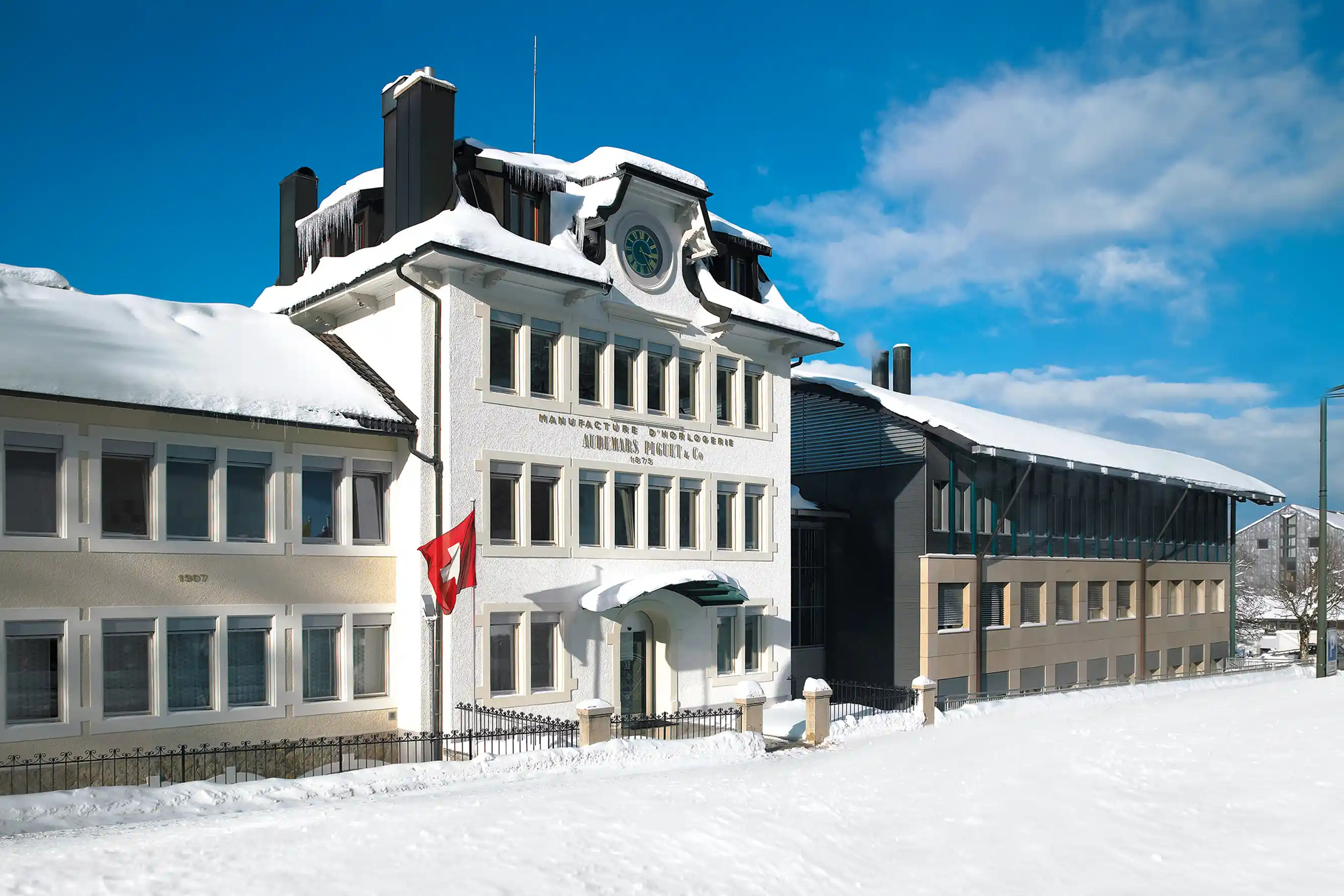
Home to world-famous attractions like the Jet d’eau and the Palais des Nations (the European headquarters of the UN), Geneva, all of about 16 square kilometres in area, sits an hour’s drive away from the global hub of watchmaking — Vallée de Joux. The city surrounded by the Alps and the Jura Mountains finds a place on my itinerary when Verve is invited to visit the Audemars Piguet manufacture in Le Brassus — where only a select few publications have been before.
The House has two major facilities in the village — the historic one dating from 1875, and a newer one from 2008. I bundle up in warm clothes and pile into the car — all ready to leave with my companions for our hour-long drive to Le Brassus. As my journey progresses, I find myself travelling uphill among snowy side lanes; along the way I catch glimpses of the morning sun at almost every turn of the road. I'm still admiring the breathtaking landscapes when the car comes to a halt, and, as soon as I alight, I'm enveloped by gushes of cool winds and some light flakes of snowfall. Hopping over a small bridge to cross a tiny stream, I find myself at the doorstep of decades of watchmaking excellence. I am fortunate enough to spend the morning observing what happens behind the doors of a place that is usually kept out of public sight.
Following a quick meet-and-greet with Mark Schmid, digital media specialist for Audemars Piguet and our host for the day, I set aside my jacket to don a blue visitor lab coat. I make my way through some doors till, adding one last layer of protection — covering shoes with booties to avoid contamination — I embark on my journey through the world of watchmaking. I am escorted through spaces with floor-to-ceiling windows that allow an uninterrupted flow of daylight.
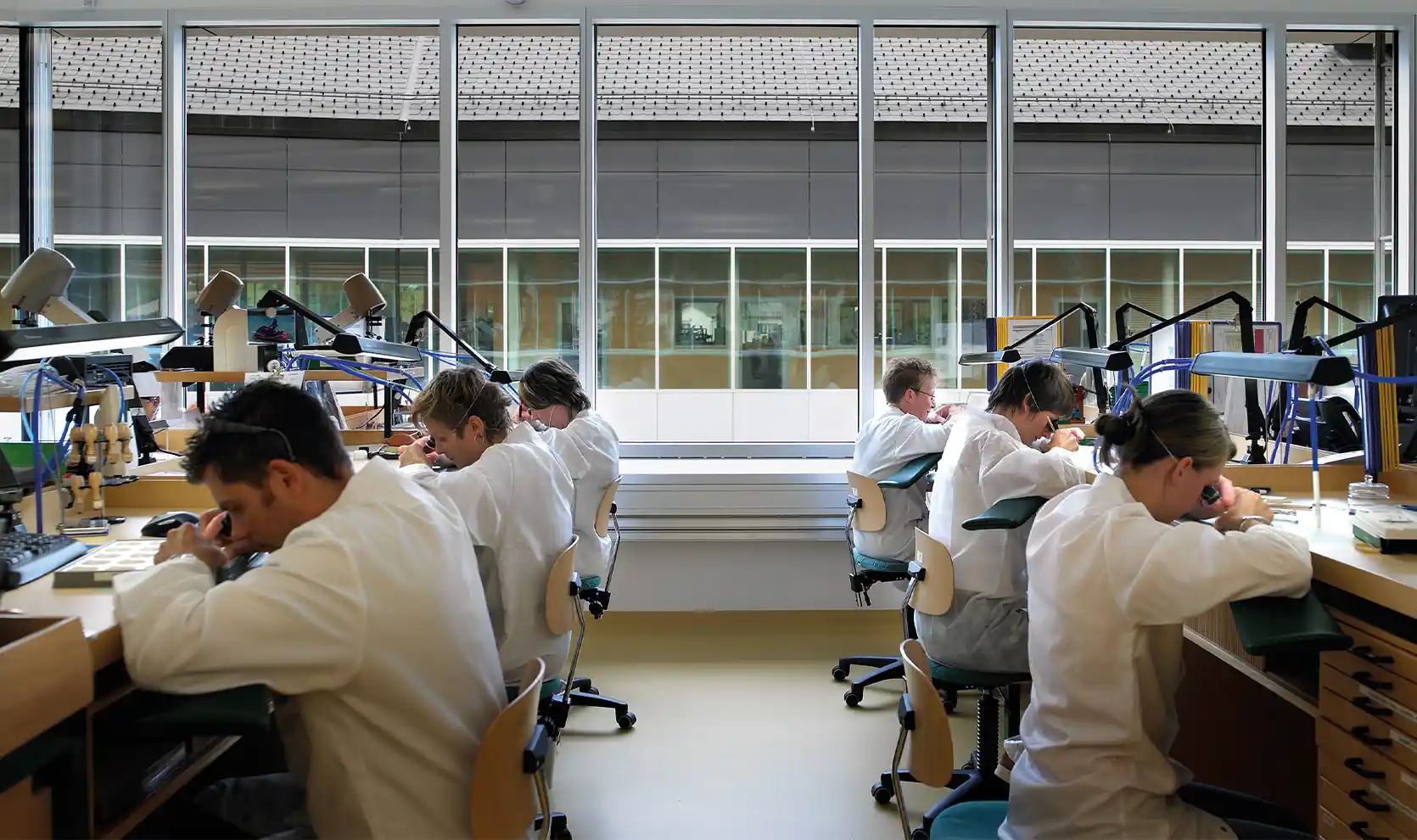
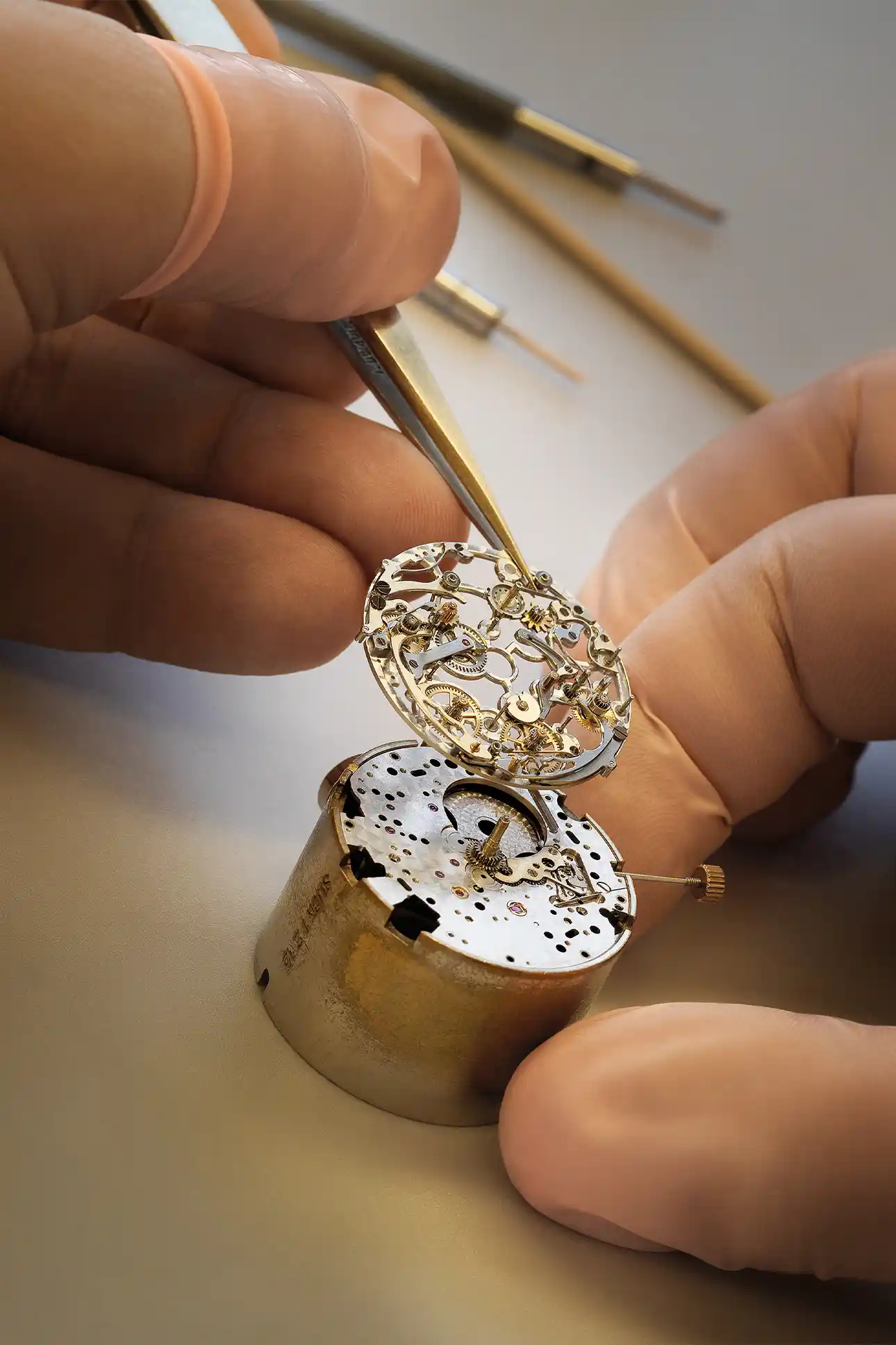
About half of the rooms I come across house rows of desks on either side. A plethora of artisans work on a multitude of tasks here — their roles defined to the last detail — spending hours perfecting the melody of time. From placing the hands on the regulated movement to replacing tester parts with the final ones, they set and even reset the entire contents of the timepiece till a flawlessly functioning product is created. Some workspaces even have a laboratory setup — to maintain air flow and keep out dust particles, which could potentially taint the working of the timekeeper. At Audemars Piguet, every little component is hand-decorated, and, except for indexing, every other part of the assembly is carried out by hand too.
In the first room that we enter, a whiteboard mounted onto a stand showcases the schedule and divides, by time and functions, the roles of over a dozen craftsmen. Moving closer, I see that every desk has a chart clipped to itself — my limited skills in French allowing me to understand that each is indicative of the task assigned to the watchmaker at that table. It is in this room that a machine begins testing certain parts long before they harmonise together to create a timepiece. A fascinating step in their examination process includes the positioning of the balance wheel, something they fondly refer to as the “bringing to life” of a watch. A set of tester hands, oscillating weights and working dials too are brought in, which are eventually replaced with the final set of hands and oscillating weights made of gold. My next stop is at the workshop of horological specialisation, where after receiving the movement, watchmakers assemble the perpetual calendar. A lone ranger of a complication, all that the perpetual calendar needs to function is power from the movement.
From placing the hands on the regulated movement to replacing tester parts with the final ones, they set and even reset the entire contents of the timepiece till a flawlessly functioning product is created.
Finding ourselves standing in the room where grand complications — typically exhibiting a chronograph, minute repeater and perpetual calendar — are brought to life, I learn a very impressive fact. There are about five pairs of dexterous hands that spend close to six to eight months individually assembling, dismantling and reconstructing every timepiece at least three times before the final product is born. And every watch is marked with a distinguishable signature, so that should the piece be brought back for servicing, it can ideally be sent back to the same watchmaker who brought it into being.
Another building brings with it a new creative oasis. Here, dated machinery which has been highly modified is used for engine-turning. In mesmerising movements, a plate bearing the engine-turning pattern is to be embodied onto the dial. A complex mechanism, starting at the periphery of the dial, works its way to the inside mirroring the design from the larger plate onto the significantly smaller dial. Even with the use of this technology, every machine ends up producing ‘twins’ — though identical they have some differences that are not visible to the naked eye.
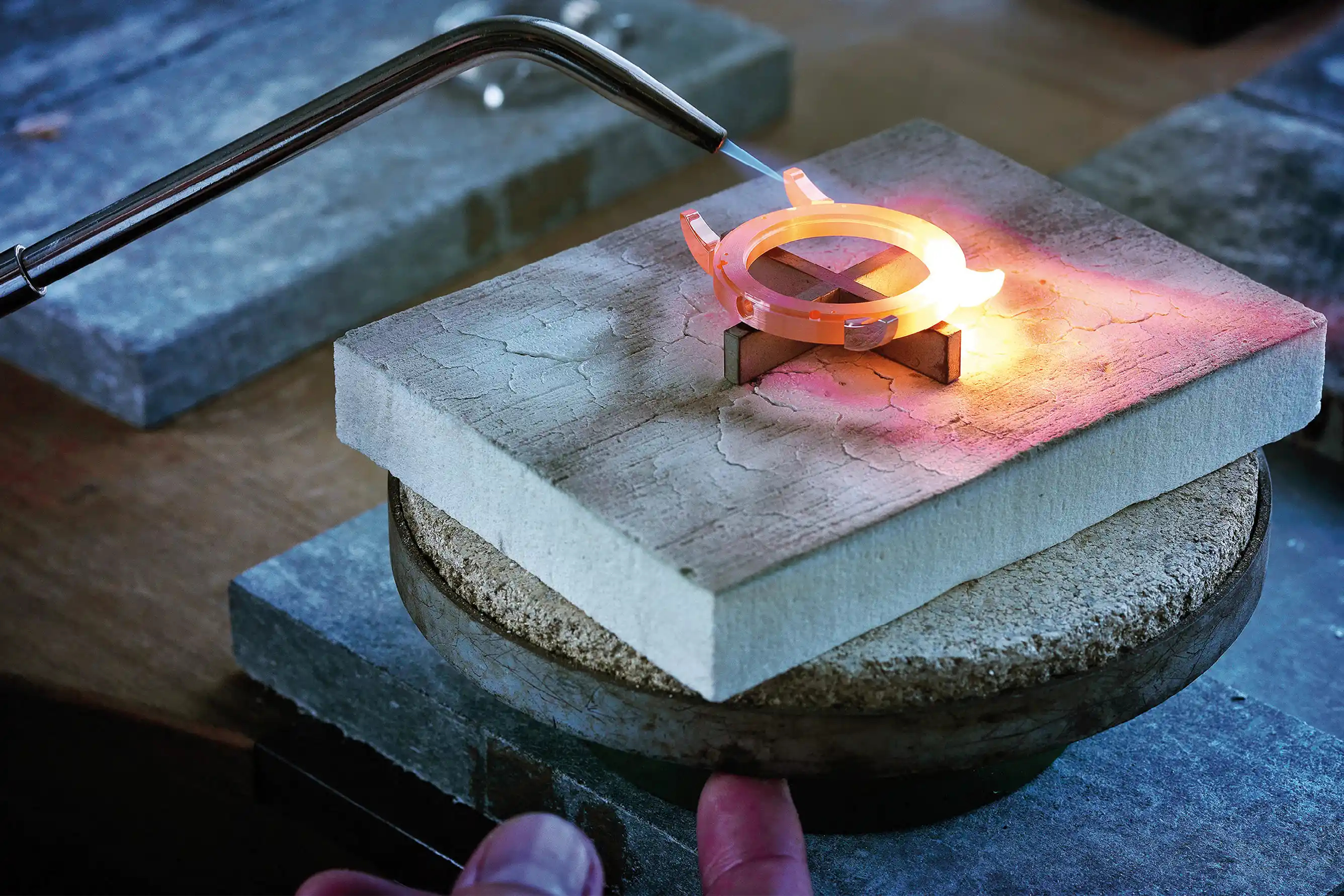
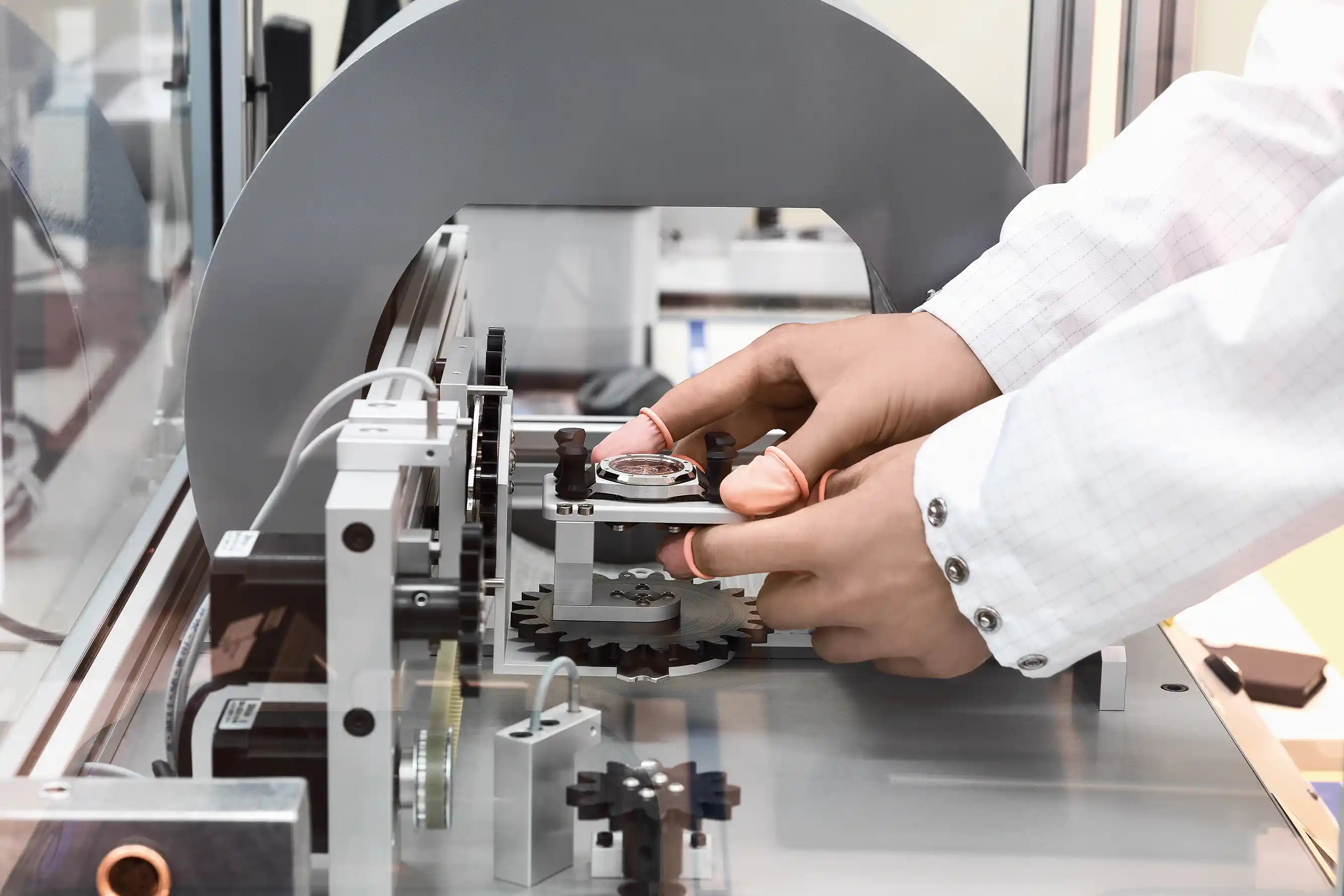
After a timely lunch at the Bellevue Le Rocheray, I head to the historical manufacture building, where it all started. Home to a museum, restoration workshop and archives, this is where the magic happened, back in the day — where Jules Louis Audemars and Edward Auguste Piguet launched the House that is today a watchmaking force to reckon with globally. Making our way through the maze of rooms, I feel like an excited child about to explore Disneyland as I make a mental note to ensure that I try to see every piece, big and small, that has contributed to Audemars Piguet’s rich history. Many pieces that have been crafted through decades, with path-breaking innovations, find their appointed places in these cases — from the first minute repeater wristwatch and the world’s thinnest pocket-watch calibre, to the journey of the Royal Oak and large frames bearing the original signage of the brand. And within the walls of the building I also see chronicles and the exemplary precedents set by the architects of the brand and those who followed.
The restoration room is another treat in itself. Here I interact with a tight team of three restorers — one of them has decades of experience while another is just 20-something but shares the same passion with her much more senior counterpart. Working on timepieces from only before the ’70s, whose spare parts are most often no longer available, the repair done here is always carried out by hand. A cupboard on one side, when opened, reveals stacks of old boxes which contain parts of what could have been complete timepieces. Many of these parts give contemporary watchmakers considerable insight into the mechanisms from back in the day — and some parts can even offer another vintage watch a new lease of life. An adjoining area has what is a replica of the original ledger — a record of every watch ever sold. Now computerised for ease of access and to prolong the life of their records, the early entries are written in a beautiful calligraphic font and are testimony to the workmanship that defines Audemars Piguet.
At the end of the day, amidst all the marvellous watches, a major takeaway for me is that no matter how many years have gone by, and how far the world of watchmaking has come, little has changed here in terms of their craftsmanship. Over the years, the family-owned House has passed on the skill, proficiency and expertise which make Audemars Piguet the master watchmakers of the past, present and future!