Art Whirl
It is a homecoming of sorts as world renowned, London-based sculptor of Indian origin, Anish Kapoor, displays his collection in India for the first time. Verve discovers that the artist stays true to his work, refusing to be tied down by cultural clichés
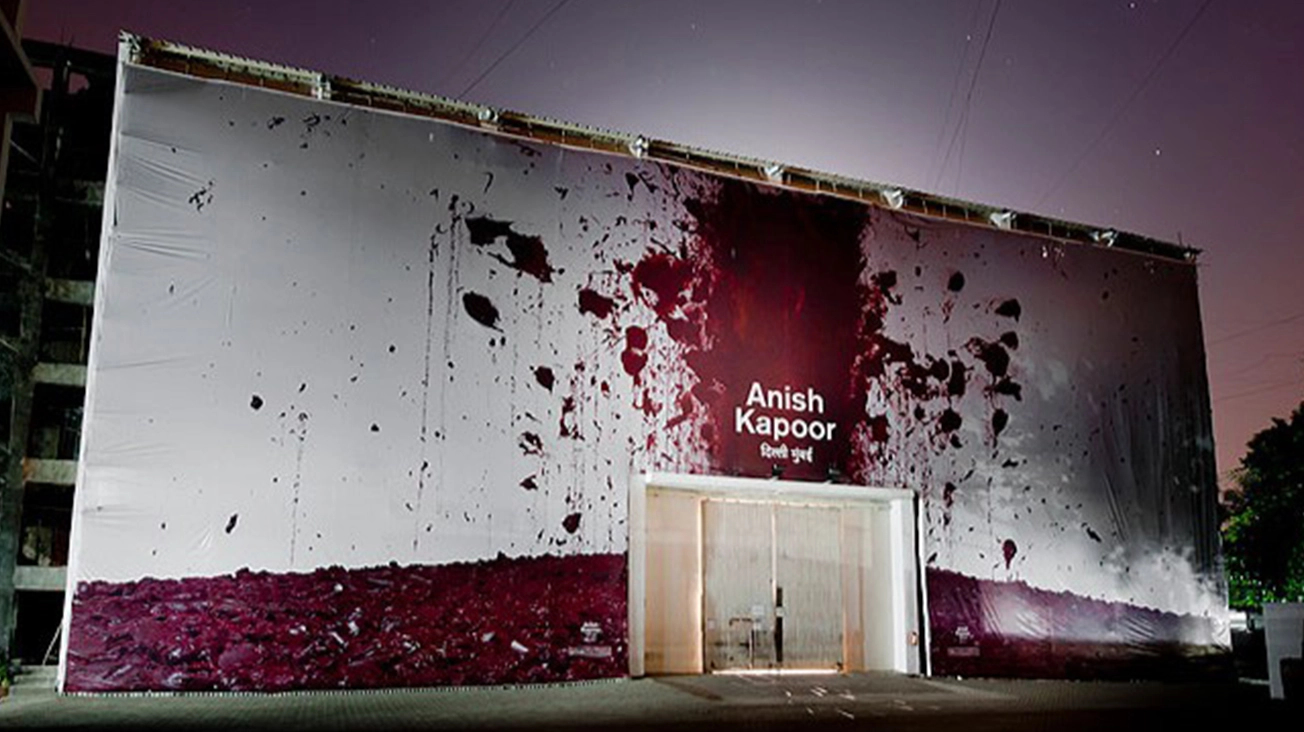
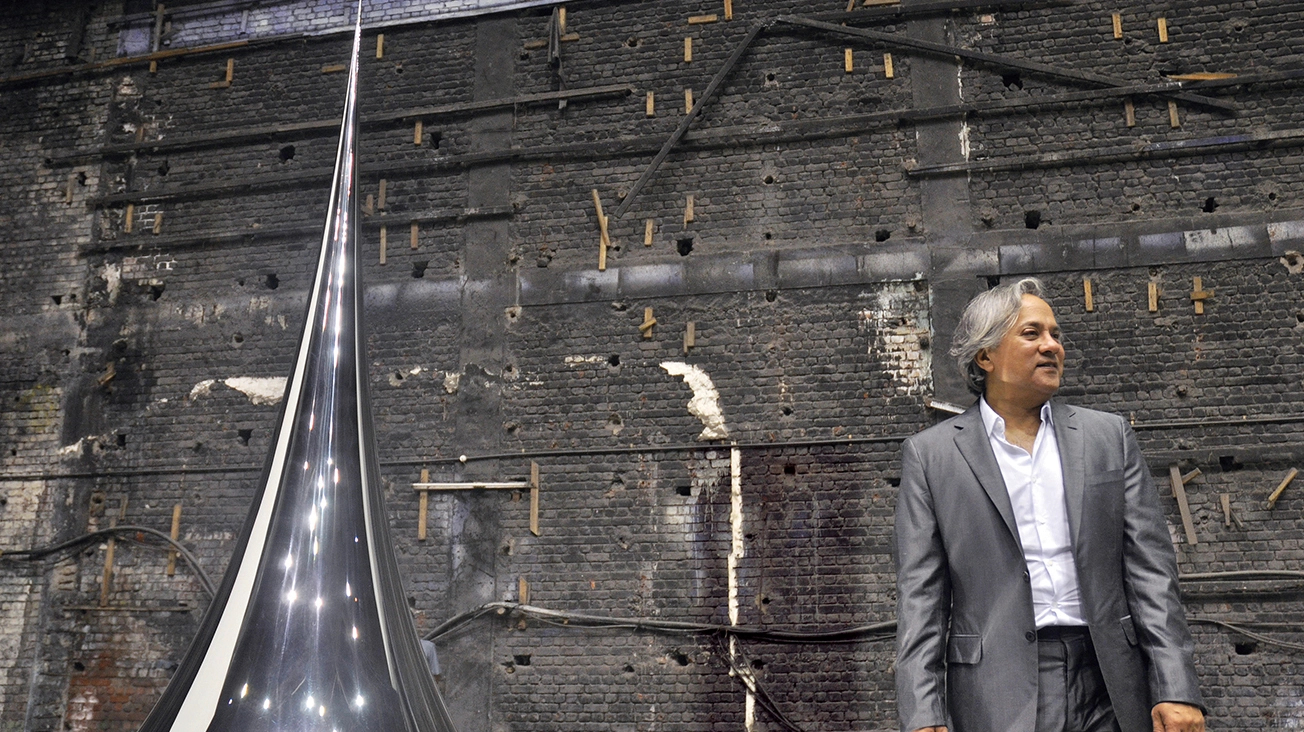
He is not going to allow himself to be drawn into the usual clichés. The thing about reality and illusion. About the reality of Bollywood. The illusion of art. Just because his work is being exhibited at Mumbai’s Mehboob Studio where celluloid is spun into Hindi potboilers. Just because viewers and the local press are desperate to find a context in which to understand these huge steel sculptures in their rather unconventional setting. Because they seem to have no antecedents, no points of reference. Frankly, India is floored by the works of Anish Kapoor, being exhibited for the first time in the country at Mehboob Studio, Mumbai and the newly renovated NGMA, New Delhi. “Bollywood? One could have played with that I suppose…. But, I wanted to bring the work as it really was, not a pastiche….” says the artist.
Kapoor’s first ever showing in India and the largest outside the UK, is being presented by the Ministry of Culture, Government of India and the National Gallery of Modern Art India, the British Council and Lisson Gallery in association with Louis Vuitton and the Tata Group. The two-city showing was inaugurated by Congress President Sonia Gandhi, and its importance cannot be underestimated. London-based Anish Kapoor was born in Bombay, grew up in India and left in 1973 to pursue his studies, at first in engineering in Israel but soon after, at Hornsey College of Art and Chelsea School of Art Design in the UK. Only seven years after graduating from Chelsea, he produced major shows in galleries in Paris, London, Rotterdam, Liverpool, Lyon, New York and Basel. In 1990, he was awarded the Turner Prize and in 1991, he was selected to represent Britain at the Venice Biennale where he was awarded the Premio Duemila prize.
Each of the exhibitions in India presents a different view of the artist’s work. The Delhi exhibition features his pigment-based sculptures of the 1980s as well as architectural models of his work. In Mumbai, on the other hand, more recent sculptures in polished steel and in wax are displayed. In fact, his stainless steel and wax pieces have never been exhibited before in such close proximity. Both sites feature works from a recent, record-breaking exhibition at the Royal Academy, London which drew over 275,000 visitors in less than three months.
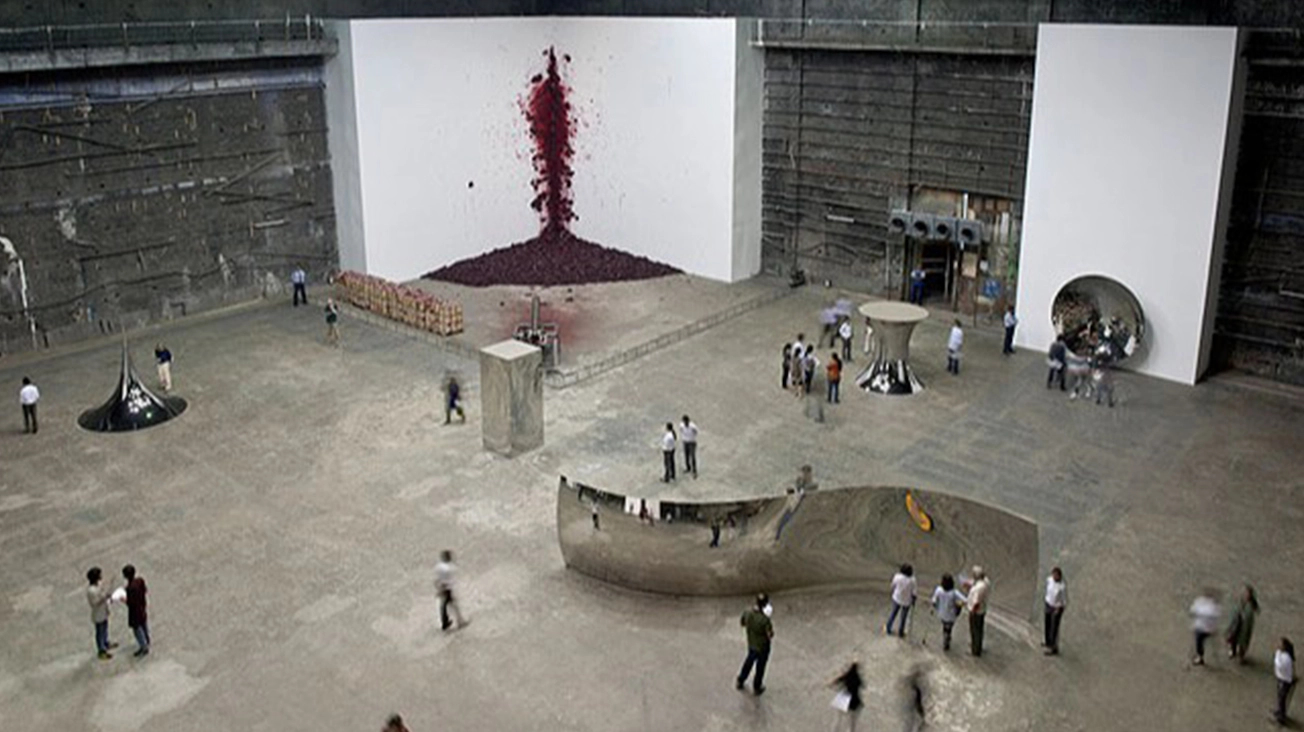
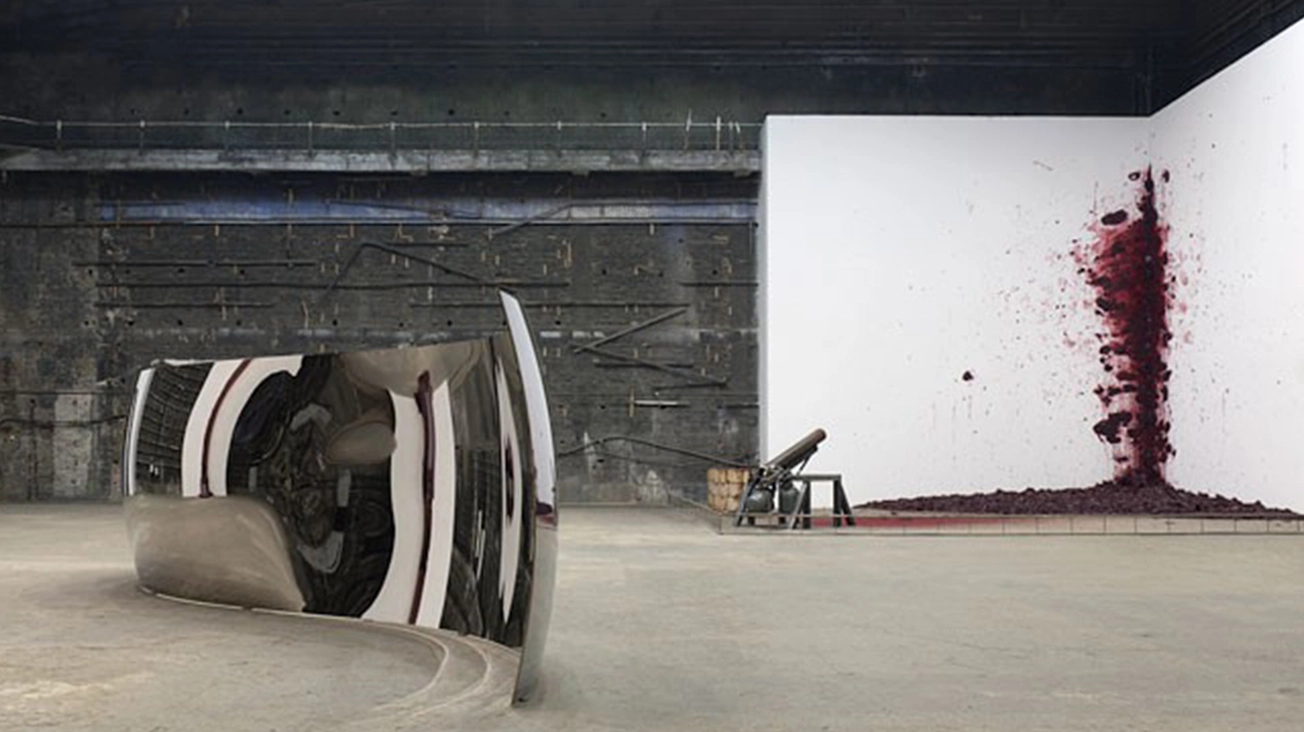
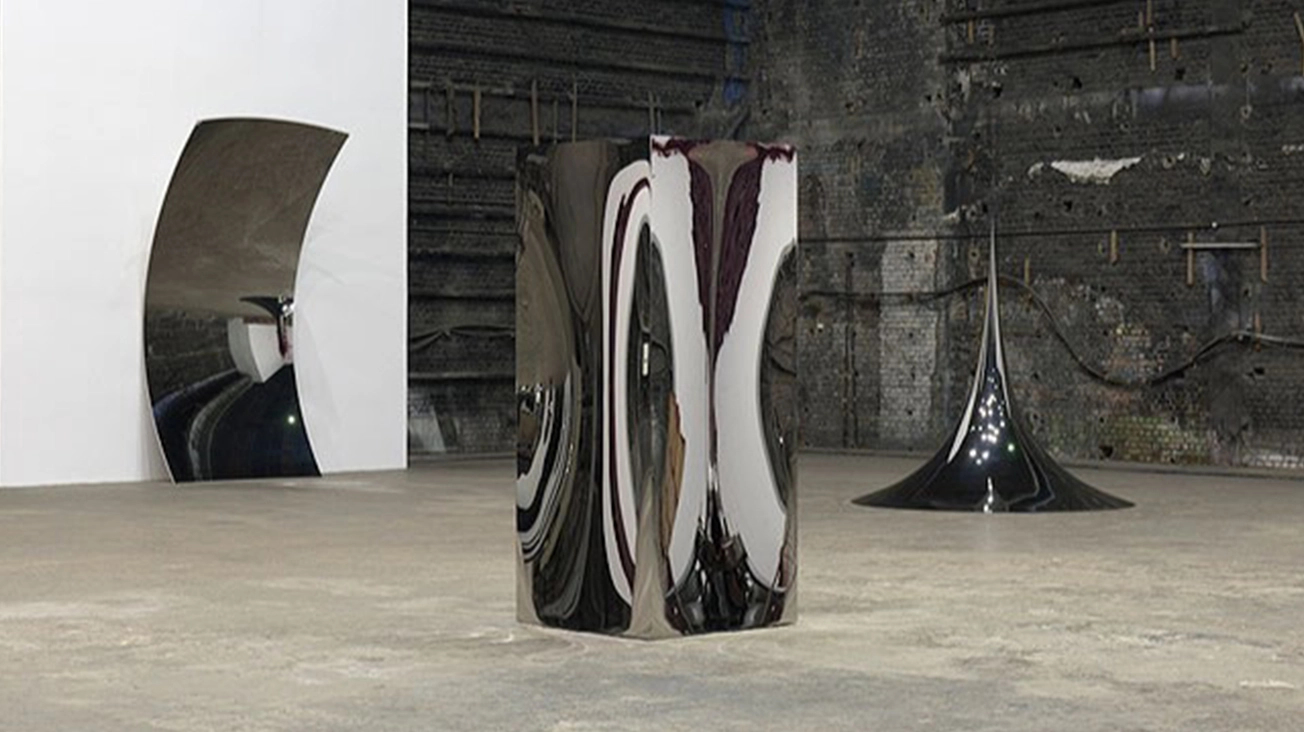
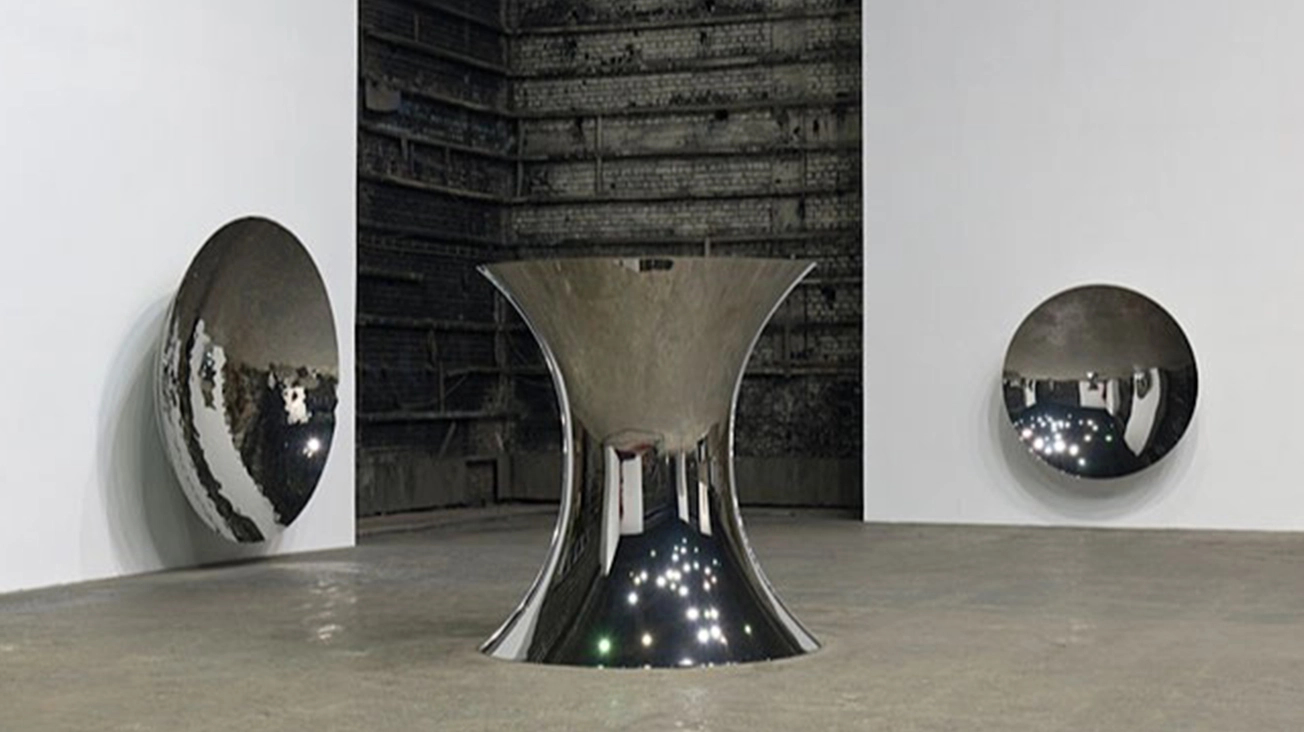
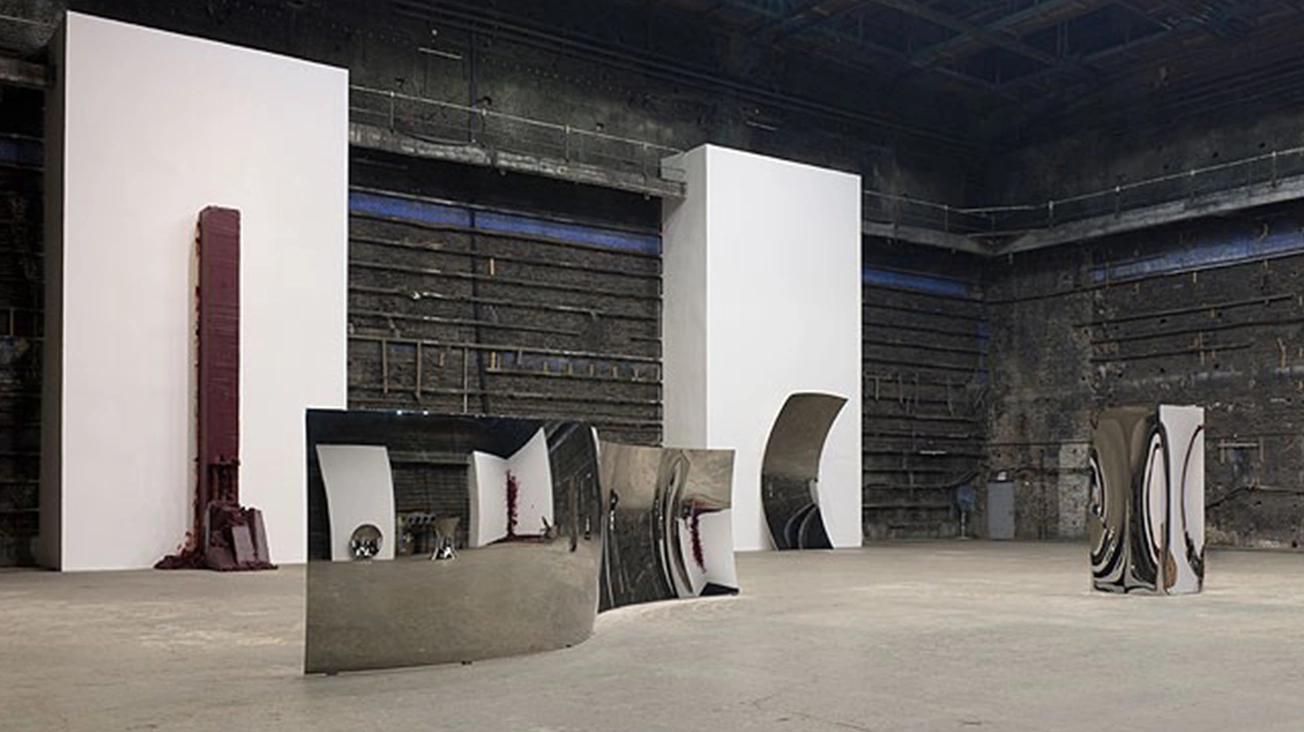
The cavernous area at Mumbai’s Mehboob Studio has become the venue for artists, art lovers, curious viewers and the city’s glitterati and chatterati to visit. The sculptures surprise by their sheer size that boggles the eye and their highly polished steel surfaces that reflect the grimness of this space, broken by the reflections of the myriad colourful spectators milling around. The surfaces gain a life all their own, redefining boundaries, shapes, moods according to the viewer. They stabilise, distort, turn upside down, spin inside out and shred reflections to ribbons of distortions that however follow fixed patterns. You want to touch these creations, figure them out, interact with them and view yourself in the best angle possible – physically as well as metaphorically. You want to break all the accepted etiquette of a gallery and get drawn into the sphere of influence of these mammoth works. They draw you in, engage you in a remarkable way. “Sculpture is about space,” Kapoor says later. “They engage with space and that’s what I am concerned with.”
The highly polished stainless steel in simple shapes blurs the lines between technology, engineering, art and architecture. The free-standing S-Curve in the centre of the large area mirrors the curve of a question mark in stainless steel and its sheer size goads you to walk around to experience it fully. While the polished steel seems almost liquid in its reflections and counter reflections, it actually echoes the mathematical model of the title, sigmoid curve. Another work, Non-object (Spire), reminds one of a trumpet or a witch’s pointed hat even as it reflects and re-reflects its environment, like a kaleidoscope. Two untitled spheres on the wall offer up their reflections — one broken into a myriad jigsaw pieces, throwing the mind back to mosaic pieces of glass. “Mirrored sculptures have historically been understood by the Egyptians who worked mainly with convex form. I have worked with a concave form which has only really been used in science,” says the creator.
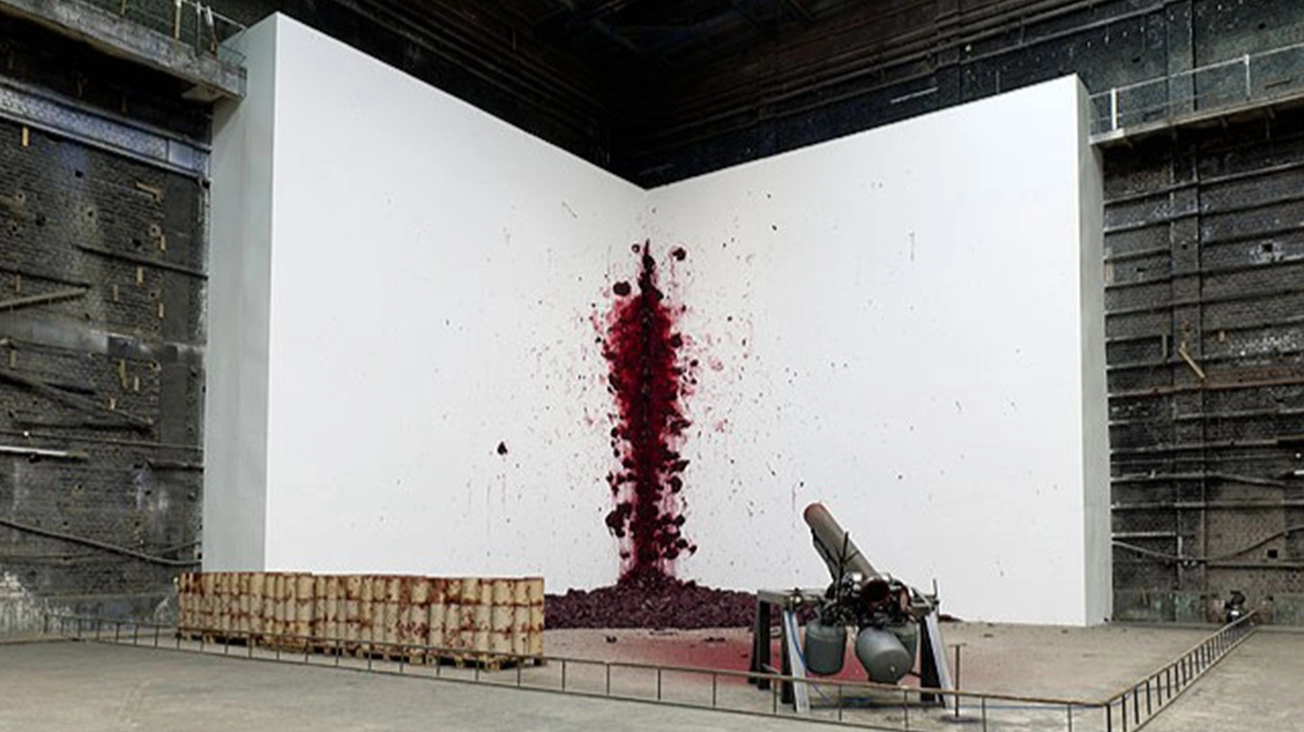
Mumbai viewers are also treated to one of the sculptor’s loudest works. Literally. Shooting into the Corner features an enormous cannon shooting huge pellets of red wax into a corner. “A kind of psycho-drama is at play,” says Kapoor, who is often startled by the loud retorts. An artwork is being created on the wall, as the wax sticks, falls, piles up. The silence of the gallery is broken, viewers jump out of their skin while a comment on the process of making art is revealed. The work defies any single explanation or meaning for as the artist maintains, he has nothing to say. Is this a comment on violence, masturbation, lifeblood, the phallic gun, the receptive corner – the work is so many things to so many.
And so many viewers are busy interpreting the oeuvre in their own way. Gallerist and industrialist wife Pheroza Godrej has her favourite that she spends long moments in front of. Non-object (Plane) is the one that fascinates her. “I think this is an amazing show,” she says. “I am really attracted to this piece because it is good for my ego – everyone’s ego,” she laughs at her pared down reflection that she is so enjoying. In more serious mode, she says, “These are great pieces of sculpture. You can see a lot of thought has gone behind them. I like the shapes since they are so primordial, in a way — primitive as a form. I see blood in the free standing pieces, also to be looked upon as a life force without which we would not be alive.”
“It’s fantastic!” says sculptor and installation artist Subodh Gupta, in a detached kind of way. “And I did not know that Mumbai had a studio like this!” Artist Anju Dodiya looks at the reflective surfaces and claims, “Put these outdoors and it would be quite different. The blue of the sky would be pulled down in reflection while the ground would move up. It is amazing the way he works with surfaces.” Actor Rahul Bose professes his great admiration for the work, particularly “in the way that they engage the viewer”. Artist and designer, Rajeev Sethi, especially flown in from Delhi for the exhibition, drops a teaser thought as he reflects on the reflections around him. “Mumbai needs a mirror,” he intones.
Interpret that as you will and yes, the city would embrace a reflection by Anish Kapoor anytime, at the most literary interpretation of that statement. Kapoor however refuses to make any statements that will make a viewing of his work easier. He has nothing to say, he states, as always. You may want to deconstruct his oeuvre as inspired by the Indian ethos or his Buddhist leanings. The artist however has resisted all attempts to hold him to his past or cultural “origins”. Writes art critic Homi Bhabha in his wonderful essay of Kapoor’s work: “Kapoor’s repeated insistence on the power of the “self-made” as the repose of the sculptural object suggests that the concept of svayambhav — the Sanskrit word for the “self-born” aesthetic (as distinct from rupa, the manmade form imposed through human artifice) – has been a long preoccupation of his thinking.” This may be best seen in the work Shooting into the Corner, mentioned before.
Kapoor has several important pieces of public art to his credit and after this exposure, surely the people of Mumbai and Delhi will refuse to be left out. Ending the Delhi-Mumbai debate before it has begun he says, “I don’t see it in terms of which city but what’s the site? Sites that have significance…. Make one that is not significant into one that is significant.” Like the incredible Cloud Gate at Millennium Park, Chicago which reportedly saw real estate prices soaring in the previously middle-class area. Sky Mirror at Rockefeller Centre, New York, continues to engage passersby by subverting the urban landscape as they walk past. Kapoor’s latest commission is to create the ArcelorMittal Orbit, a sculpture that will be 22m taller than the Statue of Liberty and which will consist of a continuous looping lattice of tubular steel, for London’s 2012 Olympic Park. It’s to be created in partnership with steel magnate Lakshmi Mittal.
While Kapoor may feel that referring to one’s country of origin “seems to question one’s ability as an artist” he continues, “I am very proud of being an Indian but I do not necessarily want to be an Indian artist. I want to be the best artist I can be. One has to make a good exhibition, the best one can make…. I do not work out of an Indian sensibility…. I also do not make works out of the psycho-biographical. One may say that my obsession with red has something to do with India but beyond that I would not want to tie it with something specific.” India, however, has inevitably and wholeheartedly claimed the sculptor as her own – it has been an amazing homecoming!
Click here to read an interview with Yves Carcelle, CEO of Louis Vuitton, on the brand's historical art-fashion connect — and its support of Anish Kapoor’s first showcase in India.